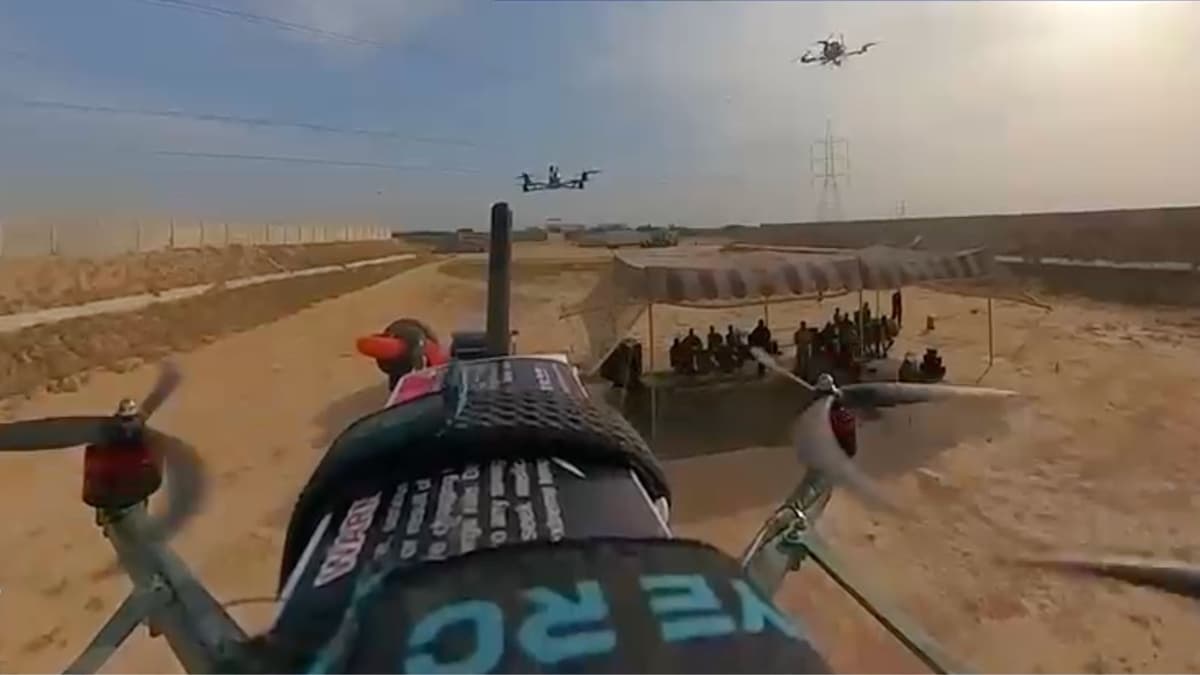
Woot-Tech SHARDS Drone Swarm System
Why It Matters
SHARDS could give infantry squads a portable, deep‑strike capability that bypasses traditional fire‑support chains, reshaping low‑level combat dynamics. Its success would also open a niche export market for affordable, infantry‑scale swarm systems.
Key Takeaways
- •SHARDS lets a single soldier launch and control a drone swarm.
- •Decentralized LSS control removes central‑controller single point of failure.
- •Swarm operates autonomously, maintaining mission despite jammed or lost drones.
- •Demonstration showed simultaneous bunker penetration and machine‑gun nest saturation.
- •If mature, SHARDS could give infantry organic deep‑strike capability.
Pulse Analysis
The global race for autonomous drone swarms has been dominated by heavyweight defence contractors in the United States, China and Israel, each fielding vehicle‑launched, multi‑domain systems. Woot Tech’s SHARDS diverges by targeting the infantry echelon, offering a lightweight, soldier‑portable solution that could democratise swarm capability for smaller militaries. By leveraging its existing loitering‑munition portfolio, the Pakistani startup positions itself as a nimble alternative to the Pentagon’s ACT programme and similar initiatives, potentially attracting mid‑tier buyers seeking cost‑effective, stand‑alone swarm kits.
At the heart of SHARDS is the Decentralized LSS (Local Swarm Synchronisation) control law, a peer‑to‑peer communication framework that eliminates the single‑point‑of‑failure inherent in centrally commanded swarms. Each drone exchanges minimal data with nearby nodes, autonomously allocating tasks, selecting approach vectors and timing attacks. This architecture delivers three tactical advantages: resilience against electronic‑warfare jamming, scalability without added operator burden, and the ability to continue the mission even if individual drones are destroyed. The April 2026 simulation demonstrated these traits, with one drone threading a narrow bunker aperture while the remainder executed a coordinated saturation strike.
Strategically, SHARDS aligns with Pakistan’s broader shift toward expendable, autonomous strike systems that can operate independently of larger fire‑support networks. If the system progresses to live‑fire trials and publishes performance metrics, it could become the first infantry‑level swarm capability outside the US, China or Israel, offering a compelling export proposition for nations lacking indigenous swarm tech. Watch for validation milestones—real‑world detonations, specification disclosures, and adoption by Pakistani or allied forces—as they will determine whether SHARDS moves from promising prototype to operational asset.
Woot-Tech SHARDS Drone Swarm System
Comments
Want to join the conversation?
Loading comments...