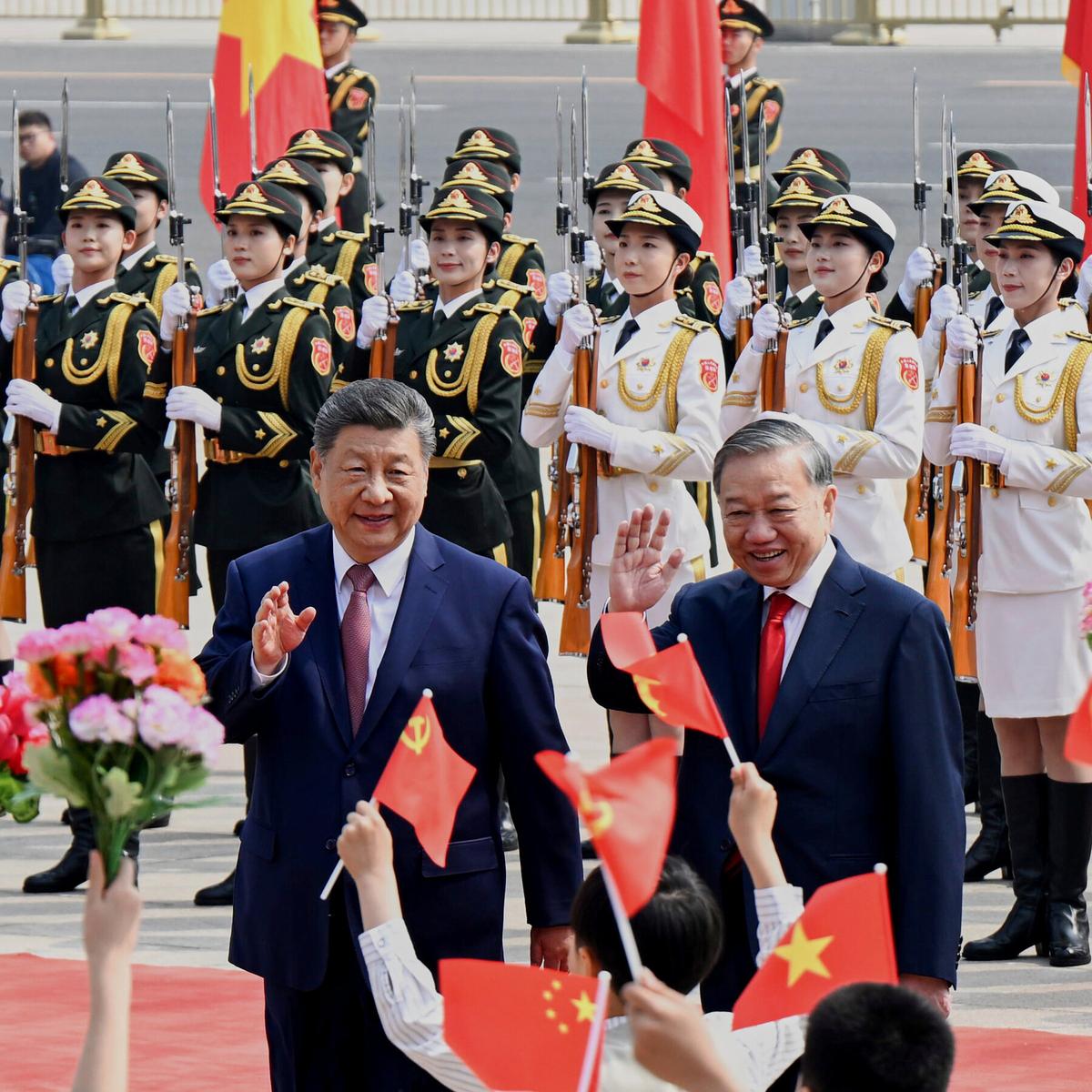
Xi Alludes to Trump’s Policies to Make a Case for Closer Ties to Vietnam
Why It Matters
The partnership narrows the strategic gap between Beijing and Hanoi, challenging U.S. influence and reshaping security dynamics in Southeast Asia.
Key Takeaways
- •Xi cited Trump tariffs to justify deeper China‑Vietnam trade security
- •Vietnam’s new leader To Lam consolidates party and presidential power
- •Security pact aims to outpace U.S. defense engagement in Southeast Asia
- •Ideological alignment reinforces regime‑centric global security narrative
Pulse Analysis
China’s outreach to Vietnam reflects a broader strategy to cement a bloc of single‑party states around its economic and security agenda. By referencing Trump‑era tariffs and the Strait of Hormuz incident, Xi framed the partnership as a safeguard against external economic coercion, positioning Beijing as the guarantor of uninterrupted trade flows and resilient supply chains. This narrative resonates with Hanoi’s recent concerns over market volatility and underscores a shift from traditional balancing toward overt alignment with Beijing’s geopolitical vision.
The security dimension of the Xi‑To Lam talks marks a decisive pivot for Vietnam. To Lam, a former security chief, has recently amassed both the presidency and party leadership, consolidating authority in a manner reminiscent of China’s strong‑man model. Joint exercises, intelligence sharing, and coordinated maritime patrols are expected to deepen, giving Beijing a foothold that already eclipses U.S. defense outreach in the region. For Washington, the erosion of its long‑standing security partnerships threatens not only deterrence against Chinese aggression but also the credibility of its regional alliances.
Regionally, the evolving China‑Vietnam tie could trigger a realignment of supply chains and infrastructure projects. With Beijing promising rail links and industrial cooperation, Vietnamese firms may increasingly source components from Chinese manufacturers, reducing reliance on U.S. or allied markets. Policymakers in Washington must weigh diplomatic engagement, economic incentives, and renewed defense commitments to counterbalance Beijing’s growing influence and preserve a free‑and‑open Indo‑Pacific architecture.
Xi Alludes to Trump’s Policies to Make a Case for Closer Ties to Vietnam
Comments
Want to join the conversation?
Loading comments...