Xi and Trump Won’t Discuss China’s Growing Nuclear Arsenal
Why It Matters
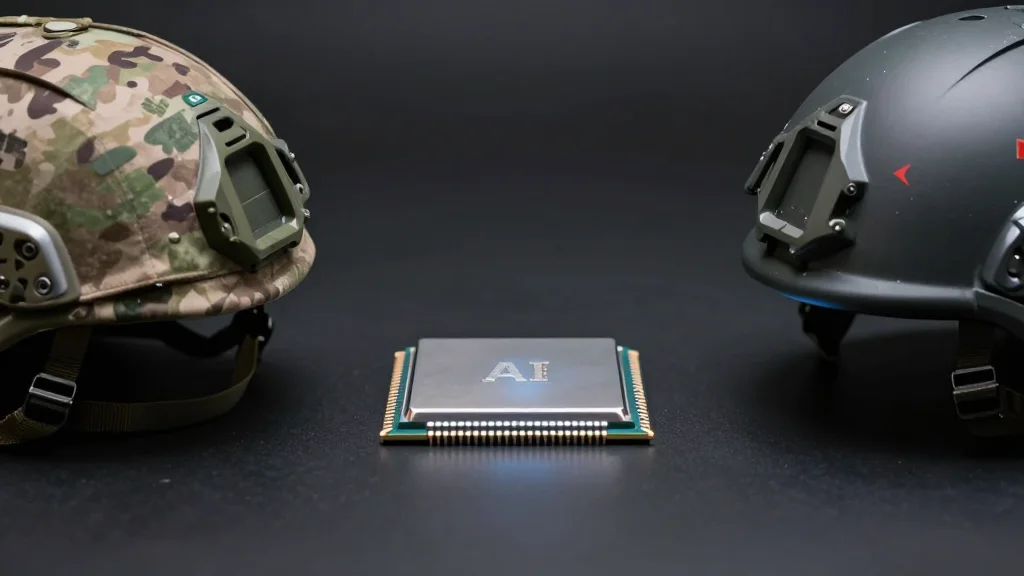
A U.S.–China dialogue on AI‑related escalation risks could establish new crisis‑management mechanisms, tempering the nuclear rivalry despite stalled arms‑control talks. Success would signal a pragmatic shift toward stability in an increasingly technology‑driven security environment.
Key Takeaways
- •China’s nuclear stockpile expanding faster than any NPT signatory
- •Trump and Xi may open AI risk dialogue at summit
- •Potential AI hotline could reduce accidental escalation
- •Space security emerges as alternative strategic discussion channel
- •US seeks Chinese pressure on Iran; China remains non‑committal
Pulse Analysis
The upcoming U.S.–China summit arrives at a moment when Beijing’s nuclear modernization outpaces all other non‑proliferation treaty members, raising alarm in Washington and among allies. While traditional arms‑control talks have stalled, both capitals recognize that AI‑enabled weapons systems introduce novel escalation pathways that could bypass existing safeguards. By exchanging threat assessments and exploring an AI‑focused communication line, the leaders aim to create a de‑confliction framework that addresses algorithmic errors and rapid decision cycles, a move that could set a precedent for future great‑power engagements.
Artificial intelligence is rapidly permeating command‑and‑control architectures, prompting concerns that mis‑interpreted data or autonomous responses could trigger unintended nuclear postures. The proposal for an "AI hotline" builds on earlier U.S.‑China agreements to keep AI out of launch decisions, offering a real‑time channel to clarify anomalies and prevent miscalculations. If institutionalized, such a mechanism would not only mitigate accidental escalation but also provide a template for other emerging technologies, from hypersonic missiles to autonomous swarms, thereby strengthening strategic stability across multiple domains.
Beyond AI, space security and regional issues like Iran’s enrichment program are likely to surface as lower‑stakes topics where cooperation is more feasible. Dialogue on space as a global commons could ease tensions over satellite weaponization, while Chinese influence over Tehran remains a sticking point for Washington. The summit’s ability to compartmentalize these concerns and achieve incremental confidence‑building steps could shape the trajectory of U.S.–China relations for years, underscoring the strategic value of focused, issue‑specific engagement over broad, stalled nuclear negotiations.
Xi and Trump won’t discuss China’s growing nuclear arsenal
Comments
Want to join the conversation?
Loading comments...