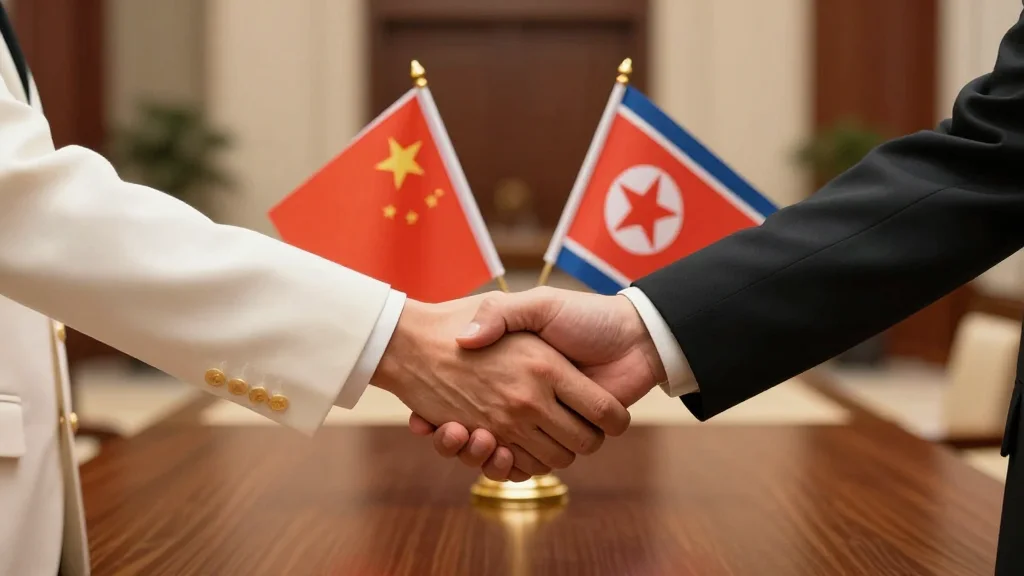
Xi Jinping’s Pyongyang Visit Signals China’s Push to Re‑balance North Korea’s Ties with Russia

Why It Matters
The visit reshapes the strategic balance on the Korean Peninsula, where North Korea’s nuclear and missile advancements pose a direct threat to regional stability. By re‑asserting its influence, China aims to prevent the DPRK from becoming a de‑facto Russian proxy, which would deepen the security dilemma for South Korea, Japan and the United States. The outcome of Xi’s diplomatic push will affect future arms control talks, alliance dynamics, and the likelihood of further nuclear proliferation in East Asia. Moreover, the trip highlights how great‑power competition is increasingly being played out through proxy states. Beijing’s effort to retain leverage over Pyongyang could either open a channel for de‑escalation or entrench a three‑way rivalry that raises the risk of miscalculation and accidental conflict, especially as missile tests and joint drills continue.
Key Takeaways
- •Xi Jinping’s first overseas trip of 2026 lands in Pyongyang on June 8
- •Visit marks the first Chinese leader in North Korea since 2019 and coincides with the 65th anniversary of the China‑DPRK defence treaty
- •South Korea’s NIS reports ~11,000 DPRK troops deployed in Ukraine, with over 7,000 casualties
- •Experts quote Joseph Torigian saying the visit boosts Kim’s stature and signals China’s intent to retain leverage
- •China reiterates that any discussion on the Korean Peninsula’s security cannot proceed without its involvement
Pulse Analysis
Xi’s Pyongyang visit is a textbook case of great‑power brinkmanship played out through a smaller, volatile state. Historically, Beijing’s security umbrella over the DPRK has been a cornerstone of its regional strategy, providing a buffer against U.S. forces stationed in South Korea. The recent surge in North Korean‑Russian military cooperation—evidenced by troop deployments and joint weapons development—has eroded that buffer, prompting Beijing to act before its leverage evaporates.
From a market perspective, heightened geopolitical risk typically fuels demand for defence spending across the region. South Korea, Japan and the United States have already accelerated procurement of advanced missile‑defence systems and extended their joint exercises. If Xi succeeds in extracting concessions from Pyongyang—such as a slowdown in missile testing or a curtailment of arms transfers to Russia—defence contractors could see a recalibration of threat assessments, potentially reshaping order books for missile‑defence and intelligence‑surveillance platforms.
Looking forward, the visit may set the stage for a new diplomatic calculus. Should China secure a tacit agreement limiting North Korea’s nuclear escalation, it could open a back‑channel for broader denuclearisation talks, albeit with Beijing as the primary broker. Conversely, a failure to achieve tangible outcomes could push Pyongyang deeper into Moscow’s orbit, solidifying a tripartite alignment that would compel Seoul, Tokyo and Washington to further integrate their defence architectures, possibly accelerating the deployment of integrated air‑and‑missile‑defence (IAMD) networks across the Indo‑Pacific. The next diplomatic moves will be critical in determining whether the Korean Peninsula moves toward a fragile equilibrium or slides into a more volatile security environment.
Xi Jinping’s Pyongyang Visit Signals China’s Push to Re‑balance North Korea’s Ties with Russia
Comments
Want to join the conversation?
Loading comments...