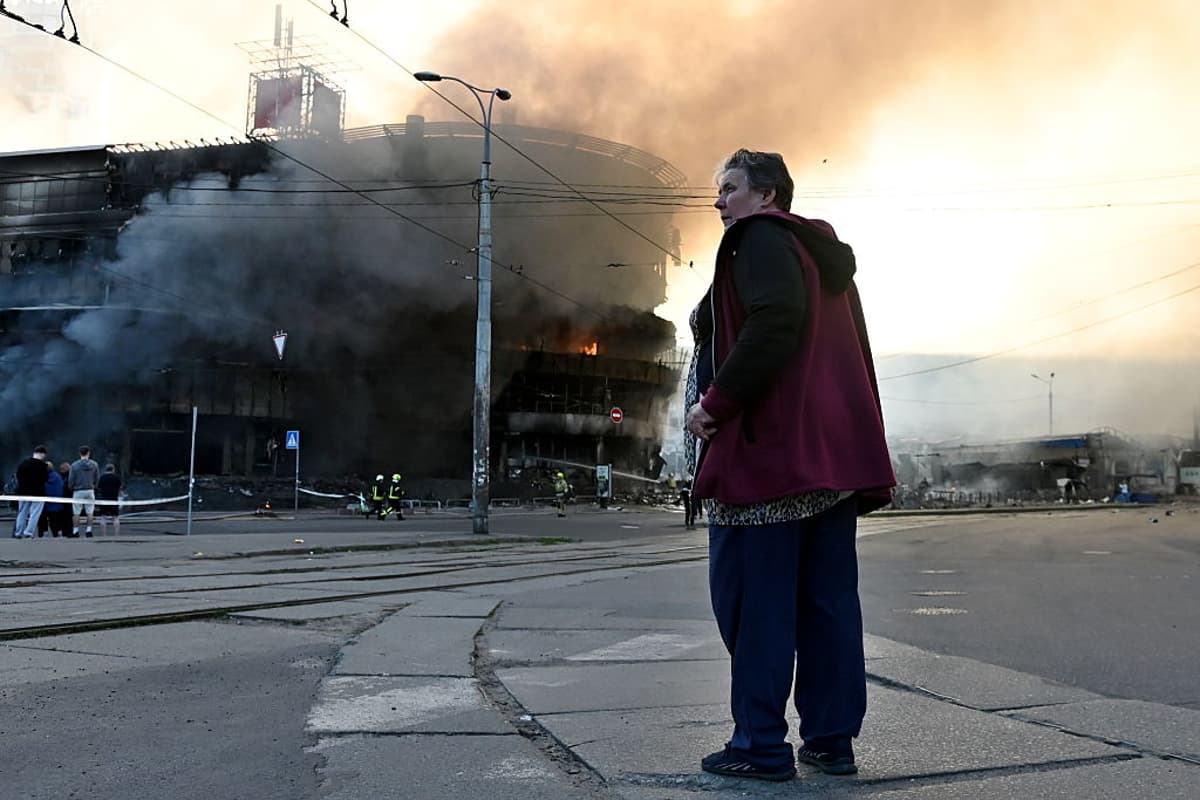
Zelensky Calls For 'Consequences' After Russia Hits Kyiv With One of Heaviest Bombardments Since War Began
Why It Matters
The assault underscores the escalating intensity of Russia’s missile campaign and exposes critical gaps in Ukraine’s air‑defense supply chain, while raising alarm in Europe about the use of nuclear‑capable weapons in the conflict.
Key Takeaways
- •Russia launched 600 drones and 90 missiles in Kyiv attack
- •Oreshnik hypersonic missile can travel 3,500 miles, nuclear‑capable
- •Ukraine downed 549 drones, 55 missiles; 19 missiles hit targets
- •Patriot missile shortages strain Ukraine's air defense amid US ammo depletion
- •EU condemned missile use as reckless nuclear brinkmanship
Pulse Analysis
The latest Russian barrage on Kyiv marks a stark escalation in the war’s kinetic phase. By deploying the Oreshnik intermediate‑range hypersonic missile—designed to carry a nuclear payload and capable of striking targets up to 3,500 miles away—Moscow signaled a willingness to blur the line between conventional and nuclear tactics. NATO allies are closely monitoring the development, fearing that repeated use of such weapons could lower the threshold for nuclear escalation and compel a recalibration of collective defense postures across Europe.
Ukraine’s ability to repel the attack hinged on a patchwork of legacy and Western air‑defense systems, most notably the U.S.-made Patriot batteries. However, a concurrent ammunition shortage—exacerbated by the United States and Gulf partners diverting interceptors to counter Iranian missile threats—has left Kyiv scrambling for interceptors. Zelensky’s call for European defense self‑sufficiency reflects a growing anxiety that reliance on external stockpiles may become untenable, prompting EU leaders to explore indigenous production and alternative procurement pathways to sustain the front‑line shield.
The European Union’s swift denunciation of the Oreshnik launch as "reckless nuclear brinkmanship" signals a potential shift toward tougher diplomatic and economic measures against Moscow. Sanctions targeting missile components and delivery‑system supply chains are likely to intensify, while discussions at NATO and UN forums may broaden to address the legal ramifications of using nuclear‑capable weapons in a conventional war. For policymakers and investors, the episode highlights heightened geopolitical risk, the urgency of bolstering allied defense industries, and the broader implications for global security architecture.
Zelensky Calls For 'Consequences' After Russia Hits Kyiv With One of Heaviest Bombardments Since War Began
Comments
Want to join the conversation?
Loading comments...