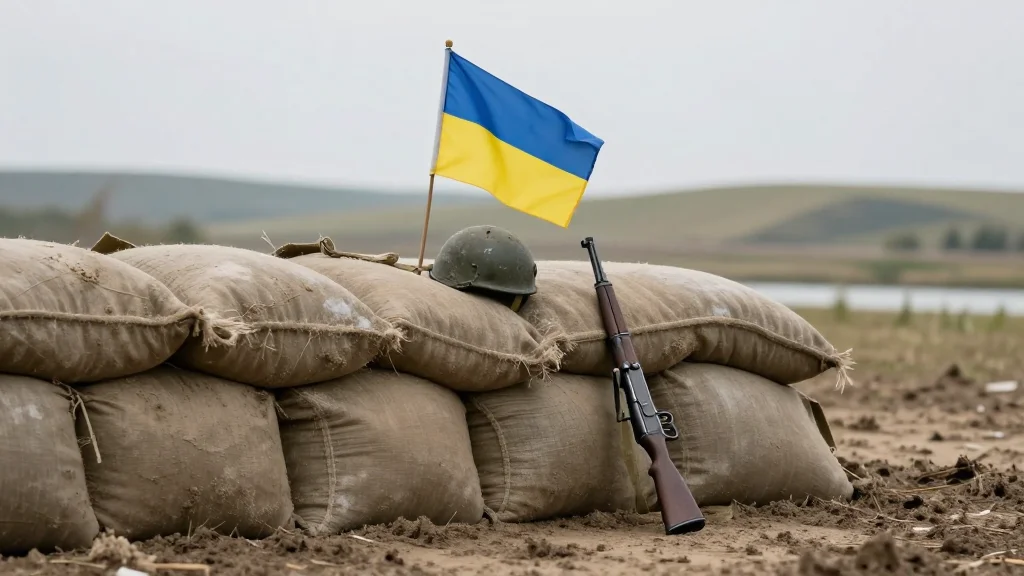
Zelenskyy Refuses Russian Demands to Surrender Ukraine’s Vital Fortress Belt
Why It Matters
Control of the fortress belt determines the front‑line depth of the conflict and influences any land‑for‑peace negotiations, making it a decisive factor for both military outcomes and diplomatic leverage.
Key Takeaways
- •Fortress belt spans ~50 km, linking Kramatorsk, Slovyansk, Kostyantynivka, Druzhkivka
- •Holds ~6,000 sq km, 20% of Donetsk still under Ukrainian control
- •Losing belt would push Russian forces 80 km deeper into Ukraine
- •Rebuilding elsewhere costs time, money and yields weaker defenses
- •Zelensky rejects handover, citing morale loss and risk of further aggression
Pulse Analysis
The northern Donetsk “fortress belt” is more than a line on a map; it is a strategically layered defense built on high ground, river obstacles and a dense network of trenches, bunkers and anti‑tank barriers. Developed over a decade, the 50‑kilometer corridor protects key urban hubs and serves as a logistical spine for Ukrainian forces. Its geography forces any attacker into costly, attritional battles, which is why analysts project that a full Russian capture could require up to two years of sustained combat.
Political pressure has intensified around the belt as U.S. Vice President JD Vance framed the dispute as a trivial land swap, suggesting that both sides should compromise to avoid further casualties. Kyiv, however, views the demand as a strategic ploy to force a concession that would undermine Ukraine’s negotiating position in any future peace talks. Zelensky’s refusal underscores a broader resistance to “land‑for‑peace” proposals that could legitimize Russian territorial ambitions while rewarding Moscow with a foothold that dramatically reshapes the battlefield.
The stakes extend beyond military calculus. Surrendering the belt would erode Ukrainian morale, displace thousands of defenders, and compel Kyiv to erect new fortifications on less favorable terrain—an effort that would drain resources and likely yield weaker lines. Moreover, handing over the area could signal to Putin that incremental concessions are viable, potentially spurring broader territorial demands. Maintaining control thus preserves both a physical barrier and a psychological one, keeping diplomatic pressure on Russia while safeguarding Ukraine’s long‑term security objectives.
Zelenskyy refuses Russian demands to surrender Ukraine’s vital fortress belt
Comments
Want to join the conversation?
Loading comments...