Auto Browse: What Teachers Should Know About Google’s New AI Agent
•February 12, 2026
0
Why It Matters
Auto Browse could become a productivity hub for educators, streamlining routine research and communication, but its current limitations and security concerns temper immediate adoption.
Key Takeaways
- •Auto Browse integrates Gemini with Chrome, Gmail, Calendar.
- •Available via Google AI Pro ($20) and Ultra ($250) subscriptions.
- •Teachers find mixed usefulness; strong data retrieval, weak browsing.
- •Prompt‑injection attacks pose security risks for AI agents.
- •Early version not yet a game‑changer for education tasks.
Pulse Analysis
The rollout of Google’s Auto Browse marks the tech giant’s most public foray into autonomous web‑navigation agents, a space previously dominated by niche startups and experimental tools. Leveraging the Gemini large‑language model, the feature embeds directly in Chrome, allowing users to issue natural‑language commands that open tabs, scrape data, and interact with Google services. By packaging the capability within the AI Pro and Ultra tiers, Google is betting on subscription revenue while positioning the tool as a premium productivity add‑on, directly competing with Microsoft’s Copilot and emerging browser‑based bots.
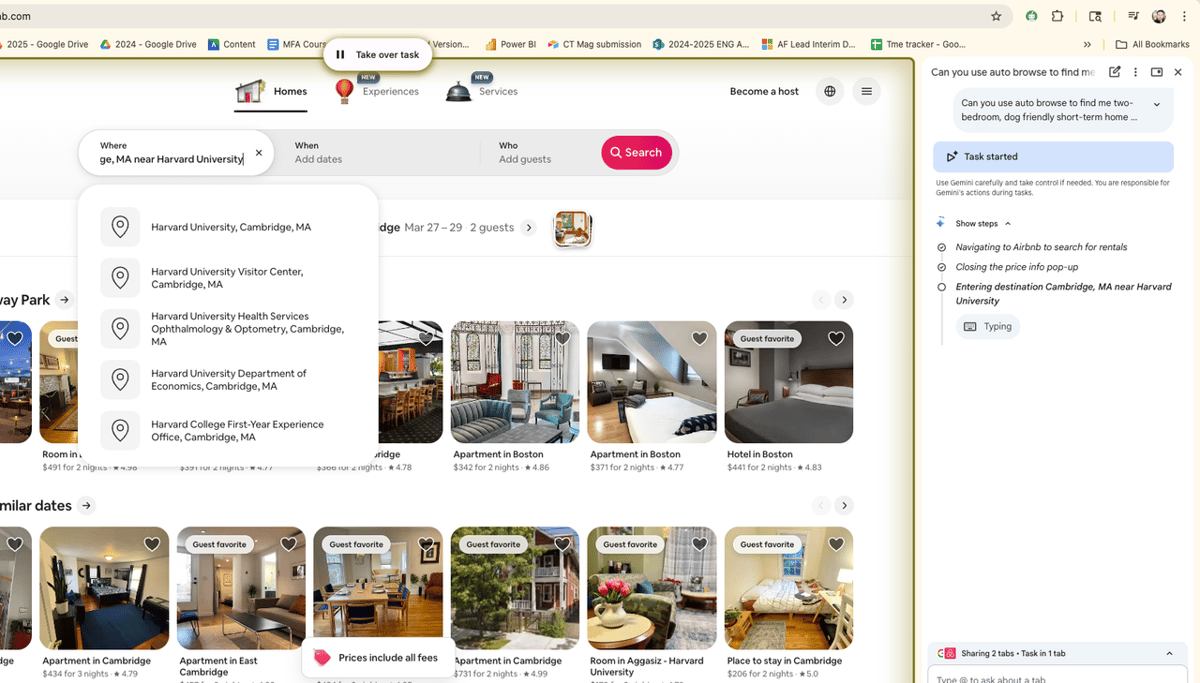
For educators, the promise of a hands‑free assistant that can pull calendar events, scan email threads, and compile teaching resources is compelling. In practice, the system excels at structured queries—such as generating lists of academic positions or extracting student interaction logs—thanks to tight integration with Gmail and Calendar. However, its browsing proficiency remains rudimentary; broken links and incomplete search results undermine tasks that require nuanced web navigation, like locating accommodation or curating up‑to‑date curriculum materials. Consequently, early‑adopter teachers may find Auto Browse useful for data‑centric chores but will still rely on traditional search engines for complex discovery.
Security and liability concerns loom large. Prompt‑injection attacks, where malicious web content manipulates the agent’s instructions, could expose institutional accounts or compromise sensitive data. Google’s disclaimer that users bear responsibility for the agent’s actions underscores the need for vigilant oversight. As the technology matures and safeguards improve, schools may integrate Auto Browse into broader digital‑learning ecosystems, but for now, cautious experimentation is advisable.
Auto Browse: What Teachers Should Know About Google’s New AI Agent
0
Comments
Want to join the conversation?
Loading comments...