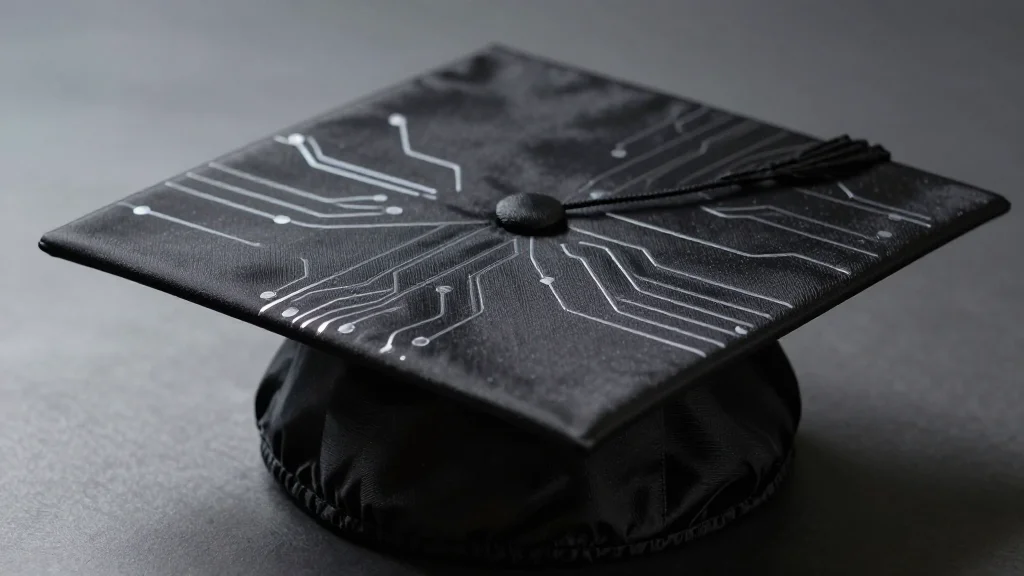
CollegeGPT’s First Cohort Set to Graduate Amid AI Cheating Debate

Why It Matters
The CollegeGPT episode spotlights a watershed moment where AI tools move from novelty to mainstream academic use, challenging the core promise of higher education—learning through effort and critical inquiry. If unchecked, AI‑driven cheating could devalue credentials, erode trust in academic institutions, and create a workforce ill‑prepared for tasks that require nuanced judgment. Conversely, embracing AI as a collaborative partner could produce graduates who are adept at leveraging technology while retaining essential analytical skills, reshaping hiring criteria across industries. Regulators, educators, and employers now face a three‑fold challenge: develop detection and deterrence mechanisms, redesign curricula to embed AI literacy, and create hiring frameworks that assess both technical fluency and independent thinking. The outcome will influence how degrees are perceived, how curricula evolve, and how the labor market values AI‑augmented talent.
Key Takeaways
- •CollegeGPT (Einstein) logged ~100,000 users before being shut down after cease‑and‑desist letters.
- •The Class of 2026, the first cohort exposed to the tool, will graduate next month.
- •Creator Advait Paliwal questioned the value of education when AI can do all the work.
- •Hiring experts say AI‑native grads may be favored, but critical‑thinking skills remain essential.
- •Universities and platforms like Canvas are under pressure to update honor codes and detection tools.
Pulse Analysis
CollegeGPT’s brief rise and fall underscores how quickly generative AI can disrupt entrenched academic practices. Historically, cheating has evolved with technology—from cheat sheets to internet plagiarism—but the scale and automation potential of tools like Einstein represent an order‑of‑magnitude shift. Institutions that respond with punitive measures alone risk a cat‑and‑mouse game that may drive cheating underground. A more sustainable approach lies in integrating AI literacy into curricula, turning a threat into a teachable asset.
From a market perspective, the episode accelerates a trend already visible in hiring: firms are scouting for candidates who can harness AI to boost productivity. Twill’s CEO’s optimism reflects a broader employer sentiment that AI‑savvy graduates will fill roles that demand rapid data synthesis and content generation. However, the risk of skill atrophy looms large; if students outsource reasoning to bots, they may lack the problem‑solving depth employers ultimately need. Companies may therefore begin to assess AI‑augmented work samples alongside traditional interviews.
Policy‑wise, the CollegeGPT case may catalyze clearer guidelines on AI use in education. Legislators could consider mandating disclosure of AI assistance in assignments, similar to citation requirements for external sources. Such transparency would preserve academic integrity while acknowledging AI’s inevitability. In the meantime, universities will likely invest in AI‑detection technologies and redesign assessments to emphasize in‑person, oral, and project‑based evaluations that are harder to automate. The balance struck now will shape the credibility of degrees and the readiness of the future workforce for an AI‑infused economy.
CollegeGPT’s First Cohort Set to Graduate Amid AI Cheating Debate
Comments
Want to join the conversation?
Loading comments...