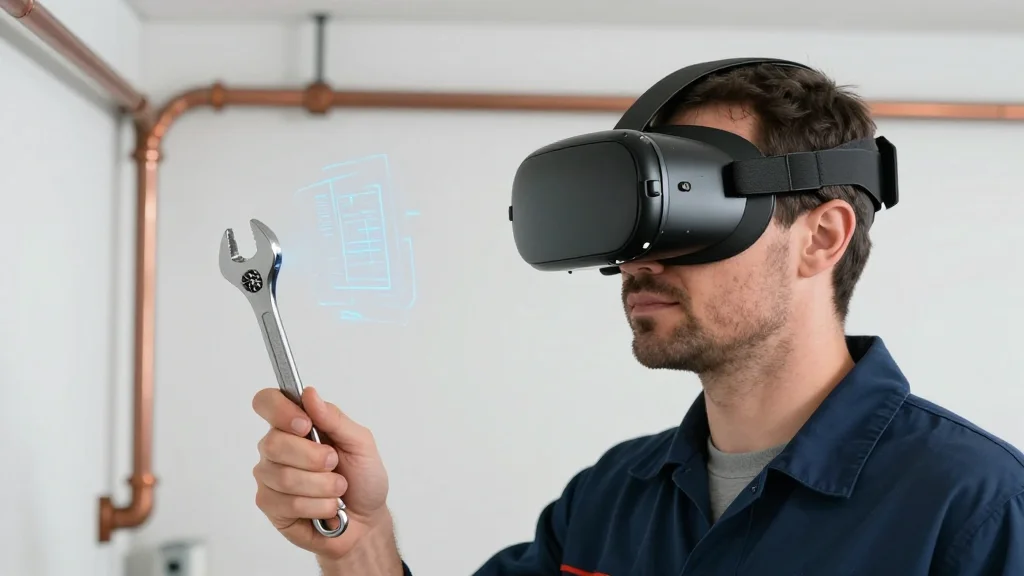
Companies and Schools Are Trying Virtual Reality for Skilled Trades Training
Companies Mentioned

Why It Matters
VR offers a scalable way to address the skilled‑trade labor shortage, but its effectiveness hinges on blending immersive tech with real‑world practice and instructor expertise.
Key Takeaways
- •Southern Home Services adopted Interplay VR to augment HVAC training
- •VR provides immersive simulations but can't replace hands‑on labs
- •Skilled‑trade vacancy exceeds 110,000 jobs, intensifying training demand
- •Schools use VR to expose students early, yet prioritize field experience
- •No rigorous data yet compares VR outcomes to traditional training
Pulse Analysis
Virtual reality is gaining traction as a cost‑effective bridge for the chronic skilled‑trade talent gap. Companies like Southern Home Services leverage Interplay Learning’s Meta Quest simulations to replicate customer sites, allowing technicians to rehearse procedures without travel or equipment downtime. This immersive approach shortens onboarding cycles and standardizes skill exposure across geographically dispersed teams, a crucial advantage when 110,000 HVAC positions remain unfilled nationwide. Yet, VR remains a complement, not a replacement, for tactile labs that teach muscle memory and nuanced problem‑solving.
The technology’s promise is tempered by practical constraints. A shortage of seasoned instructors limits the ability to design and oversee high‑fidelity VR curricula, and educators warn that virtual feedback—such as a vibrating joystick for an electrical shock—may not convey the real‑world stakes of hazardous errors. Moreover, the industry lacks robust comparative studies linking VR training to certification pass rates or on‑the‑job performance, leaving ROI calculations speculative. These gaps underscore the need for hybrid models that pair immersive simulations with seasoned mentors and physical practice.
Educational institutions are experimenting with VR to spark early interest in career and technical education. Districts like Santa Rosa in Florida have deployed headsets to let students experience welding, tower climbing, or emergency‑room scenarios, helping them gauge personal fit before committing to a trade. While such exposure enriches career awareness, schools continue to emphasize field placements as the gold standard for skill acquisition. As VR hardware becomes more affordable and content libraries expand, the sector is likely to see a gradual shift toward blended learning pathways that combine virtual immersion with hands‑on apprenticeships, ultimately strengthening the pipeline of qualified trade workers.
Companies and schools are trying virtual reality for skilled trades training
Comments
Want to join the conversation?
Loading comments...