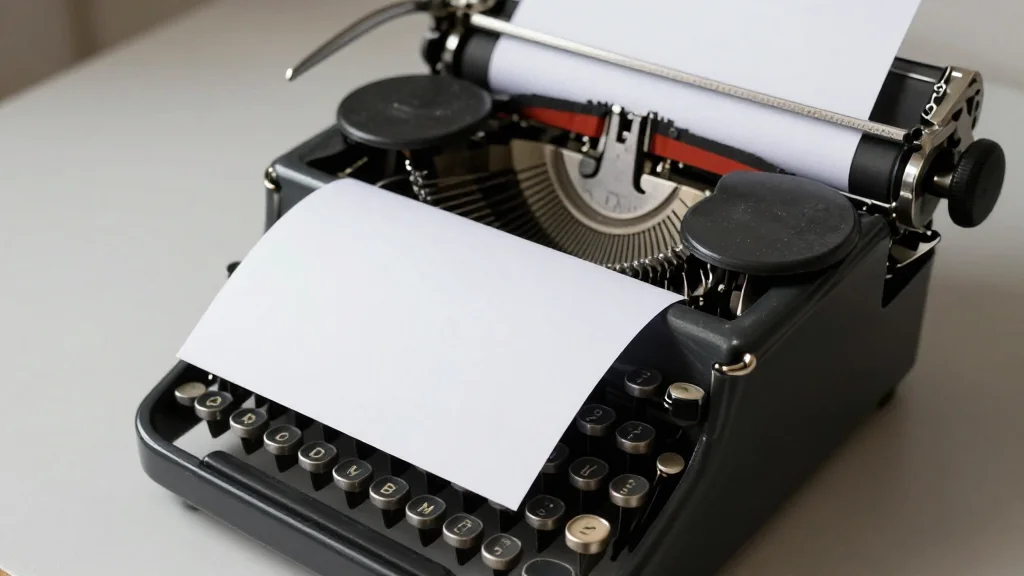
Cornell Professor Revives Typewriters to Block AI‑Generated Essays

Companies Mentioned
Why It Matters
The resurgence of manual typewriters at Cornell highlights a concrete response to the escalating challenge of AI‑generated plagiarism, a problem that threatens the credibility of higher education. By forcing students to write without digital crutches, the experiment tests whether slower, more deliberate processes can restore authentic learning and reduce reliance on AI tools. If successful, the model could influence policy decisions at other universities, prompting a reevaluation of assessment design, investment in low‑tech infrastructure, and the development of hybrid approaches that blend digital convenience with analog safeguards. The broader implication is a potential shift in how academic integrity is enforced, moving beyond software detection toward pedagogical redesign.
Key Takeaways
- •Cornell German professor Grit Matthias Phelps introduced a semester‑long typewriter assignment to curb AI‑generated essays.
- •Students must write without spellcheck, delete keys, or internet access, using vintage manual typewriters.
- •Quotes from Phelps and students illustrate the shift in thinking and classroom dynamics.
- •The initiative mirrors a national trend toward low‑tech assessments as AI plagiarism rises.
- •Phelps plans to collect data on plagiarism rates to evaluate the program’s effectiveness.
Pulse Analysis
The Cornell typewriter experiment arrives at a moment when AI detection tools are still playing catch‑up with ever‑more sophisticated generative models. While software solutions promise to flag suspicious text, they often generate false positives and can be circumvented with prompt engineering. Phelps’s analog approach sidesteps the arms race entirely by removing the digital medium, forcing students to engage in the cognitive labor that AI typically shortcuts.
Historically, education has oscillated between embracing new technologies and retreating to proven methods when those tools threaten core values. The typewriter revival is reminiscent of the early 2000s push for "no‑phone" policies in classrooms, which eventually gave way to blended learning models. For the analog assignment to have lasting impact, institutions will need to embed it within a broader strategy that includes clear learning outcomes, assessment metrics, and scalability plans. Otherwise, the novelty may wear off, and students could simply view it as a gimmick.
Looking ahead, the key question is whether the data collected by Phelps will demonstrate a measurable drop in AI‑assisted submissions. If so, other departments may adopt similar low‑tech interventions, potentially leading to a hybrid assessment ecosystem where digital tools are used for research and collaboration, but final submissions are required in analog form. Such a shift could reshape the market for educational technology, prompting vendors to develop secure, offline‑first platforms that satisfy both integrity concerns and modern pedagogical needs.
Cornell Professor Revives Typewriters to Block AI‑Generated Essays
Comments
Want to join the conversation?
Loading comments...