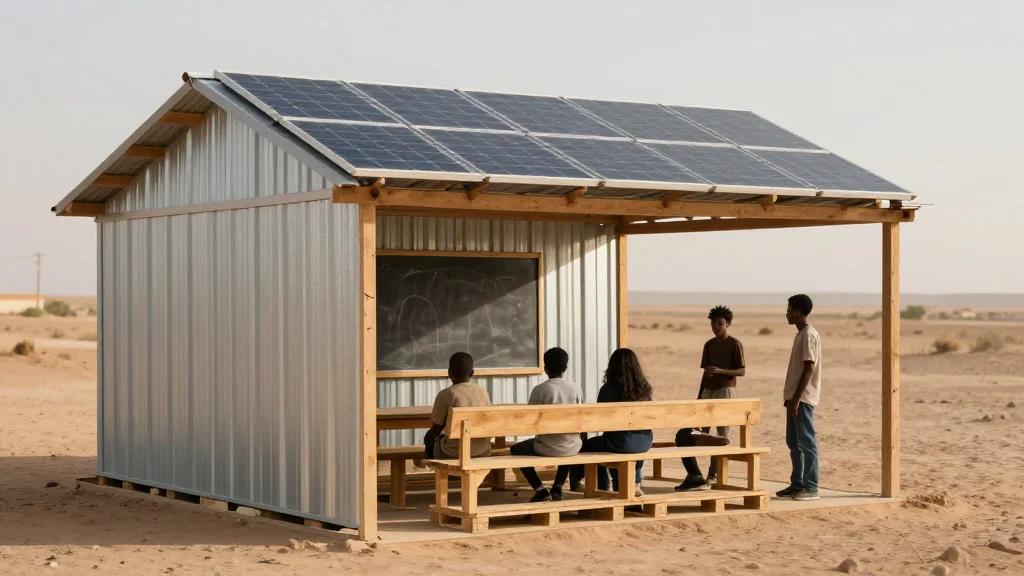
Gaza’s ‘University City’ Reopens, Serving Up to 600 Displaced Students Daily

Why It Matters
University City illustrates how low‑cost, community‑driven solutions can sustain higher‑education access in war zones, where traditional infrastructure is destroyed. By providing a physical venue with reliable internet, the project bridges the digital divide that has left many Gaza students unable to participate in online courses. The initiative also underscores the role of NGOs in filling gaps left by state institutions, offering a template for other conflict‑affected regions seeking to preserve academic continuity. Beyond immediate student outcomes, the hub’s business incubator hints at a longer‑term strategy to rebuild Gaza’s economy. Empowering students with entrepreneurial skills can generate micro‑enterprises that alleviate unemployment and reduce dependence on humanitarian aid. If scaled, such hubs could become engines of post‑conflict reconstruction, preserving a skilled workforce that might otherwise be lost to displacement or emigration.
Key Takeaways
- •Scholars Without Borders opened ‘University City’ in al‑Mawasi, Gaza, serving up to 600 students daily.
- •Six halls, solar‑powered internet and a small business incubator were built from locally sourced wood and metal.
- •The site hosts classes from the Islamic University, Al‑Azhar University and the Palestine College of Nursing.
- •Student Mariam Nasr described the campus as a rare return to normal academic life after two years of disruption.
- •The rotating schedule allows multiple institutions to share limited space, maximizing educational reach.
Pulse Analysis
The emergence of University City signals a pragmatic pivot in Gaza’s education sector, where the conventional campus model is no longer viable. By leveraging modest construction materials and renewable energy, the project sidesteps the logistical nightmare of rebuilding full‑scale facilities amid ongoing hostilities. This approach mirrors a broader trend in conflict‑affected regions: low‑tech, high‑impact interventions that prioritize continuity over perfection.
From an EdTech perspective, the hub’s hybrid model—physical classrooms equipped with solar internet—offers a blueprint for resilient learning ecosystems. While many NGOs have focused on pure e‑learning platforms, the reality on the ground—intermittent power, limited bandwidth, and crowded shelters—means that a blended approach can capture the benefits of both worlds. The incubator component adds another layer, turning education into an engine for economic recovery, a critical need in a territory where unemployment hovers above 50 %.
Looking ahead, the scalability of such hubs will depend on sustained funding and coordination with local authorities. If donors can secure longer‑term financing, the model could evolve into a network of micro‑campuses, each tailored to the unique constraints of its neighborhood. This would not only preserve academic pathways for Gaza’s youth but also create a decentralized knowledge infrastructure that is harder to disrupt. In the long run, the success of University City could inspire similar initiatives in other conflict zones, reshaping how the global EdTech community thinks about education delivery under fire.
Gaza’s ‘University City’ Reopens, Serving Up to 600 Displaced Students Daily
Comments
Want to join the conversation?
Loading comments...