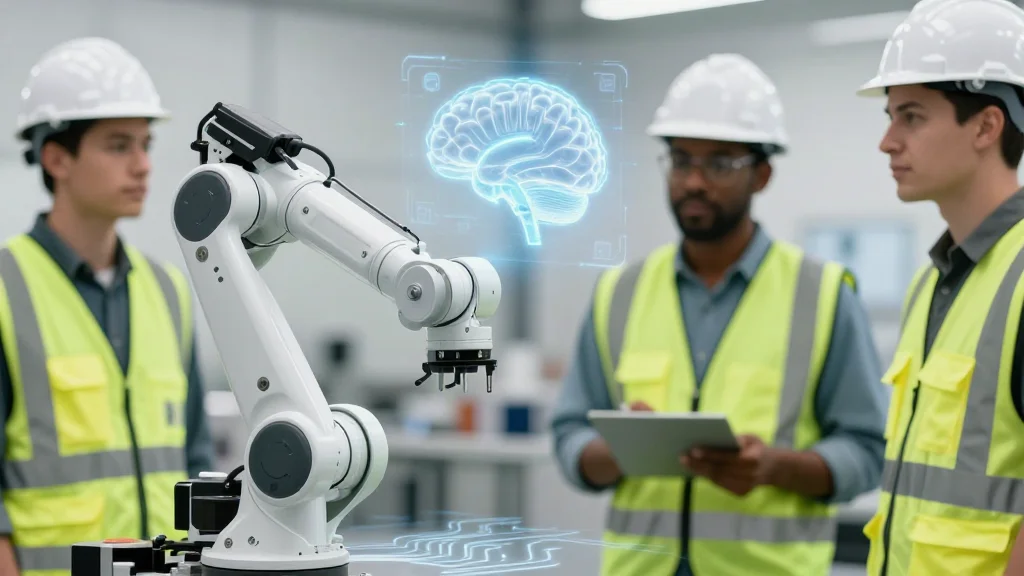
Google Pours $10 Million Into AI Training for 40,000 U.S. Manufacturing Workers

Companies Mentioned
Why It Matters
The partnership tackles two intertwined challenges: a looming skilled‑labor deficit in U.S. manufacturing and the need for AI‑driven productivity gains. By equipping workers with concrete AI tools, the program could help manufacturers modernize faster, preserving jobs that might otherwise be lost to automation or offshoring. Beyond the immediate workforce, the initiative signals a shift toward private‑sector leadership in vocational education. If Google’s model proves effective, it could inspire other tech giants to fund similar programs, reshaping how technical skills are taught and who bears the cost of upskilling America’s industrial base.
Key Takeaways
- •Google.org’s AI Opportunity Fund allocates $10 million to AI training for manufacturing workers
- •Program targets 40,000 U.S. workers with two new courses
- •Partnership includes the Manufacturing Institute and expands FAME into 15 regions
- •Industry estimates 1.9 million manufacturing jobs could stay vacant by 2033 without intervention
- •Training aims to reduce skill gaps and accelerate AI adoption on the factory floor
Pulse Analysis
Google’s entry into manufacturing workforce development reflects a broader trend of tech firms leveraging their expertise to address systemic talent shortages. Historically, corporate training initiatives have focused on internal staff or high‑visibility consumer products; this move into blue‑collar manufacturing marks a strategic diversification. By positioning AI as a tool that augments rather than replaces human labor, Google attempts to pre‑empt the backlash that often accompanies automation narratives.
From a market perspective, the $10 million outlay is modest compared with the potential economic upside of a more AI‑savvy factory floor. If even a fraction of the 40,000 trainees improve operational efficiency by 2‑3 percent, manufacturers could realize billions in added value, justifying the investment and encouraging further private funding. Moreover, the collaboration with the Manufacturing Institute provides a conduit to existing industry networks, increasing the likelihood of rapid adoption.
Looking ahead, the program’s success will hinge on measurable outcomes—skill retention, productivity gains, and job retention rates. Should the data demonstrate clear benefits, we may see a cascade of similar partnerships, potentially reshaping the vocational education ecosystem. Conversely, if uptake is low or results are ambiguous, it could reinforce skepticism about corporate‑led upskilling, prompting policymakers to step in with more structured funding mechanisms.
Google Pours $10 Million into AI Training for 40,000 U.S. Manufacturing Workers
Comments
Want to join the conversation?
Loading comments...