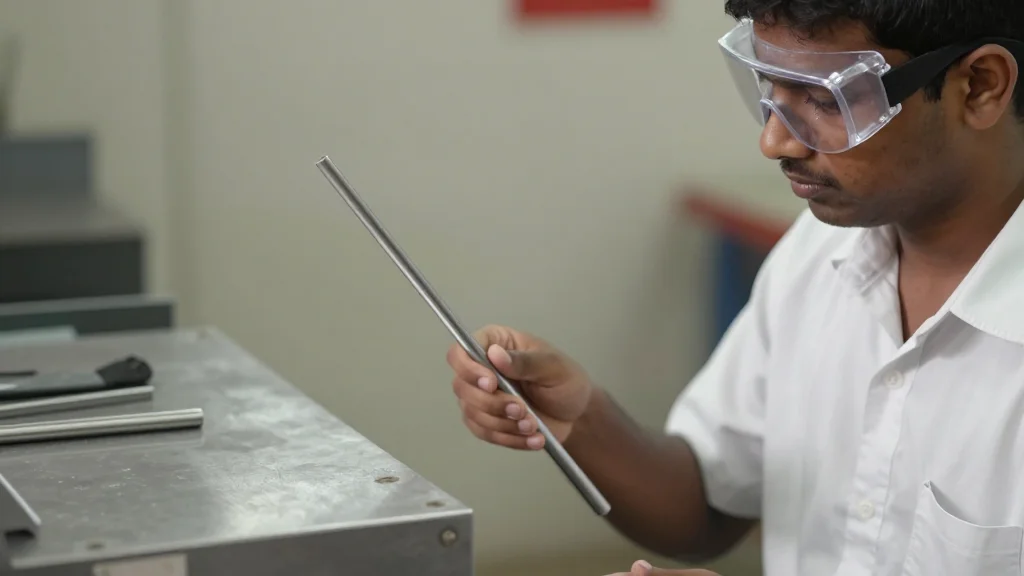
Jindal Stainless Renews MoU with Haryana Board to Expand Stainless‑steel Training

Companies Mentioned
Why It Matters
The renewed MoU tackles a critical bottleneck in India’s manufacturing ecosystem: the shortage of workers who possess both theoretical knowledge and hands‑on experience with stainless‑steel processes. By embedding industry‑led training within state polytechnics, the program accelerates workforce readiness, reduces onboarding time for employers, and supports the country’s broader ambition to become a global manufacturing hub. Moreover, the partnership showcases a replicable model for other sectors where skill gaps threaten growth, illustrating how corporate investment in vocational education can yield tangible economic returns. In the context of Jindar Stainless’s aggressive capacity expansion, a skilled labor pool is essential to sustain higher production volumes while maintaining quality and sustainability standards. The initiative also aligns with the Indian government’s push for sustainable manufacturing, as a technically adept workforce is better equipped to adopt energy‑efficient practices and advanced alloy technologies, thereby contributing to the nation’s climate goals.
Key Takeaways
- •Jindal Stainless and HSBTE renewed MoU, adding a second polytechnic to the Stainless Academy program
- •Program now reaches over 5,500 students, with a 45‑hour elective and a compulsory stainless‑steel module across Haryana polytechnics
- •Jindal Stainless reported FY26 turnover of INR 42,955 crore (~$5.2 billion) and plans 4.2 million‑tonne melt capacity by FY27
- •Partnership aligns with Skill India and Make in India initiatives to close manufacturing skill gaps
- •Future rollout may expand to other Indian states, creating a template for industry‑academia collaboration
Pulse Analysis
Jindal Stainless’s renewed partnership with HSBTE is more than a CSR gesture; it is a strategic investment in the talent pipeline that underpins the company’s growth trajectory. Historically, Indian manufacturing has suffered from a disconnect between academic curricula and the practical demands of the shop floor, leading to high attrition and costly on‑the‑job training. By embedding a 45‑hour, engineer‑led elective directly into polytechnic programs, Jindal is effectively outsourcing a portion of its workforce development, reducing future recruitment costs, and ensuring that new hires are already fluent in the company’s proprietary processes.
The timing is critical. As Jindal scales its melt capacity to 4.2 million tonnes, the marginal cost of labor will become a decisive factor in profitability. A skilled, locally sourced workforce can also mitigate supply‑chain disruptions that have plagued the global steel industry in recent years. Moreover, the partnership dovetails with the Indian government’s push for sustainable manufacturing; a technically competent workforce is better positioned to implement energy‑saving practices and adopt newer, lower‑carbon alloy formulations.
If the Haryana model proves successful, it could catalyze a wave of similar agreements across the country, reshaping the vocational education landscape. Competitors in the steel and broader metals sector may feel pressure to launch comparable initiatives, potentially sparking a race to the top in industry‑driven curriculum design. The long‑term payoff could be a more resilient, innovation‑ready manufacturing base that supports India’s ambition to become a top‑10 global steel producer by the end of the decade.
Jindal Stainless renews MoU with Haryana board to expand stainless‑steel training
Comments
Want to join the conversation?
Loading comments...