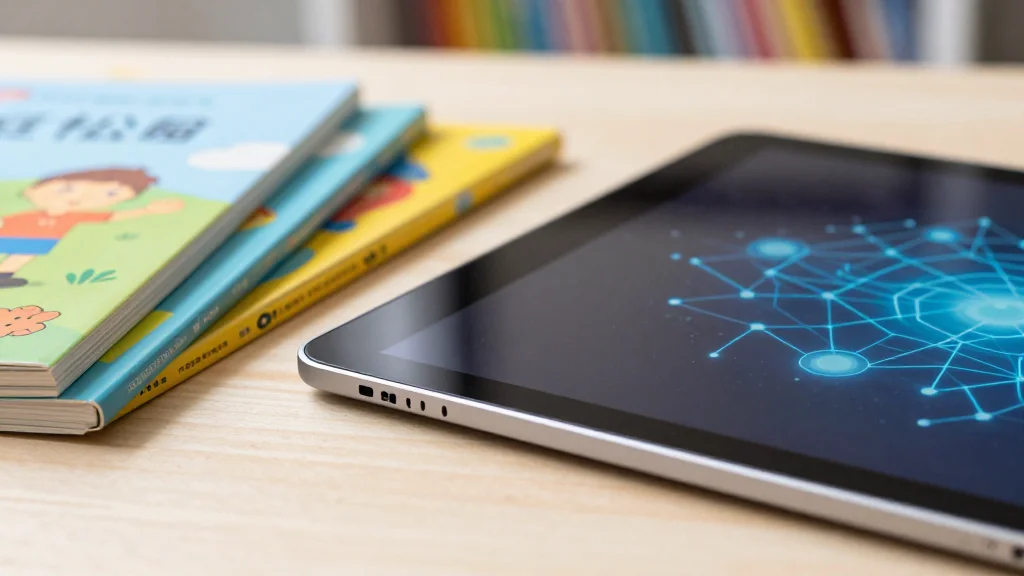
Jiska Secures Near $10M Series A to Scale AI‑Driven Kids Learning Platform in China

Why It Matters
Jiska’s Series A highlights a shift in Chinese venture capital toward AI‑centric education solutions that operate within the post‑crackdown regulatory framework. By focusing on early childhood learning, the startup taps into a demographic that is less restricted by tutoring bans, while still offering a scalable, technology‑driven product. If Jiska can demonstrate measurable learning outcomes and secure partnerships with local education authorities, it could pave the way for a new wave of AI‑enabled curricula that blend government‑approved content with adaptive personalization. This would not only broaden access to high‑quality early education in underserved regions but also set a precedent for how AI can be responsibly integrated into China’s education ecosystem.
Key Takeaways
- •Jiska closed a Series A round of roughly $10 million on July 27, 2026.
- •Lead investor: Qiming Venture Partners; co‑investors: GGV Capital and Yinghua Capital.
- •Founded in 2015 by Lei Ming and Mo Qi under Beijing Happy Wisdom Technology.
- •Platform targets children aged 3‑8 with AI‑personalized learning content.
- •Funds will support expansion into tier‑2/3 cities and development of offline voice‑interaction features.
Pulse Analysis
The Jiska financing underscores a nuanced recalibration of China’s EdTech investment thesis. After the 2021 crackdown, capital flowed away from profit‑centric tutoring and toward technology‑heavy, compliance‑friendly models. Jiska’s focus on AI‑driven early learning aligns with this new paradigm, offering a product that can be positioned as an enrichment tool rather than a revenue‑generating tutoring service. This distinction is crucial for navigating the Ministry of Education’s stricter guidelines on after‑school instruction.
From a competitive standpoint, Jiska’s proprietary AI stack gives it a defensible moat in a market where many rivals rely on third‑party algorithms. The involvement of Qiming and GGV—both of which have deep networks in Chinese consumer and education sectors—provides Jiska with not just capital but strategic access to distribution channels, school partnerships, and talent pipelines. If the company can translate its technology into demonstrable learning gains, it could become a template for other startups seeking to blend AI with curriculum standards.
Looking forward, the real test will be Jiska’s ability to scale while maintaining data privacy and compliance. The planned offline voice‑interaction capability addresses parental concerns about data transmission, but it also raises technical challenges around model updates and content freshness. Success here could set a new standard for privacy‑by‑design in AI education products, influencing both regulators and competitors. Conversely, failure to achieve measurable outcomes or to secure government endorsements could stall the momentum that this funding round has generated, reminding investors that capital alone does not guarantee market adoption in China’s tightly regulated EdTech space.
Jiska Secures Near $10M Series A to Scale AI‑Driven Kids Learning Platform in China
Comments
Want to join the conversation?
Loading comments...