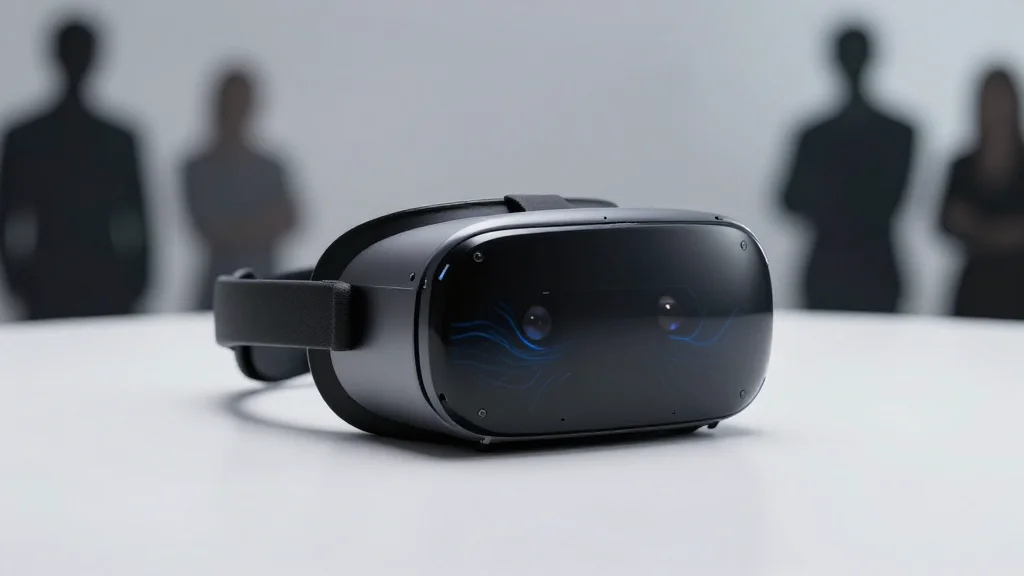
Singapore’s SkillsFuture Institute Launches AI‑VR System to Assess and Bridge Worker Skill Gaps

Why It Matters
The SIT AI‑VR platform tackles two persistent challenges in workforce development: the inefficiency of traditional, labor‑intensive assessments and the difficulty of measuring soft skills at scale. By providing instant, data‑driven feedback, the system can accelerate upskilling pathways, reduce training costs, and help Singapore meet the rising demand for elder‑care services as its population ages. Moreover, the technology’s adaptability to diverse industries positions it as a potential global standard for competency‑based hiring and continuous learning. If the pilot’s early success translates into broader adoption, it could reshape how governments and corporations evaluate talent, shifting focus from static test scores to dynamic, context‑aware performance. This would influence hiring practices, curriculum design, and public policy on lifelong learning, potentially setting a new benchmark for evidence‑based workforce planning worldwide.
Key Takeaways
- •AI‑VR assessment launched in January, with ~50 volunteers at Loving Heart completing the test.
- •Platform evaluates both technical tasks and soft skills such as empathy, communication, and decision‑making.
- •Pilot at UNC Greensboro revealed a gap between technical proficiency and the ability to translate jargon for non‑technical audiences.
- •Early adopters report noticeable improvement in cross‑department collaboration among new hires.
- •SIT plans sector‑wide rollout by Q4 2026, linking assessments to government upskilling subsidies.
Pulse Analysis
SIT’s AI‑VR assessment initiative arrives at a moment when both public and private sectors are scrambling for scalable solutions to upskill workers for an increasingly digital and service‑oriented economy. Traditional assessment models—paper tests, on‑the‑job observation, and self‑reported surveys—are costly, slow, and often fail to capture the nuanced interpersonal competencies that modern jobs demand. By embedding candidates in high‑fidelity simulations, SIT not only reduces the logistical burden but also creates a data‑rich environment where machine‑learning models can surface hidden patterns in communication and decision‑making.
The Singapore rollout also serves as a strategic testbed for policy integration. If the government can tie AI‑validated skill scores to subsidies or certification pathways, it could streamline the upskilling pipeline and create a merit‑based, transparent route for workers to transition into higher‑value roles. However, the initiative’s success hinges on addressing legitimate concerns around algorithmic bias and data privacy. Continuous human oversight and transparent audit mechanisms will be essential to maintain trust, especially in sectors like elder care where empathy is non‑negotiable.
Internationally, the pilot at UNC Greensboro signals that the technology is not limited to Singapore’s social‑service context. The ability to diagnose soft‑skill deficiencies in technical fields such as cybersecurity could become a differentiator for firms competing for talent. Companies that adopt these tools early may gain a competitive edge by aligning hiring and training with real‑world performance metrics, potentially reshaping talent pipelines across the globe. As more economies confront ageing workforces and rapid digital transformation, SIT’s model could evolve from a national experiment into a blueprint for next‑generation workforce development.
Singapore’s SkillsFuture Institute Launches AI‑VR System to Assess and Bridge Worker Skill Gaps
Comments
Want to join the conversation?
Loading comments...