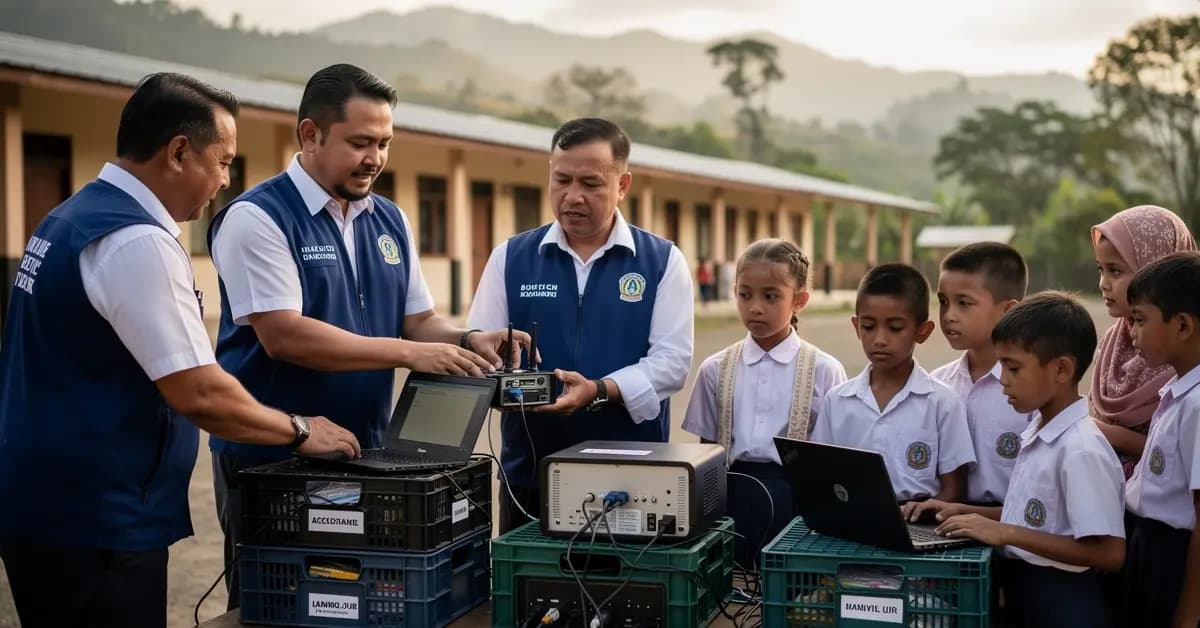
The Philippines: Offline Digital Science Libraries Boost Learning in Mindanao
Why It Matters
By providing internet‑free access to up‑to‑date STEM resources, the program strengthens learning outcomes in underserved areas and aligns with the Philippines’ national push for inclusive science education.
Key Takeaways
- •MOST delivered 22 offline STARBOOKS units to eight Lanao del Sur schools.
- •STARBOOKS provides science, tech, agriculture, health content without internet.
- •Platform aims to close digital divide in Bangsamoro's remote classrooms.
- •Teachers can integrate multimedia resources into lessons, boosting engagement.
- •Initiative supports Philippines' broader goal of inclusive STEM education.
Pulse Analysis
The Bangsamoro Autonomous Region in Muslim Mindanao has long struggled with limited broadband penetration, leaving many secondary schools without reliable internet access. By deploying the Science and Technology Academic and Research‑Based Openly Operated KioskS (STARBOOKS) platform, the Ministry of Science and Technology (MOST) provides a self‑contained digital library that stores textbooks, videos, and audio modules across science, agriculture, health and engineering. Because the system runs offline, students in Lanao del Sur can retrieve the same curriculum‑aligned content that urban classrooms receive, effectively narrowing the information gap.
Beyond mere content delivery, STARBOOKS equips teachers with multimedia tools that can transform traditional lectures into interactive sessions. The platform’s video demonstrations and audio explanations align with the Philippines’ K‑12 science standards, enabling educators to reinforce concepts without relying on external internet sources. This approach dovetails with the Department of Education’s push for inclusive STEM education, which seeks to raise science proficiency in under‑served provinces. By embedding up‑to‑date research and local agricultural practices, the kiosks also foster relevance, encouraging students to apply classroom learning to community challenges.
The rollout of 22 STARBOOKS units marks a pilot that could be replicated across the archipelago’s thousands of connectivity‑constrained schools. If the Ministry of Science and Technology partners with local universities and NGOs to maintain hardware and curate region‑specific modules, the model offers a sustainable pathway for digital inclusion. Moreover, data gathered from usage analytics can inform future curriculum updates and highlight gaps in resource coverage. As the Philippines aims to boost its global competitiveness through a skilled STEM workforce, initiatives like STARBOOKS lay the groundwork for long‑term economic and social advancement.
The Philippines: Offline Digital Science Libraries Boost Learning in Mindanao
Comments
Want to join the conversation?
Loading comments...