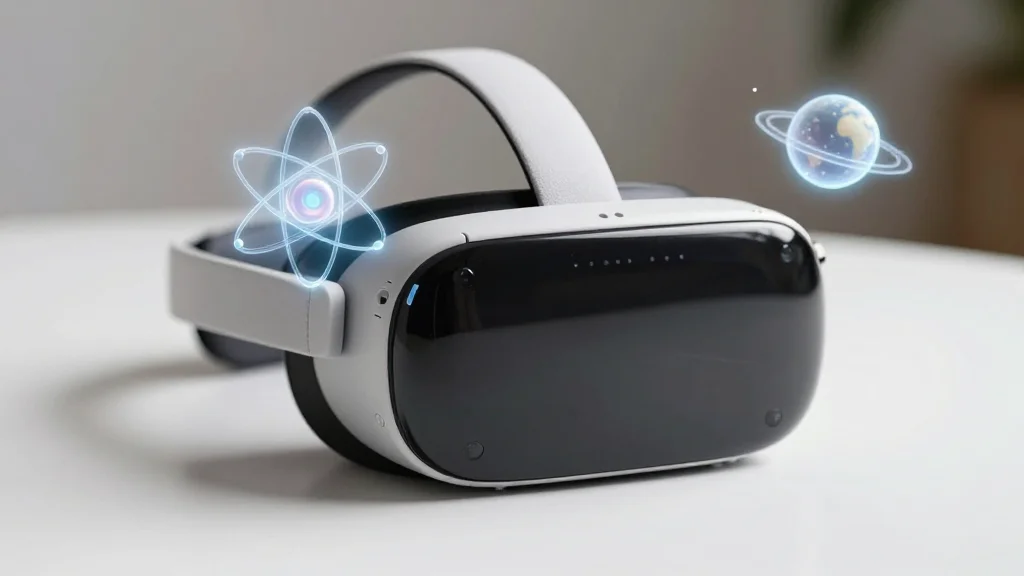
Virtual Reality Takes Physics Students to Another Planet
Why It Matters
VR‑driven labs boost engagement and conceptual understanding, offering a low‑cost way to modernize STEM education in under‑resourced schools and help replenish the region’s future scientific talent.
Key Takeaways
- •VR program piloted in Buenos Aires technical high school in 2025.
- •Students solve planetary colony challenges using immersive atomic and molecular simulations.
- •12 US‑made headsets cost less than typical classroom laptops.
- •Positive engagement: disengaged student became active participant.
- •Expansion planned across Argentina and Latin America for STEM subjects.
Pulse Analysis
Virtual reality is reshaping classroom pedagogy by turning abstract concepts into tactile experiences. De Florian’s initiative builds on a global trend where immersive tech bridges the gap between theory and practice, allowing students to “hold” atoms and experiment with molecular assembly without costly lab equipment. By partnering with the Development Bank of Latin America and the Caribbean, the project secured funding that bypasses traditional school budgets, demonstrating how public‑private collaborations can fast‑track innovative curricula in emerging markets.
The pilot’s results highlight a measurable shift in student behavior. Learners who previously avoided participation became vocal and eager, indicating that VR’s blend of interactivity and narrative context can overcome attention‑span challenges common in teenage audiences. The hardware investment—twelve US‑sourced headsets priced below standard laptops—shows that scaling is financially feasible; schools can rotate a modest inventory of devices across classes, minimizing collision risks while maximizing exposure. Moreover, the structured yet exploratory scenarios reinforce problem‑solving skills that translate to real‑world scientific reasoning.
Beyond the classroom, the program addresses a strategic talent pipeline issue for Argentina and the broader Latin American region. With funding cuts threatening research capacity, early exposure to cutting‑edge tools may inspire a new generation of physicists, chemists and biologists. Expanding the VR suite to cover mathematics and biology could create a unified STEM ecosystem, positioning the region to retain talent and compete globally. As more schools adopt immersive learning, policymakers will likely view VR not just as a novelty but as a critical component of future‑ready education.
Virtual Reality Takes Physics Students to Another Planet
Comments
Want to join the conversation?
Loading comments...