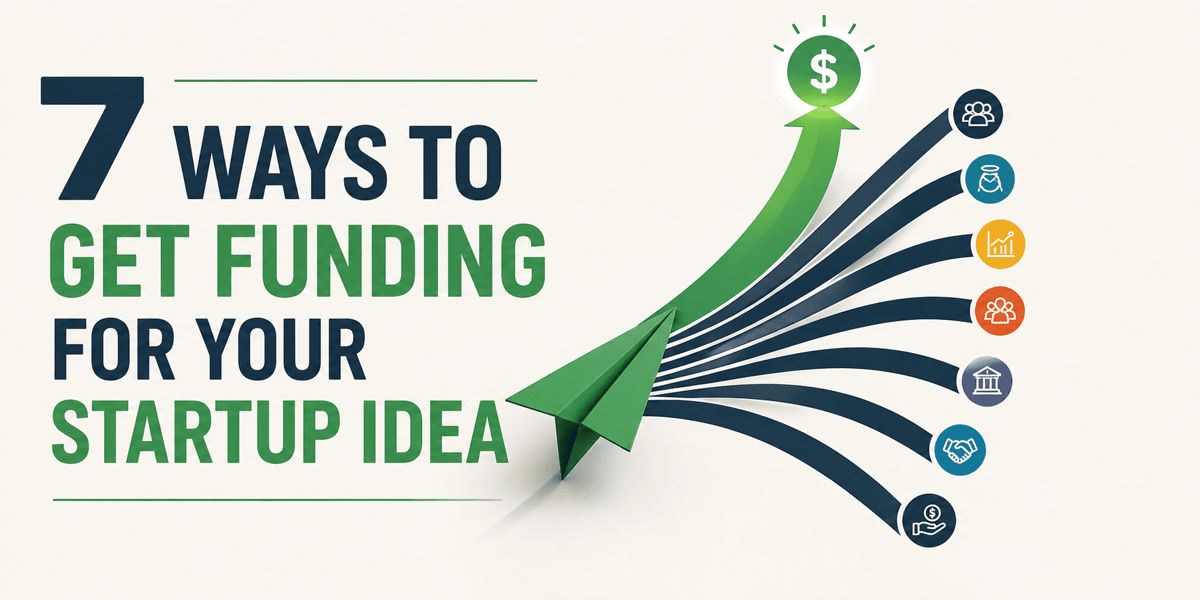
7 Best Ways to Get Funding for Your Startup Idea
Key Takeaways
- •Bootstrapping preserves equity but may limit growth speed
- •Grants offer non‑dilutive capital for tech‑heavy startups
- •Accelerators combine mentorship with seed funding, often for equity
- •Angel investors provide early capital and networks, yet vary in value
- •Crowdfunding validates consumer demand while building a community
Pulse Analysis
In today’s startup ecosystem, founders are no longer forced to chase venture‑capital as the sole path to growth. Non‑dilutive sources—bootstrapping, government grants, and competition prizes—have gained prominence thanks to lower development costs driven by open‑source tools, cloud credits, and AI‑assisted prototyping. These avenues let entrepreneurs retain full ownership while proving market demand, a signal that can later attract larger investors on more favorable terms. Moreover, the rise of sector‑specific grant programs in AI, climate tech, and biotech provides a steady stream of funding for research‑intensive ventures that might otherwise struggle to secure early equity.
Strategic funding decisions now hinge on three core variables: company stage, market dynamics, and the founder’s control preferences. Early‑stage ideas with limited traction often benefit from bootstrapping or accelerator programs that supply mentorship and modest seed capital in exchange for modest equity stakes. As a startup validates its product‑market fit, angel investors can inject flexible capital and valuable networks, though founders must manage cap‑table complexity. For high‑growth, large‑addressable‑market businesses, venture capital remains the catalyst for rapid scaling, hiring, and global expansion, but it comes with heightened performance expectations and governance oversight. Conversely, consumer‑focused products may thrive on reward‑based crowdfunding, which simultaneously tests demand and builds a loyal community.
Looking ahead, the funding landscape will continue to evolve as technology lowers entry barriers and regulatory frameworks adapt. Micro‑VC funds and revenue‑based financing platforms are emerging to fill the gap between traditional angel rounds and large VC checks, offering founders more nuanced capital structures. Simultaneously, increased scrutiny on equity crowdfunding and stricter reporting for grant recipients are prompting startups to adopt robust compliance processes early. Entrepreneurs who blend multiple financing sources—leveraging non‑dilutive capital to de‑risk early development and then tapping equity investors for scale—will be best positioned to navigate market volatility and maximize long‑term valuation.
7 Best Ways to Get Funding for Your Startup Idea
Comments
Want to join the conversation?