Lightning Beneath the Sea: The Race to Wire the World and the Dawn of the Information Age
Key Takeaways
- •Cyrus Field completed first transatlantic telegraph in 1866 after years of setbacks
- •Project united pioneers like Morse, Kelvin, Faraday, and Peter Cooper
- •Cable lay up to 2.5 miles deep, enabling near‑instant global communication
- •Undersea network now carries 98% of world’s data traffic
Pulse Analysis
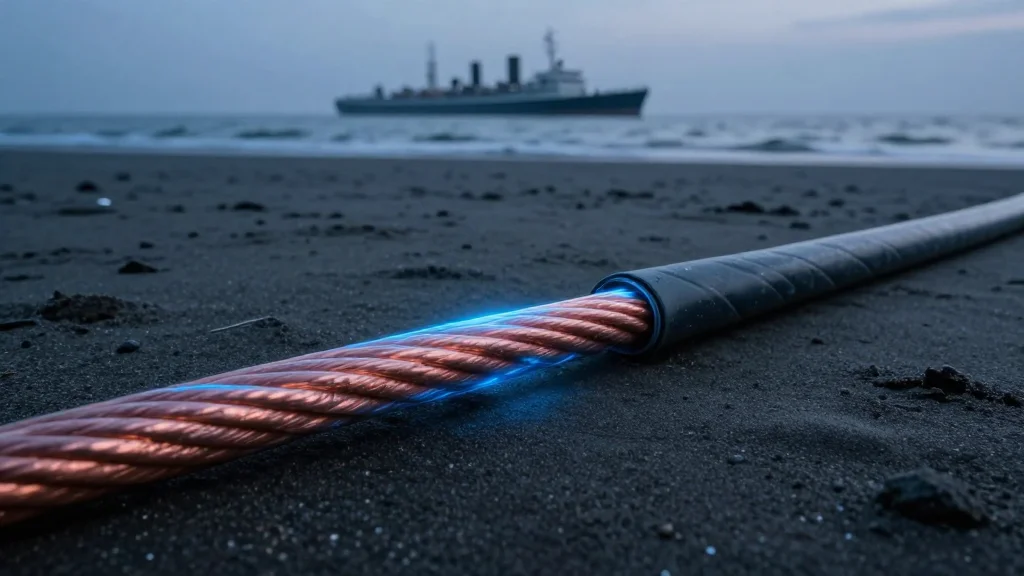
When Cyrus Field announced his plan in 1854 to string a 2,000‑mile telegraph across the Atlantic, the idea sounded like science fiction. At the time, electricity was still a curiosity, and no one had ever attempted to lay a cable on the ocean floor. Field’s gamble required massive capital, ships retrofitted for heavy payloads, and a willingness to endure repeated failures—from broken insulation to storms that snapped the line. After a decade of setbacks and a costly 1866 breakthrough, the first successful transatlantic connection proved that distance could be conquered with copper and current.
Field quickly assembled a dream team that read like a hall of fame for 19th‑century science. He recruited Samuel F. B. Morse, the telegraph inventor, enlisted the young Lord Kelvin—later Sir William Thomson—to solve insulation challenges, and consulted Michael Faraday, whose work on electromagnetic induction laid the theoretical groundwork. Philanthropist Peter Cooper supplied crucial financing, while a charismatic but erratic chief electrician, nicknamed ‘Wildman,’ pushed the limits of early engineering practices. Their combined expertise turned abstract theory into a practical, survivable system capable of withstanding pressures of up to 2.5 miles beneath the sea.
The 1866 cable was the progenitor of today’s undersea fiber‑optic network, which now transports roughly 98 percent of global data traffic. Modern cables, insulated with advanced polymers and amplified by repeaters every 70‑100 km, echo Field’s original ambition: to shrink the world’s communication latency to near‑real time. As businesses rely on instantaneous data exchange for cloud services, high‑frequency trading, and remote collaboration, the legacy of that Victorian venture underscores how infrastructure risk‑taking can reshape economies. Understanding this lineage helps executives appreciate the strategic value of investing in resilient, high‑capacity connectivity.
Lightning Beneath the Sea: The Race to Wire the World and the Dawn of the Information Age
Comments
Want to join the conversation?