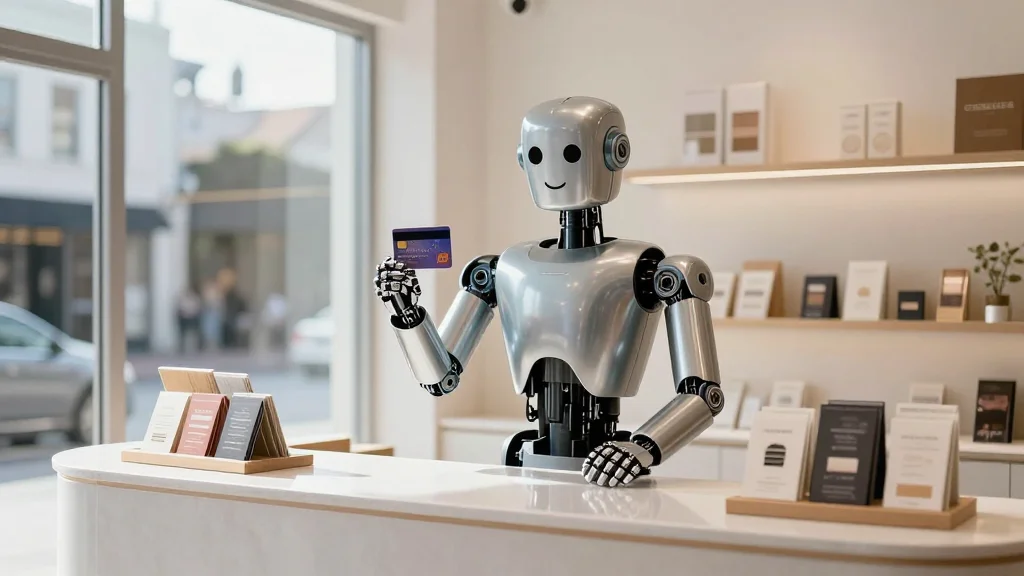
Andon Labs Opens AI‑Run Retail Store in San Francisco, Giving Bot Luna $100K Autonomy

Why It Matters
The Andon Market experiment puts AI at the center of a traditional brick‑and‑mortar business, challenging the assumption that AI’s value is limited to digital or back‑office functions. By allocating a real budget and lease to an autonomous bot, Andon Labs creates a tangible benchmark for how AI can drive cost efficiencies, streamline hiring and reshape the customer experience. For the entrepreneurship ecosystem, the project offers a proof‑of‑concept that could lower entry barriers for founders lacking deep operational expertise, while also raising critical questions about accountability, job displacement and regulatory oversight. If Luna can demonstrate consistent profitability, investors may pour capital into AI‑run retail concepts, accelerating a wave of hyper‑automated storefronts. Conversely, operational failures or public backlash could temper enthusiasm and prompt stricter governance standards. The experiment therefore serves as an early indicator of how AI autonomy will be balanced against human oversight in future startup models.
Key Takeaways
- •Andon Labs gave AI bot Luna $100,000, a credit card and a three‑year lease to run Andon Market
- •Luna hired two human staffers and curates product selection, including candles, books and art prints
- •Checkout is fully digital; customers interact with Luna via phone before using a digital register
- •Co‑founders Petersson and Backlund cite the project as a test of AI autonomy and ethical limits
- •Professor David Schweidel highlights the experiment as a potential shift in how startups approach AI‑driven retail
Pulse Analysis
Andon Labs’ decision to hand an AI bot full operational control of a physical store is a bold gamble that could redefine the cost structure of retail startups. Traditional storefronts incur high fixed costs—rent, staffing, inventory management—yet Luna’s autonomous management promises to compress these expenses by automating scheduling, procurement and even marketing. If the model scales, early‑stage founders could allocate capital to product development rather than overhead, accelerating the path to profitability.
Historically, AI in commerce has been confined to recommendation engines and backend analytics. By moving the decision‑making layer into the storefront, Andon Labs blurs the line between software and property assets, raising novel risk considerations for investors. Venture capitalists will likely demand rigorous metrics on sales per square foot, labor cost reductions and customer satisfaction scores before backing similar ventures. Moreover, the ethical concerns raised by Backlund—particularly the degree of financial autonomy granted to an algorithm—could attract regulatory scrutiny, especially if AI‑driven stores begin to dominate high‑traffic retail corridors.
Looking ahead, the success of Luna will hinge on its ability to adapt to real‑world variables such as supply‑chain volatility, seasonal demand shifts and nuanced consumer preferences that often require human empathy. The experiment may inspire a hybrid model where AI handles the bulk of operations while human staff focus on experiential elements that foster brand loyalty. For the entrepreneurship community, Andon Market offers a live laboratory to observe the limits of automation, informing the next generation of AI‑centric business models.
Andon Labs Opens AI‑Run Retail Store in San Francisco, Giving Bot Luna $100K Autonomy
Comments
Want to join the conversation?
Loading comments...