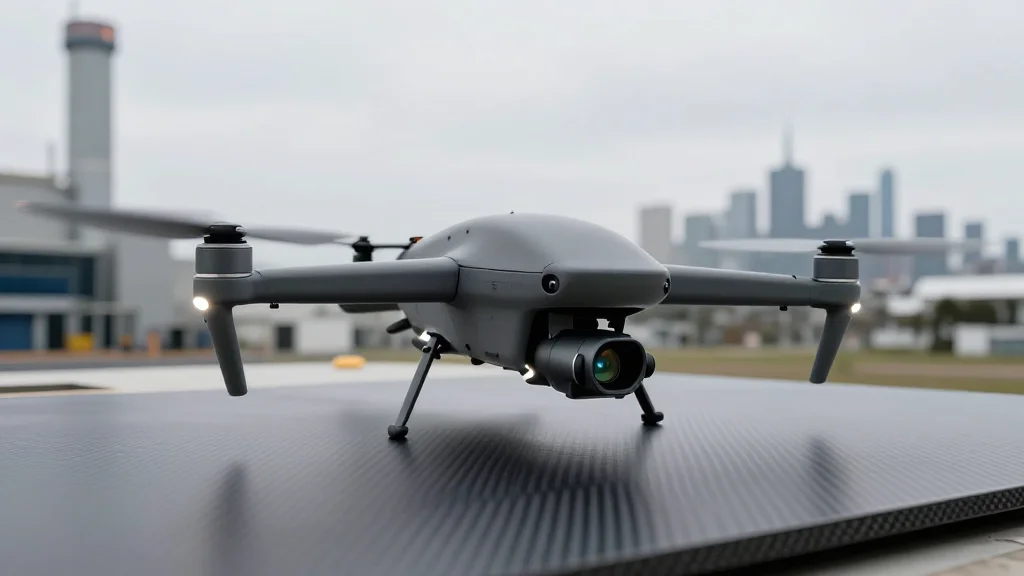
Arkeus Secures A$25 M Series A After Winning Pentagon Drone Sensor Contracts

Companies Mentioned
Arkeus
QIC
TEKEVER
AeroVironment
Boeing
BA
Salus Ventures

DYNE Ventures

Main Sequence Ventures
Beaten Zone Venture Partners
Why It Matters
Arkeus’s financing round demonstrates how defence‑oriented AI hardware startups can leverage high‑value government contracts to accelerate growth, a model that could reshape venture capital strategies in the sector. By winning Pentagon business, an Australian firm has proven that cutting‑edge sensor technology can compete on the world stage, potentially encouraging more domestic founders to target defence markets rather than purely commercial ones. The deal also underscores a strategic shift in global defence procurement toward edge‑computing and autonomous decision‑making. As traditional platforms become increasingly network‑centric and vulnerable, governments are seeking solutions that embed intelligence directly on the platform. Arkeus’s success may prompt other nations to invest in similar capabilities, spurring a wave of innovation and competition in hyperspectral and AI‑driven sensing technologies.
Key Takeaways
- •Arkeus raised A$25 million (≈US$16.5 million) in a Series A led by QIC Ventures.
- •Post‑money valuation reached $100 million, about seven times its seed valuation.
- •Series A funds a Queensland manufacturing hub and expands Australian defence support staff.
- •Pentagon contracts place Arkeus sensors on drones from AeroVironment, Textron, Tekever and Insitu.
- •QIC Ventures sees the deal as part of a broader shift to software‑defined, autonomous defence systems.
Pulse Analysis
Arkeus’s rapid ascent illustrates a convergence of three trends: the maturation of edge‑AI hardware, the urgency of modern defence procurement, and the willingness of Australian capital firms to back high‑risk, high‑reward defence tech. Historically, defence startups have struggled to secure early‑stage funding because of long sales cycles and heavy regulatory burdens. Arkeus sidestepped this by proving its value proposition on the battlefield, turning a government contract into a de‑facto validation that unlocked private capital.
The Series A also signals a pivot in venture capital focus from pure software to hybrid hardware‑software solutions. While software‑only AI startups can scale with relatively low capital intensity, hardware‑centric firms like Arkeus require substantial upfront investment in manufacturing and certification. QIC Ventures’ involvement suggests that institutional investors are now comfortable underwriting these costs, especially when a credible customer—here, the US Department of Defense—provides a revenue anchor.
Looking forward, the key risk for Arkeus will be managing the transition from low‑volume, high‑margin contracts to larger, repeatable production runs without compromising performance. Success will likely hinge on its ability to integrate supply‑chain resilience, maintain rapid AI model updates, and navigate export‑control regimes. If it can do so, Arkeus may set a template for other Australian defence innovators seeking to export cutting‑edge autonomous capabilities to the world’s largest defence markets.
Arkeus Secures A$25 M Series A After Winning Pentagon Drone Sensor Contracts
Comments
Want to join the conversation?
Loading comments...