Baidu-Backed Smart Lock Maker Lockin Applies for Hong Kong IPO
•February 10, 2026
0
Why It Matters
The listing gives Lockin capital to scale its AI‑enabled home‑security platform, positioning it to capture a larger share of the fast‑growing smart‑lock and integrated smart‑home markets.
Key Takeaways
- •Filed Hong Kong IPO prospectus, Baidu holds 18.43% stake
- •2024 shipments 1.3 M units, 4th globally, 2.6% share
- •Leads China apartment smart‑lock market, 5.8% share
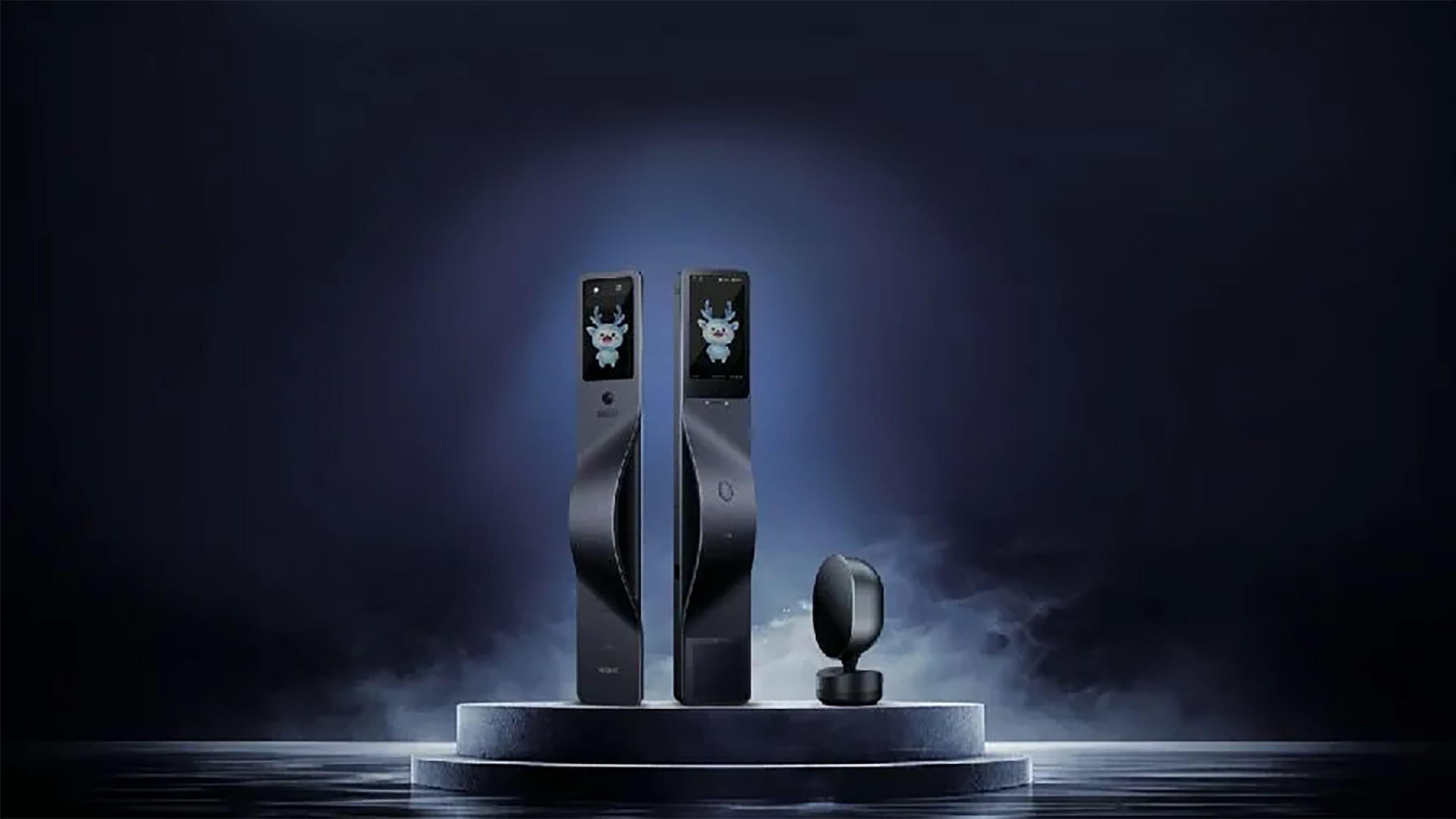
- •Introduced AI‑powered V7 Max lock with wireless charging
- •IPO proceeds earmarked for AI R&D and overseas expansion
Pulse Analysis
The global smart‑lock market is entering a rapid expansion phase, with shipments projected to rise from 54 million units in 2025 to nearly 90 million by 2029, according to Frost & Sullivan. Within this surge, vein‑based biometric locks are expected to grow at a 35 % compound annual rate, reflecting consumer demand for higher security and low false‑acceptance rates. Parallel advances in artificial intelligence and long‑range wireless charging are reshaping the product landscape, turning a simple access device into a connected hub capable of proactive threat detection and energy‑efficient operation.
Lockin has leveraged these trends to secure a leading position in China’s apartment segment, holding a 5.8 % share and the top spot in vein‑smart‑lock shipments worldwide. Its flagship V7 Max, billed as the first AI‑powered lock with optical charging, showcases proprietary imaging algorithms that combine vein recognition with machine‑learning‑driven anomaly detection. Backed by Baidu’s 18.4 % stake and a roster of strategic investors, the company benefits from access to cloud‑AI infrastructure, accelerating product development and enabling integration with broader smart‑home ecosystems.
The Hong Kong main‑board listing provides Lockin with roughly US$30 million of fresh capital, earmarked for advanced R&D, AI ecosystem building, and overseas market entry. By channeling funds into embodied‑intelligence capabilities, the firm aims to evolve from standalone locks to a central hub for whole‑home automation and even service robots. If successful, Lockin could capture a larger slice of the projected $66 billion home‑security‑management market by 2029, reinforcing Baidu’s strategic push into IoT and positioning the company as a key player in the next generation of intelligent residential security.
Baidu-backed smart lock maker Lockin applies for Hong Kong IPO
Lockin Files Prospectus for Hong Kong Main Board Listing
Lockin, a Chinese operator of the namesake smart lock brand, has formally filed a prospectus with Hong Kong Exchanges and Clearing, seeking a main board listing. China Galaxy International is acting as the company’s sole sponsor.
Founded in 2014, Lockin focuses on residential solutions spanning home and community security, smart property management, and in‑home caregiving. The company positions its products as a foundational layer of everyday residential security, combining physical access control with connected digital services.
In 2015, Lockin launched Yunding, an integrated smart apartment lock and management system. At the time, it was among the first companies in China to introduce such a platform. By connecting door locks to the internet and enabling them to operate as always‑online devices, the system positioned the lock as a control point for broader smart‑home management. This approach contributed to the early adoption of apartment digitalisation across China.
According to data from Frost & Sullivan, Lockin held the largest market share in China’s apartment smart‑lock segment in 2024.
The Lockin brand was officially launched in 2021. That year, the company introduced what it described as the industry’s first finger‑vein smart lock, helping establish finger‑vein recognition as a distinct product category. In 2023, it expanded the lineup with palm‑vein smart locks.
Powered by the company’s proprietary imaging algorithms, these products extended biometric authentication beyond fingerprints and facial recognition to vein‑based identification. Lockin has said vein recognition offers stronger security and higher accuracy, citing improved performance on measures such as false‑acceptance and false‑rejection rates compared with traditional biometric methods.
At this year’s CES, which concluded in January, Lockin unveiled V7 Max, describing it as the world’s first artificial intelligence-powered smart lock capable of long‑range wireless optical charging.
Frost & Sullivan data show that Lockin shipped 1.3 million smart locks globally in 2024, ranking fourth worldwide with a 2.6 % market share. In mainland China, shipments reached 1.2 million units, placing it third with a 5.8 % share. The firm also ranked first globally in vein‑smart‑lock shipments that year, with a 10.5 % market share.
Lockin said it aims to strengthen the role of its products as a “steward” of home security. In addition to safety and convenience, the company plans to focus on improving functionality and user experience across a wider range of residential and community scenarios. It also expects to expand what it refers to as embodied‑intelligence capabilities around smart locks, with the longer‑term goal of positioning its platform as a central hub for whole‑home smart devices and certain categories of home robots.
Frost & Sullivan estimates that the global home‑security‑management‑solutions market will grow at a CAGR (compound annual growth rate) of 11.4 %, reaching USD 66 billion by 2029. As large‑language models and agent‑based technologies mature, the firm expects home security to shift from basic device connectivity and remote control toward systems capable of proactive sensing, decision support, and automated services. This transition is expected to drive demand away from standalone hardware and toward integrated platforms offering continuous and personalised services.
Within the broader smart‑home market, smart locks remain one of the most widely adopted security devices. Frost & Sullivan forecasts global smart‑lock shipments will increase from 54 million units in 2025 to 89.9 million units in 2029, representing a CAGR of 13.6 %. Over the same period, shipments of vein‑smart locks are projected to rise from 1.9 million units to 6.3 million units, implying a faster CAGR of 35.6 %.
Financially, Lockin reported revenue of RMB 1.015 billion (USD 142.1 million) in 2023 and RMB 1.086 billion (USD 152 million) in 2024. For the first three quarters of 2025, revenue rose 11.5 % year‑on‑year to RMB 774 million (USD 108.4 million), compared with RMB 694 million (USD 97.2 million) over the same period in 2024.
Gross margin was 31.1 % in 2023, increased to 35.2 % in 2024, and stood at 31.2 % for the first three quarters of 2025. Net‑profit margin over the same periods was 1.4 %, 4.9 %, and 4.1 %, respectively.
Since its founding, Lockin has raised funding from a range of institutional investors, including Baidu, Shunwei Capital, SIG Susquehanna, Zhongguancun Science City, Lan Fund, K2VC, Fosun Group, Legend Star, Heaven‑Sent Gold Group, Wu Capital, Kinzon Capital, Noblelift, Xiaomi, and Detong Capital.
Following a RMB 200 million (USD 28 million) investment from Zhongguancun Science City in December 2025, the company was valued at RMB 3.5 billion (USD 490 million).
Baidu holds an 18.43 % stake in Lockin, making it the largest external shareholder. Hu Yu, CFO of Baidu’s Xiaodu unit, serves as a non‑executive director.
In its prospectus, Lockin said net proceeds from the IPO will primarily be used for mid‑ to long‑term R&D to support its product and technology strategy. Planned uses include continued investment in product development, including an AI‑enabled home‑security technology ecosystem, as well as further development of proprietary capabilities. Additional funds will be allocated to marketing and overseas expansion, partial repayment of existing debt, and general working‑capital and corporate purposes.
Thisarticlewas adapted based on a feature originally written by Stone Jin and published on IPO Zaozhidao. KrASIA is authorized to translate, adapt, and publish its contents.
0
Comments
Want to join the conversation?
Loading comments...