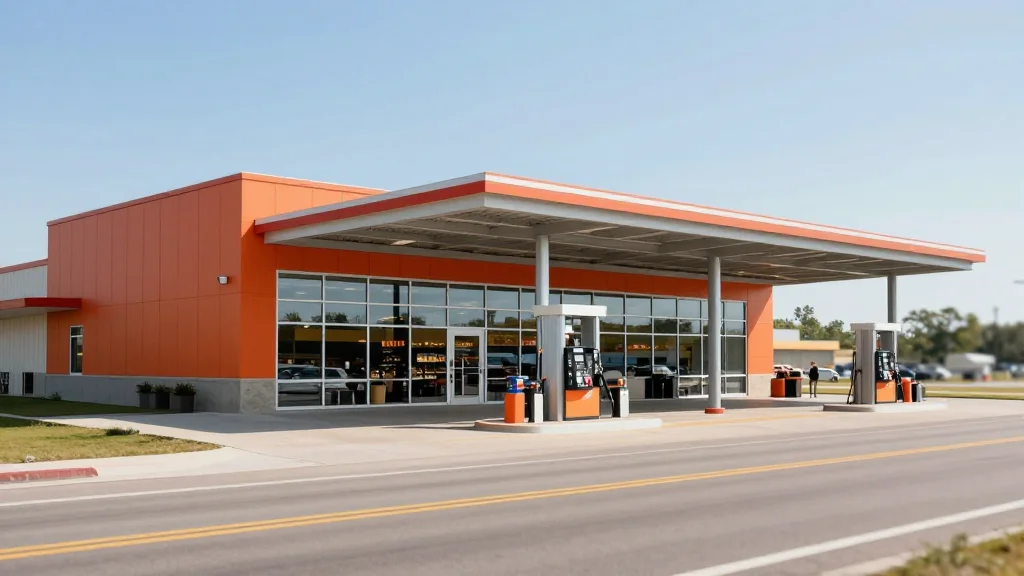
Buc‑ee’s Scales Up to 54 Travel Centers, Redefining the Gas‑Station Experience

Companies Mentioned
Why It Matters
Buc‑ee’s evolution from a modest 3,000‑sq‑ft pump station to a network of 80,000‑sq‑ft travel hubs demonstrates that even saturated, low‑margin industries can be disrupted through scale, experience design, and branding. The model provides a roadmap for entrepreneurs seeking to revitalize legacy assets—fuel stations, auto‑service bays, or small‑format grocery stores—by turning them into multi‑purpose destinations that capture higher-margin ancillary spend. If the Ohio rollout proves successful, it could trigger a broader shift in how investors evaluate traditional retail real estate, prioritizing sites with the capacity to host food, entertainment, and retail under one roof. That would reshape financing patterns, supply‑chain logistics, and even zoning policies, creating new opportunities for venture capital and private‑equity firms focused on “experience‑centric” retail transformations.
Key Takeaways
- •Buc‑ee’s operates 54 travel centers averaging 80,000 sq ft each.
- •Company employs more than 12,000 workers across the United States.
- •Travel centers generate higher revenue from food and merchandise than fuel.
- •First non‑Texas location slated for Ohio in late 2026.
- •Model inspires similar up‑scaling efforts by competitors like Wawa and Sheetz.
Pulse Analysis
Buc‑ee’s success hinges on three interlocking levers: location, scale, and narrative. By planting massive sites at high‑traffic interstates, the chain captures a captive audience that would otherwise make a brief stop. The oversized footprint enables a diversified product mix—fresh‑made meals, specialty snacks, and a retail catalog that far exceeds the SKU count of a typical convenience store. This diversification cushions the business against volatile fuel margins and creates a higher‑margin, repeat‑visit engine.
Aplin’s personal story and the beaver branding function as cultural capital, turning each stop into a pilgrimage for fans of Texas hospitality. In an era where consumer loyalty is increasingly tied to experience, the brand’s authenticity differentiates it from chain competitors that rely on uniformity. The upcoming Midwest expansion will be the first test of whether that authenticity can be transplanted beyond its home turf.
From an investment perspective, Buc‑ee’s illustrates a new asset class: “experience‑centric fuel stations.” Real‑estate investors may begin to value parcels not just for their fuel sales potential but for their capacity to host large‑scale food service and retail. This could reshape loan underwriting criteria and attract growth‑stage capital that traditionally avoided the low‑margin convenience sector. If the Ohio rollout succeeds, we may see a wave of similar up‑scaling projects, prompting a re‑evaluation of legacy retail models across the transportation and logistics ecosystem.
Buc‑ee’s Scales Up to 54 Travel Centers, Redefining the Gas‑Station Experience
Comments
Want to join the conversation?
Loading comments...