Entrepreneurship News and Headlines
  • All Technology
  • AI
  • Autonomy
  • B2B Growth
  • Big Data
  • BioTech
  • ClimateTech
  • Consumer Tech
  • Crypto
  • Cybersecurity
  • DevOps
  • Digital Marketing
  • Ecommerce
  • EdTech
  • Enterprise
  • FinTech
  • GovTech
  • Hardware
  • HealthTech
  • HRTech
  • LegalTech
  • Nanotech
  • PropTech
  • Quantum
  • Robotics
  • SaaS
  • SpaceTech
AllNewsDealsSocialBlogsVideosPodcastsDigests

Entrepreneurship Pulse

EMAIL DIGESTS

Daily

Every morning

Weekly

Sunday recap

NewsDealsSocialBlogsVideosPodcasts
EntrepreneurshipNewsCan Berlin Become Europe’s Most Builder-Friendly Tech City in 24 Months?
Can Berlin Become Europe’s Most Builder-Friendly Tech City in 24 Months?
Entrepreneurship

Can Berlin Become Europe’s Most Builder-Friendly Tech City in 24 Months?

•February 20, 2026
0
Tech.eu
Tech.eu•Feb 20, 2026

Companies Mentioned

Project A

Project A

n8n

n8n

Choco

Choco

Auxxo

Auxxo

Why It Matters

If successful, the initiative could boost Berlin’s attractiveness to investors and talent, reinforcing its role as a European tech hub and driving higher economic output.

Key Takeaways

  • •Berlin contributes 10‑12% of city GDP via startups
  • •€2.2 bn VC funding 2024, 31% of German total
  • •Initiative targets 5‑10 high‑impact reforms within 24 months
  • •Bureaucracy and housing shortages hinder foreign founders
  • •BAD1 backed by mayor, founders, Delta, UNITE, Dentsu

Pulse Analysis

Berlin’s startup ecosystem already punches above its weight, delivering roughly a tenth of the city’s gross domestic product and generating over 150,000 jobs. The capital attracted €2.2 billion in venture capital this year—about a third of all German VC activity—and hosts a dense AI cluster of 283 companies. Yet the city’s image often suffers from stereotypes of a party‑centric culture, obscuring the disciplined, high‑growth firms that are reshaping Europe’s digital landscape.

The primary obstacles to Berlin’s ascent are structural rather than financial. Entrepreneurs face a labyrinthine regulatory environment, prolonged permit processes, and a housing market that strains newcomers, especially non‑EU talent. Moreover, the disconnect between world‑class universities and early‑stage ventures limits the commercialisation of research and the steady influx of skilled graduates. These frictions raise operational costs and deter foreign founders, weakening Berlin’s competitive edge against faster‑moving hubs like London or Paris.

BAD1 tackles these pain points through a community‑driven model that prioritises a concise set of reforms—ranging from digitising bureaucratic procedures to creating university‑startup liaison programs. Backed by the mayor, prominent founders and industry partners, the initiative aims to deliver tangible improvements within two years, fostering a more agile, supportive environment for builders. If the plan succeeds, Berlin could not only shed its outdated reputation but also set a benchmark for other European cities seeking to nurture high‑growth tech ecosystems.

Can Berlin become Europe’s most builder-friendly tech city in 24 months?

When I tell people I live in Berlin at startup events abroad, I often receive a bad reaction, especially from investors.  Many people associate Berlin with its heyday of Rocket Internet and see it as a city full of techno sex clubs, drug addicts, and founders more interested in partying than disciplined, global ambition.

It’s certainly not a view I share — and now there’s a concerted initiative determined to demonstrate what Berlin is truly capable of.

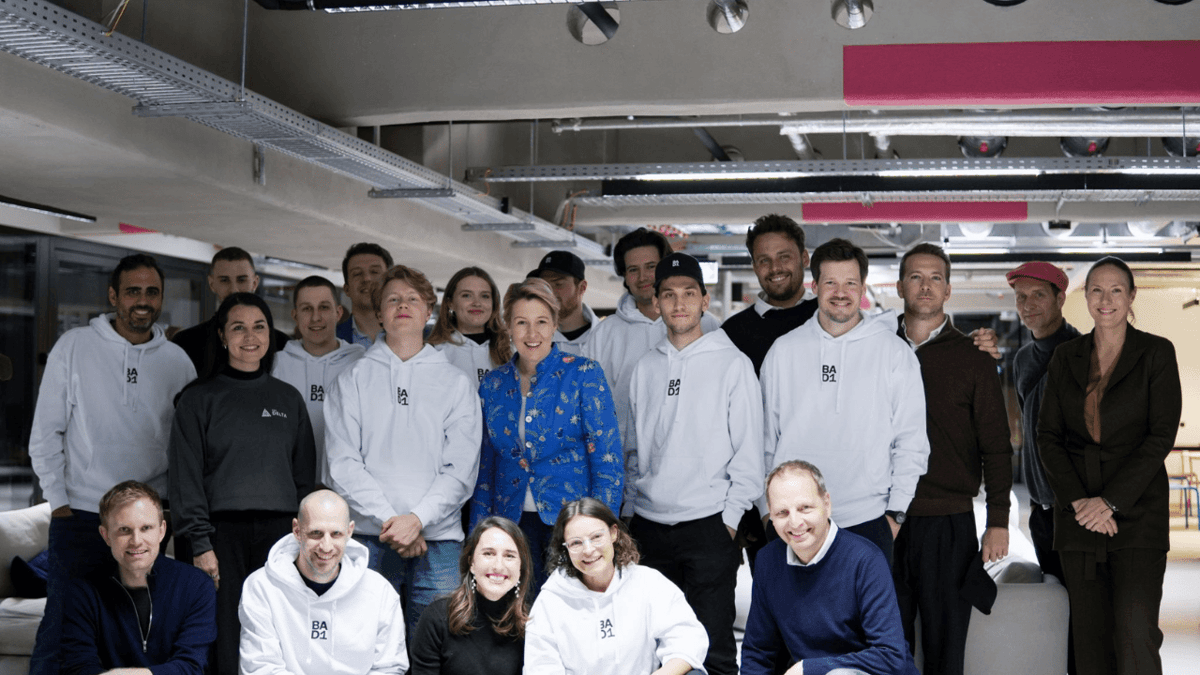
This week saw the launch of Berlin auf die Eins (BAD1), a community-led campaign founded by local founders, startup builders, investors, and ecosystem players with the goal of making Berlin the most builder-friendly tech city in Europe within the next 12 to 24 months. 

​This grassroots initiative was started by entrepreneurs Bela Wiertz, Julian Teicke, Linda Büscher, Benedict Kurz, Leonard Darsow, Max Linden & Bastian Meyer, is powered by The Delta and supported by founding partners UNITE and Dentsu Creative. 

The reality of the startup system in Berlin

  • Berlin's startup ecosystem contributes 10–12 per cent of the city's GDP and is a major growth driver.

  • It creates over 150,000 jobs directly and indirectly.

  • Berlin is Germany's funding hub: €2.2 billion in VC in 2024, that's 31 per cent of all German VC volume. Berlin is Germany's leading AI cluster, home to 283 AI startups.

  • Berlin keeps founding at speed: 498 new startups in 2024.

  • Home to initiatives like EWOR, Vision Lab, and Deep Tech Momentum.

And yet, despite this strength, structural frictions continue to slow its global competitiveness.

What holds Berlin back

Berlin, like all of Germany, is notorious for its slow, complex bureaucracy and administrative processes — this is why we need the 28th regime.  Newcomers to the city — particularly migrants from outside the EU, myself included as an Australian — face severe housing shortages and systems that are still highly paper-based and decentralised  that make the practicalities of relocating both costly and exhausting.

And structurally, Berlin still lacks a strong, systematic pipeline between its universities and startup ecosystem, limiting the commercial translation of research and the steady flow of talent into early-stage companies.

High impact focus on meaningful change

Importantly, Berlin auf die Eins is not a top-down policy programme but a community-driven movement with a focused mission. Rather than producing a long wishlist, the aim is to prioritise a small number of high-impact issues — five to ten changes that could meaningfully improve Berlin within 12 to 24 months.

From there, working groups drawn from the community develop concrete, owned solutions.

At the same time, the initiative seeks to reshape Berlin’s narrative through facts — highlighting that the city is already a major economic engine and deserves stronger global recognition.

Supporters include: 

  • Kai Wegner – Mayor of Berlin.

  • Jan Oberhauser – Founder of n8n.

  • Daniel Khachab, Founder of Choco.

  • Marius Meiners, Founder of Peec AI

  • Filip Dames, Founding Partner at Cherry.

  • Florian Heinemann, Founding Partner at Project A.

  • Dr Gesa Miczaika, co-founder and Partner at Auxxo and the Auxxo Female Catalyst Fund.

Overall, BAD1 aims to reduce friction for startups and founders, bring ecosystem stakeholders together, and build momentum across the city and beyond.

While the campaign is just getting started, it's a great start to make Berlin more competitive globally.

Read Original Article
0

Comments

Want to join the conversation?

Loading comments...