Canada’s Early-Stage Startup Funding Is in a Sustained Decline, RBCx Finds
Companies Mentioned
Why It Matters
Reduced early‑stage capital hampers the pipeline of high‑growth companies, threatening Canada’s competitiveness in tech and limiting returns for investors.
Key Takeaways
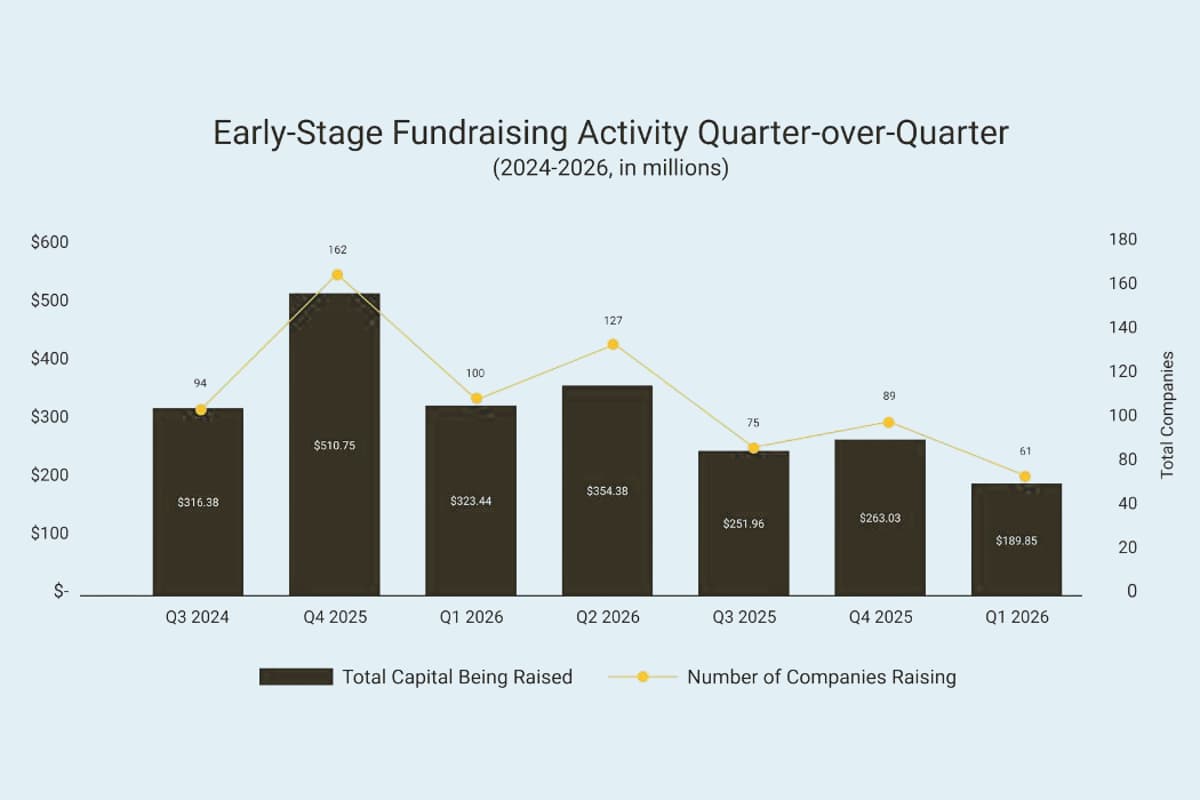
- •Q1 2026 saw 61 startups raise CAD 190M, 40% YoY drop.
- •Average seed round stayed at CAD 3M despite funding dip.
- •Top five VCs captured 80% of 2025 capital, fundraising down 50%.
- •Early‑stage capital outside top VCs fell 90% over five years.
- •Federal CAD 750M fund faces competing proposals from CVCA, NACO, CSCA.
Pulse Analysis
RBCx’s two‑year tracking of more than 700 Canadian pre‑seed and seed firms reveals a sharp contraction in early‑stage financing, echoing the broader venture capital slowdown that plagued 2025. While the total capital raised in Q1 2026 fell to CAD 190 million (≈ USD 140 million), the average seed round size held at CAD 3 million (≈ USD 2.2 million), suggesting that the remaining investors are still willing to fund companies with similar capital requirements. Analysts point to a mix of factors, including fewer entrepreneurs launching ventures, the rise of AI‑driven product development that delays fundraising, and a growing tendency for founders to seek U.S. capital pools.
The concentration of capital among Canada’s five largest venture firms, which absorbed roughly 80% of 2025 funding, has intensified the strain on emerging managers who traditionally back early‑stage startups. RBCx notes a 90% decline in fundraising outside the top tier over the past five years, eroding the diversity of the investor base and limiting mentorship and network effects essential for scaling nascent tech firms. This squeeze threatens the pipeline of innovative companies that feed later‑stage growth and export‑oriented sectors, potentially ceding market share to U.S. and European ecosystems.
In response, the federal government has earmarked CAD 750 million (≈ USD 555 million) for an early‑growth venture envelope, but industry bodies such as the CVCA, NACO and the Canadian Startup Capital Association are vying for control of those funds. Their competing visions—ranging from direct seed‑stage grants to co‑investment models—reflect divergent strategies for reviving the capital stack. The effectiveness of this policy injection will hinge on its ability to unlock financing for emerging managers and restore confidence among founders, lest Canada’s tech sector face a prolonged talent and investment drain.
Canada’s early-stage startup funding is in a sustained decline, RBCx finds
Comments
Want to join the conversation?
Loading comments...