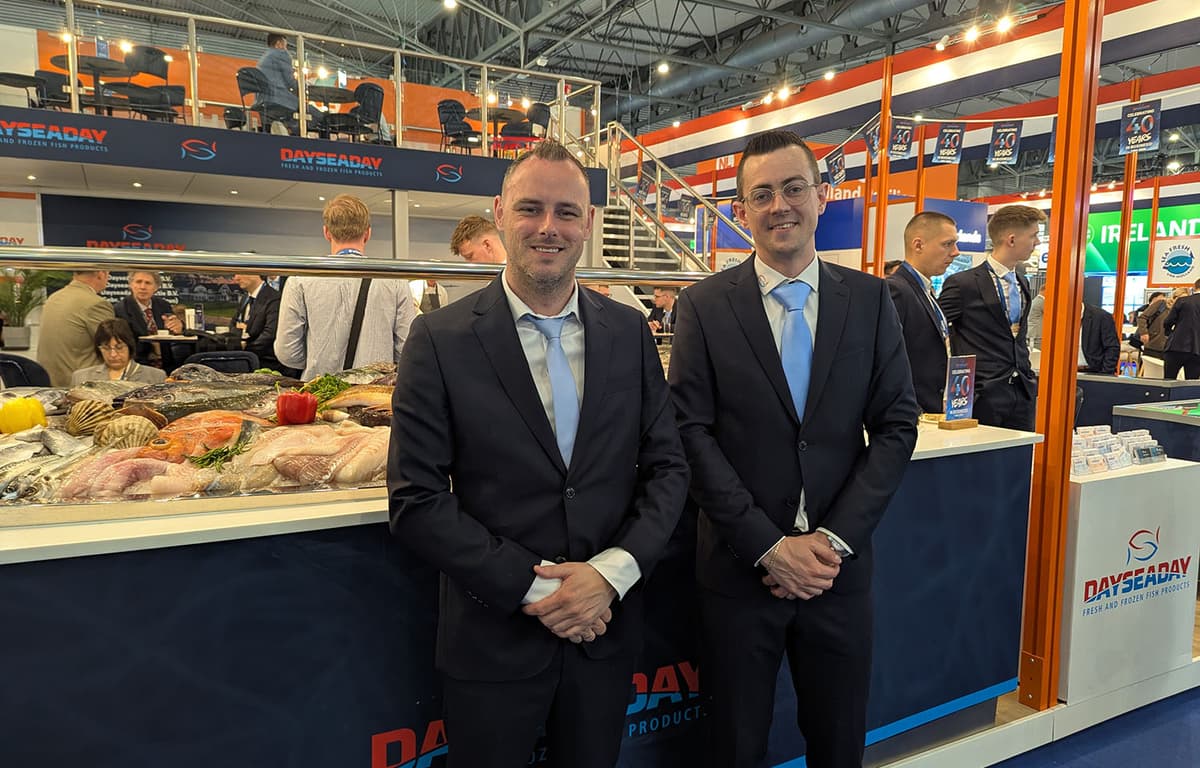
Dayseaday Group Continuing to Expand After 40 Years of Business
Why It Matters
The expansion positions Dayseaday to meet surging demand for both fresh and frozen seafood, strengthening its market share in Europe and supporting its diversified growth strategy. It also illustrates how family‑owned firms can leverage organic growth and strategic acquisitions to stay competitive in a consolidating industry.
Key Takeaways
- •Facilities expanded by thousands of square meters to meet demand
- •Employee count reached 250, reflecting four decades of growth
- •Salmon accounts for 70% of fresh sales, primarily to Europe
- •Acquisitions include Romanian Oceania and 50% of PetsFish, enhancing product range
- •Cold‑storage and blast‑freezing capacity upgrades aim to support year‑round supply
Pulse Analysis
The European seafood market has been buoyed by rising consumer demand for high‑quality protein, especially salmon, which continues to dominate premium segments. Dayseaday Group’s expansion reflects this macro trend, as the company scales its processing footprint to serve a broader client base across the continent and into the Middle East. By increasing its cold‑storage and blast‑freezing capabilities, the firm can better manage seasonal variability—particularly for short‑season products like squid—ensuring year‑round availability for wholesale partners.
Operationally, the new facility, nearly three times larger than the previous plant, allows Dayseaday to shift from double‑shift, capacity‑strained production to a more regular schedule. This not only improves labor efficiency but also reduces reliance on external blast‑freezing providers, lowering costs and enhancing quality control. The expanded cold‑storage at the Urk port further strengthens the supply chain, enabling the company to hold larger inventories of imported frozen goods from Asia and domestically sourced salmon from Norway.
Strategically, Dayseaday’s selective acquisitions—such as the Romanian Oceania and a 50% stake in PetsFish—extend its product range beyond seafood into meat, reinforcing its one‑stop‑shop proposition. These moves, driven by long‑term client relationships rather than aggressive buy‑out ambitions, illustrate a nuanced growth model that balances organic scaling with opportunistic diversification. As the firm looks ahead to the next 40 years, its focus on stable client ties, family‑owned flexibility, and infrastructure investment positions it as a resilient player amid industry consolidation and evolving consumer preferences.
Dayseaday Group continuing to expand after 40 years of business
Comments
Want to join the conversation?
Loading comments...