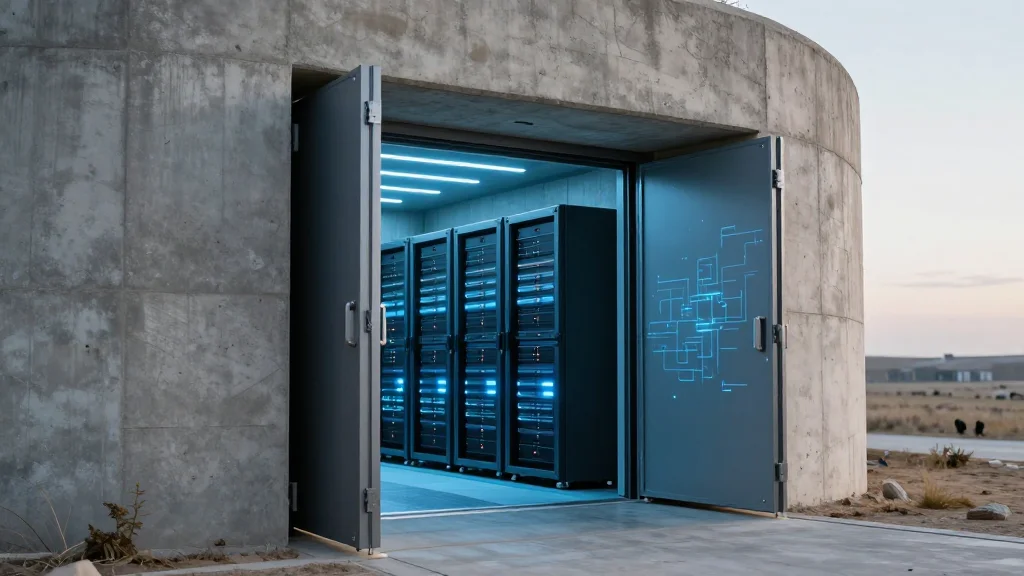
Entrepreneur Turns Cold War Missile Silo Into $10M AI Data Center

Companies Mentioned
Starbucks

KFC
Why It Matters
The silo conversion signals a shift in how entrepreneurs view obsolete infrastructure—not as a liability but as a hidden asset that can be retrofitted for high‑tech purposes. By demonstrating that a former weapons facility can become a secure, energy‑efficient AI hub, the project challenges conventional data‑center economics and opens a pathway for cost‑effective, geographically diverse compute resources. This could accelerate AI development in regions that lack traditional fiber‑rich data‑center clusters, democratizing access to powerful compute. Moreover, the venture illustrates a broader entrepreneurial mindset that blends daring personal branding with strategic asset acquisition. Halik’s willingness to invest millions in a niche, high‑risk property reflects a growing confidence among venture capitalists to back unconventional, capital‑intensive projects that promise differentiated value propositions. If successful, the model may inspire a wave of similar conversions—from abandoned military bunkers to decommissioned oil platforms—expanding the real‑estate playbook for tech founders.
Key Takeaways
- •Nik Halik bought a decommissioned missile silo near Denver for > $10 million in 2021.
- •The silo, once capable of launching three 4.5‑megaton missiles, is being retrofitted as an AI data center.
- •Halik describes himself as a “thrillionaire” and a “value‑facturer,” emphasizing the venture’s novelty.
- •The project mirrors global trends, such as Russian entrepreneurs rebranding former McDonald’s and Starbucks sites.
- •Pilot AI workloads are scheduled for early 2027, with potential energy‑cost savings of up to 20%.
Pulse Analysis
Halik’s silo‑to‑data‑center conversion is a textbook case of asset‑light entrepreneurship meeting capital‑intensive infrastructure. Historically, data‑center development has been dominated by large hyperscale operators who build purpose‑built campuses in low‑cost regions. Halik flips that script by acquiring a pre‑existing, hardened structure at a discount and layering cutting‑edge cooling and networking on top. The approach reduces land‑acquisition costs and leverages the silo’s inherent security—features that are increasingly valuable as AI workloads become mission‑critical and as geopolitical tensions raise concerns about data‑center vulnerability.
From a market perspective, the venture could carve out a niche for “secure edge” facilities that sit outside the traditional carrier‑hotel ecosystem. Companies handling sensitive government contracts, defense AI, or proprietary models may prefer an underground site that is physically isolated from surface disruptions. If Halik can demonstrate reliable uptime and competitive pricing, larger cloud providers might partner or even acquire the facility to augment their edge portfolios.
Finally, the project reflects a cultural shift among modern entrepreneurs who blend personal adventure with business strategy. Halik’s background—skydiving over Everest, training as a civilian cosmonaut, diving to the Titanic—feeds a narrative that resonates with investors seeking bold, story‑driven ventures. While the financial upside remains uncertain, the publicity generated by such a dramatic premise can attract early‑stage capital and strategic partners, potentially turning a once‑forgotten Cold War relic into a cornerstone of the next generation of AI infrastructure.
Entrepreneur Turns Cold War Missile Silo into $10M AI Data Center
Comments
Want to join the conversation?
Loading comments...