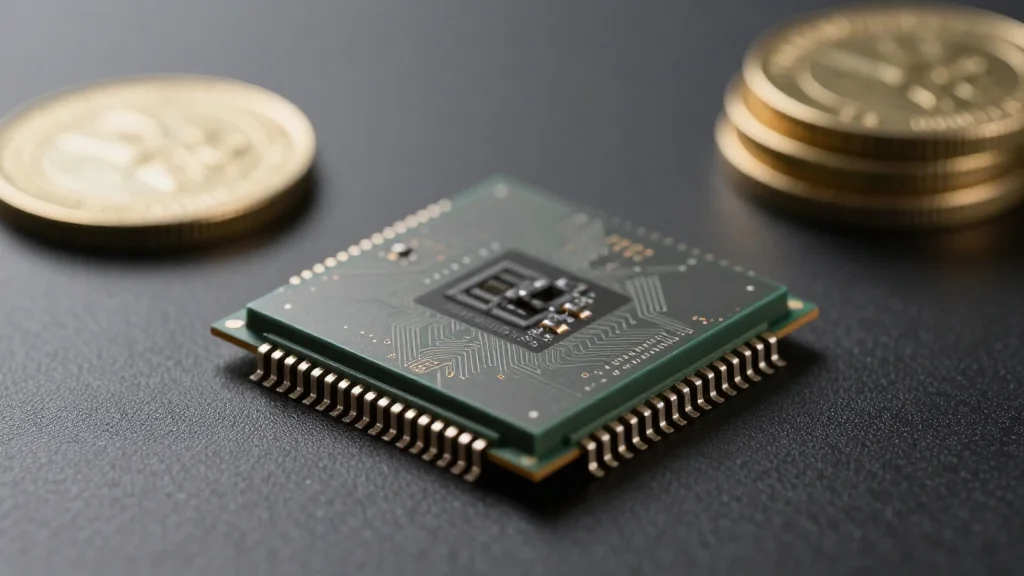
EPIC Microsystems Raises $21M to Power Next-Gen AI Data Centers

Why It Matters
By solving power‑density and thermal bottlenecks, EPIC’s solution enables hyperscalers to scale AI workloads more cost‑effectively, reshaping the power‑delivery layer of next‑generation data centers.
Key Takeaways
- •EPIC raised $21M Series A, total $26M funding.
- •Hybrid switched‑capacitor tech replaces inductors in AI racks.
- •Improves power efficiency, density, and thermal management.
- •Targets multi‑megawatt AI data center scaling.
- •Backed by Intel Capital, Seligman Ventures, and others.
Pulse Analysis
The AI boom is driving data‑center power consumption toward the megawatt‑per‑rack frontier, forcing operators to confront inefficiencies in traditional DC‑DC converters. EPIC Microsystems’ recent $21 million Series A injection, led by Seligman Ventures and bolstered by Intel Capital, underscores investor confidence that power delivery will be a decisive factor in AI infrastructure scaling. The capital will fund silicon refinement, volume production tooling, and strategic partnerships with hyperscale cloud providers seeking to densify racks without sacrificing reliability.
At the heart of EPIC’s proposition is its hybrid switched‑capacitor (HSC) architecture, which swaps out heavyweight inductors for a compact network of capacitors and optimized switches. This design delivers higher current density and lower thermal resistance, directly addressing the z‑height constraints of ultra‑dense racks. By reducing heat generation and improving efficiency, the HSC solution can lower total‑cost‑of‑ownership for AI accelerators, allowing more GPUs per rack and extending the performance‑per‑watt envelope that hyperscalers chase.
The broader market impact is significant: as AI workloads become more compute‑intensive, power‑delivery innovations will dictate data‑center economics and geographic placement. EPIC’s backing by industry veterans signals a shift toward semiconductor‑level solutions for systemic challenges. If EPIC can translate its silicon‑proven technology into high‑volume modules, it could set a new standard for AI rack design, prompting incumbents to rethink legacy power architectures and opening opportunities for ancillary thermal‑management and rack‑integration ecosystems. The company’s trajectory will be a bellwether for how quickly the industry adopts next‑gen power delivery to sustain AI growth.
EPIC Microsystems Raises $21M to Power Next-Gen AI Data Centers
Comments
Want to join the conversation?
Loading comments...