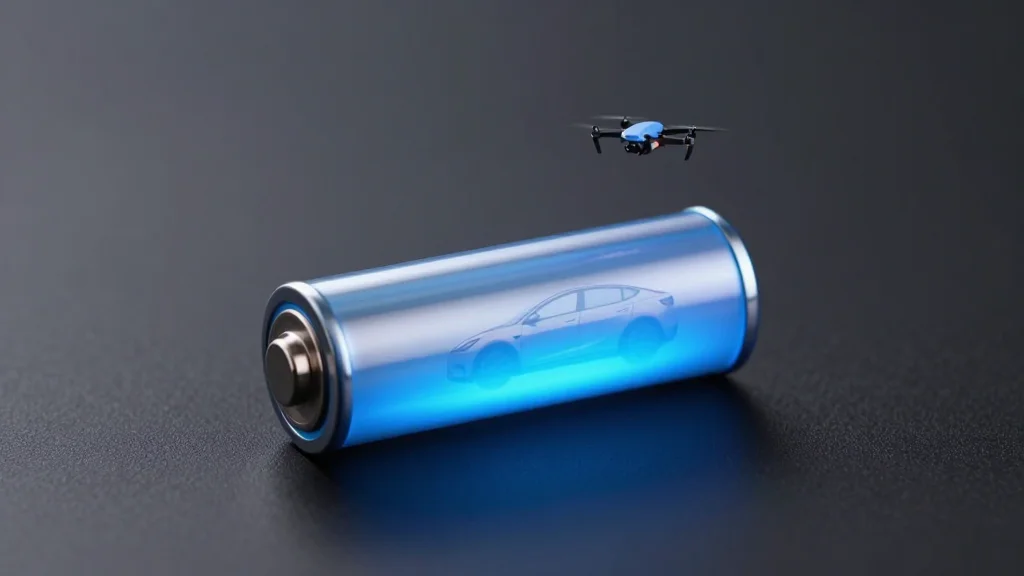
Factorial Energy's $1.1B SPAC Deal Targets Solid-State EV Batteries and Defense Drones

Companies Mentioned
Why It Matters
Factorial Energy’s SPAC merger represents a pivotal moment for the solid‑state battery sector, a technology that promises higher energy density, faster charging, and improved safety over conventional lithium‑ion cells. By securing a public listing and substantial new capital, the startup can accelerate the transition from lab‑scale prototypes to commercial volumes, potentially reshaping the electric‑vehicle market and reducing reliance on volatile liquid electrolytes. The defense‑focused expansion also highlights a strategic diversification that could insulate Factorial from the cyclical nature of the automotive market. If the company delivers on its promise, it could set a new benchmark for secure, high‑performance power sources in both civilian and military applications, influencing supply‑chain dynamics and prompting OEMs to reconsider battery sourcing strategies.
Key Takeaways
- •Factorial Energy’s SPAC merger values the company at $1.1 billion pre‑money.
- •$100 million new capital will fund pilot production and supply‑chain development.
- •Previous $200 million round was led by Mercedes‑Benz and Stellantis, with Hyundai and Kia participation.
- •Strategic investment from IQT adds a national‑security dimension to Factorial’s growth.
- •Target markets include passenger EVs, defense drones, aerospace, and robotics.
Pulse Analysis
Factorial’s move to go public via a SPAC is a calculated gamble that reflects broader investor enthusiasm for deep‑tech energy solutions. Historically, battery startups have struggled to raise sufficient capital for the massive scale‑up required to meet automotive OEM demand. By tapping public markets, Factorial sidesteps the prolonged private‑fundraising cycles that have hamstrung peers, while also gaining the visibility needed to attract large‑scale contracts.
The dual‑track focus on automotive and defense markets is a shrewd hedge against market volatility. Automotive OEMs are still cautious about committing to solid‑state cells until performance and cost metrics are proven, whereas defense contracts often provide higher margins and longer procurement horizons. This bifurcated strategy could enable Factorial to fund its R&D while generating early revenue streams, a model that could become a template for other battery innovators.
Looking ahead, the key determinant of success will be Factorial’s ability to demonstrate manufacturable, high‑cycle‑life solid‑state cells at a competitive cost. If the company can achieve this, it may catalyze a wave of OEM commitments, prompting a shift away from traditional lithium‑ion supply chains and accelerating the broader electrification agenda. Conversely, failure to meet technical milestones could reinforce skepticism and slow capital inflows into the sector, underscoring the high‑stakes nature of this SPAC transaction.
Factorial Energy's $1.1B SPAC Deal Targets Solid-State EV Batteries and Defense Drones
Comments
Want to join the conversation?
Loading comments...