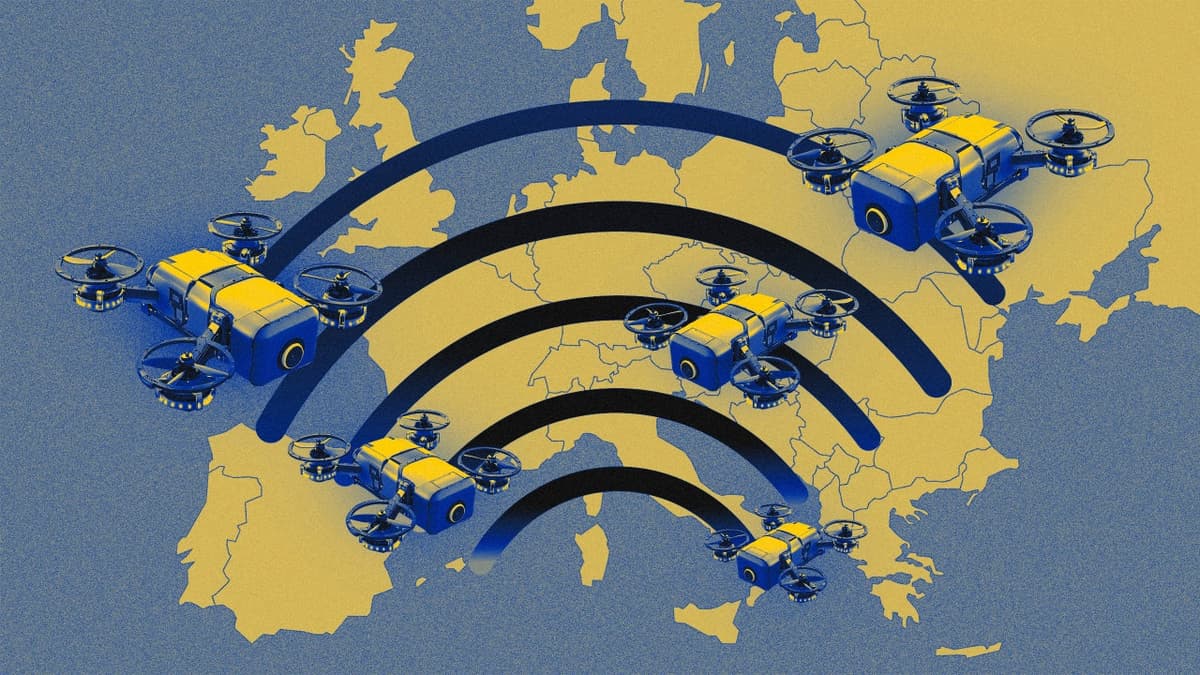
How Europe Is Building Its Own DARPA to Counter the Drone Threat

Why It Matters
The initiative could close Europe’s security gap against hostile drones while establishing a new funding paradigm that accelerates breakthrough technologies across the continent.
Key Takeaways
- •SPRIND and Vinnova launch DARPA‑style anti‑drone challenge across Europe.
- •German agency can now take equity stakes in startups, boosting funding flexibility.
- •Czech firm EAGLE.ONE gains market entry after winning 2024 SPRIND challenge.
- •Fragmented EU drone market needs unified procurement to sustain startups.
- •Netherlands plans its own SPRIND‑type agency, signaling model’s expansion.
Pulse Analysis
The surge of hostile drones over European airports and critical infrastructure has turned a once‑novel technology into a pressing security concern. While the Middle East has showcased the combat potential of unmanned aircraft, Europe now faces daily sightings that threaten civilian sites and expose reliance on foreign‑made hardware such as Chinese DJI models. In response, Germany’s SPRIND and Sweden’s Vinnova have joined forces to fund anti‑drone solutions, offering a coordinated European front that mirrors the U.S. DARPA playbook but focuses on civilian protection.
The partnership adopts a challenge‑driven approach that rewards rapid prototyping and market readiness. SPRIND’s 2023 legal amendment, which permits equity stakes in startups, gives it a venture‑capital edge uncommon among public bodies, while Vinnova brings two decades of similar funding mechanics. This hybrid model accelerates the path from laboratory to runway, as demonstrated by Czech professor Martin Saska’s EAGLE.ONE, which secured leads and a foothold in the German market after winning a 2024 SPRIND challenge. By aligning funding with clear, cross‑border demand, the agencies aim to shrink the time‑to‑scale for breakthrough firms.
The ripple effect is already reshaping Europe’s innovation ecosystem. The Netherlands announced plans for its own SPRIND‑style agency, and the European Innovation Council is piloting challenge‑based grants under Draghi’s competitiveness recommendations. A unified procurement framework could eliminate the “nightmare” of divergent national specifications, allowing small drone‑defense startups to achieve economies of scale. If successful, this model may extend beyond aerospace, offering a template for tackling other grand challenges—energy storage, quantum computing, or biotech—where rapid, coordinated investment is the missing link.
How Europe is building its own DARPA to counter the drone threat
Comments
Want to join the conversation?
Loading comments...