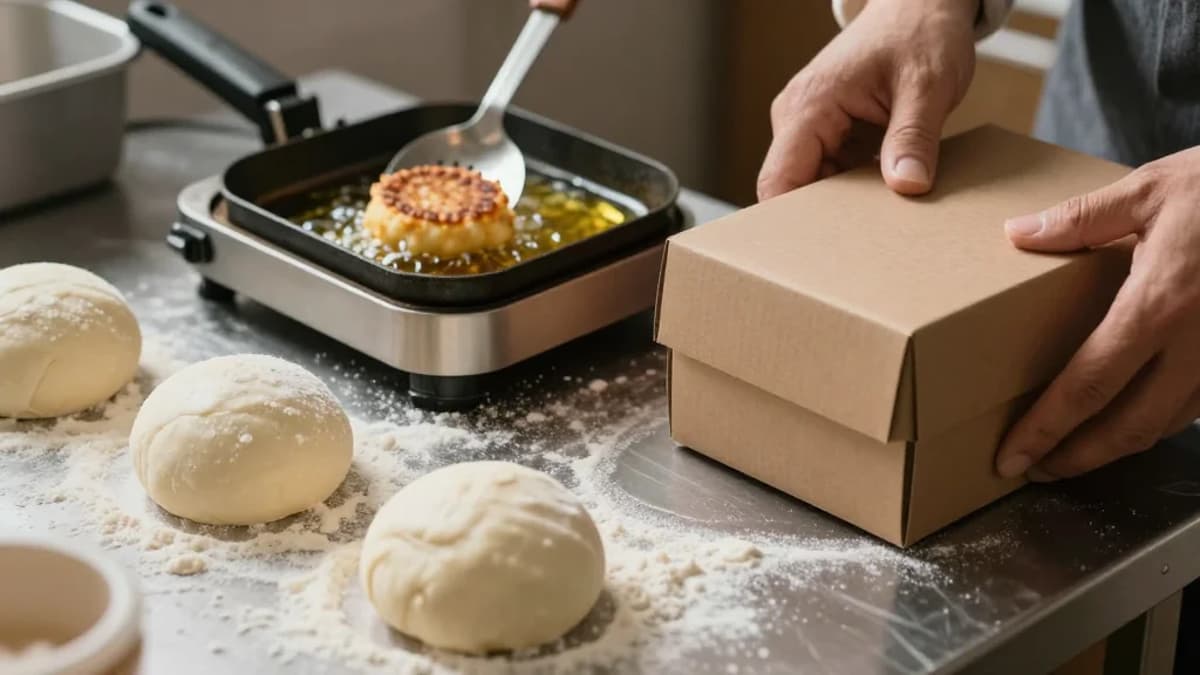
Kaushambi: Inside a Small Unit Making Everyday Namkeen and Snacks
Why It Matters
The venture shows how targeted youth entrepreneurship schemes can empower women in India's informal food sector, stabilizing household income and strengthening local snack supply chains.
Key Takeaways
- •CM YUVA loan enabled startup with ₹2.21 L loan
- •Total equipment investment reached roughly ₹6 L
- •Production relies on same‑day frying and hand‑packaging
- •Sales driven by local distribution, not large retailers
- •Unit provides primary income for a single‑parent household
Pulse Analysis
India's snack market thrives on a dense network of micro‑enterprises that churn out namkeen, sev and other fried treats for daily consumption. These businesses often operate out of modest rooms, rely on family labor, and face razor‑thin margins dictated by oil prices and seasonal demand. Government initiatives such as the CM‑YUVA scheme aim to inject capital into this segment, especially for women and first‑time entrepreneurs, recognizing that modest financing can unlock significant livelihood gains and bolster the informal economy.
In Kaushambi, Shakuntala Devi exemplifies this dynamic. Leveraging a ₹2.21 lakh youth loan and an additional ₹4 lakh of personal savings, she equipped a one‑room unit with dough‑kneading and shaping machines, raising total capital to roughly ₹6 lakh. The production line is deliberately simple: dough is mixed, shaped, fried, seasoned by hand, and packaged for same‑day delivery to nearby shops and households. Early challenges included synchronising machine cycles, managing raw‑material inventory, and maintaining cash flow, but the tight turnaround ensures fresh product quality and reduces storage costs, keeping the operation financially viable.
The broader implication is clear: low‑cost mechanisation combined with accessible micro‑finance can transform household kitchens into sustainable micro‑manufacturing hubs. As digital marketplaces expand, such units could tap into regional e‑commerce platforms, scaling beyond neighborhood stalls while preserving the artisanal appeal that consumers value. Policymakers should therefore consider expanding scheme coverage, simplifying loan disbursement, and offering training on food safety and digital sales to amplify the impact of women‑led snack enterprises across India.
Kaushambi: inside a small unit making everyday namkeen and snacks


Comments
Want to join the conversation?
Loading comments...