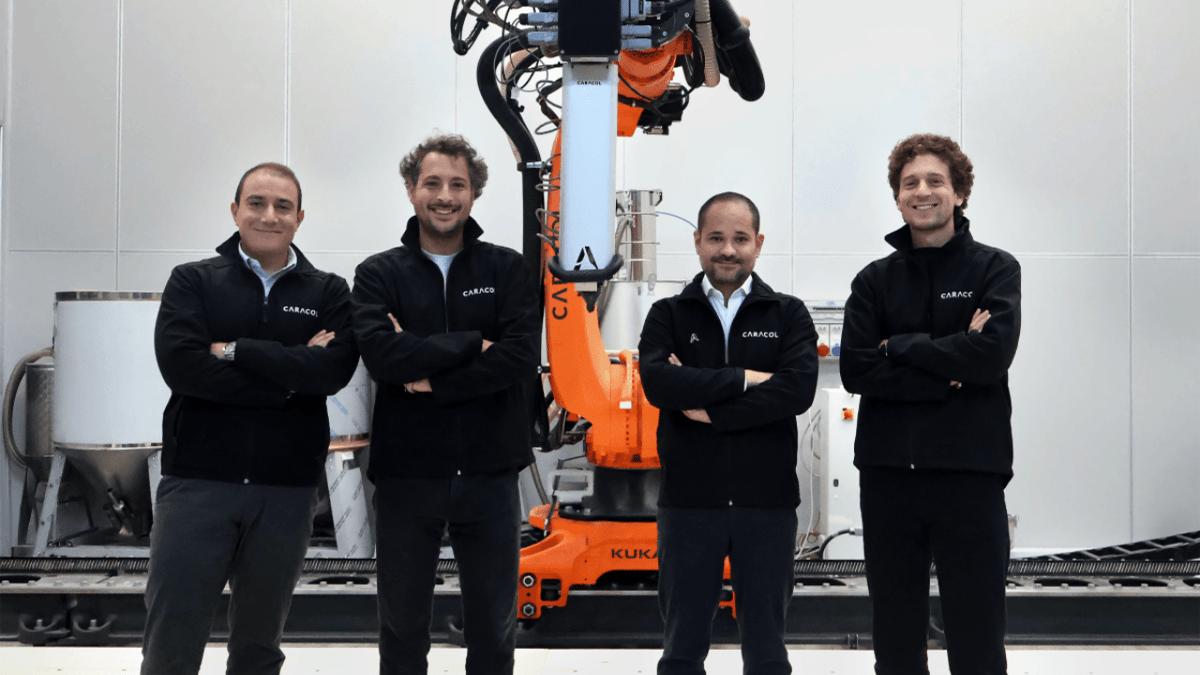
Meet the 3D Printing Startup that Spent Five Years Not Selling Its Technology
Companies Mentioned
Why It Matters
Caracol’s validated LFAM platform proves that large‑scale 3D printing can replace costly molds, boosting supply‑chain resilience and accelerating production for aerospace, maritime and defense sectors. Its success signals a shift toward distributed, software‑driven manufacturing that could reshape industrial sourcing strategies.
Key Takeaways
- •Caracol operated as a service bureau for five years before commercial launch.
- •Robotic arms give six-axis freedom, enabling metre‑scale additive parts.
- •Lead times cut >50%, delivering 30% cost savings for yachts.
- •AI-driven ADOS platform auto‑adjusts parameters, reducing waste to under 5%.
Pulse Analysis
Additive manufacturing has long been confined to small‑scale prototyping, but the industry’s push for larger, more complex parts has exposed the limits of traditional gantry printers. Caracol’s breakthrough lies in integrating six‑axis industrial robots with layer‑by‑layer deposition, a combination that expands the printable envelope to metre‑scale dimensions while preserving the material efficiency of 3D printing. This hybrid approach not only overcomes the physical "box" constraint but also aligns with the broader trend toward flexible, on‑demand production that reduces reliance on centralized tooling and long‑lead‑time supply chains.
The commercial impact is already evident. By eliminating the need for costly molds, Caracol has cut component lead times by more than half and achieved cost reductions exceeding 30% on high‑value yacht projects. In aerospace and maritime applications, material waste has dropped from 70‑80% in conventional machining to under 5% with its LFAM process, delivering both environmental and financial benefits. The company’s dual‑continent footprint—manufacturing hubs in Europe and the United States—caters to regional customers seeking rapid support and aligns with the growing demand for localized, resilient supply chains in defense and energy sectors.
Looking ahead, Caracol’s Nexus software and ADOS AI platform are steering the industry toward autonomous, self‑optimising factories. Real‑time monitoring and machine‑learning‑driven parameter adjustments enable lights‑out production, predictive maintenance, and continuous performance improvement across a globally connected network. As more OEMs adopt this distributed, data‑centric model, the competitive advantage will shift from hardware ownership to software intelligence, heralding a new era of intelligent, on‑site manufacturing that could redefine how complex industrial components are designed, produced, and serviced.
Meet the 3D printing startup that spent five years not selling its technology
Comments
Want to join the conversation?
Loading comments...