Mori Nishimura’s A Cabin Company Finds Full Occupancy After Launching Prefab Cabins in Rural Japan

Why It Matters
A Cabin Company’s rapid occupancy demonstrates a viable path for lifestyle entrepreneurs to tap Japan’s underserved rural tourism sector without heavy capital investment. By exploiting a legal classification that treats cabins as vehicles, the startup sidesteps traditional construction barriers, offering a template for other founders seeking to launch hospitality concepts in regulated markets. Moreover, the founder’s reliance on organic networking via LinkedIn highlights a growing trend where early‑stage founders can secure capital and talent without the traditional venture‑capital pipeline, reshaping how entrepreneurship unfolds in regions with nascent startup ecosystems. The venture also signals broader consumer shifts: travelers are increasingly prioritizing immersive, nature‑based stays over conventional hotels, and the gender skew toward female guests suggests untapped demand for safe, community‑oriented rural accommodations. If replicated, this model could stimulate economic activity in Japan’s declining countryside, create jobs, and inspire a wave of micro‑hospitality startups that blend design, sustainability, and regulatory ingenuity.
Key Takeaways
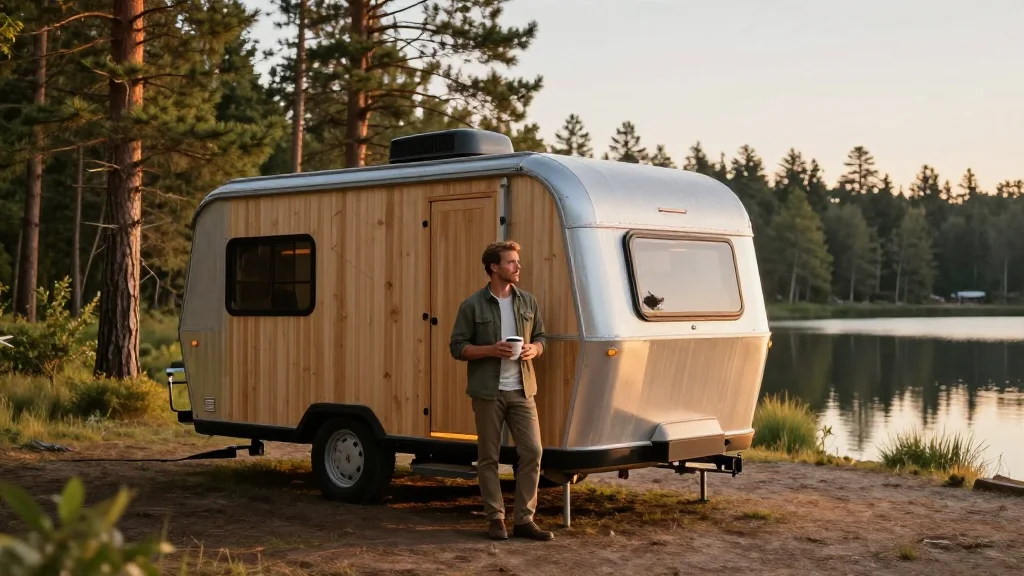
- •Founder Mori Nishimura opened the first 16‑sqm trailer‑based cabin in Chiba national park in August 2024.
- •The cabin reached full occupancy within three months, maintaining a $190 nightly rate.
- •A LinkedIn‑driven pre‑seed round funded the launch; details of the amount were not disclosed.
- •Second cabin launched May 2025; third scheduled for September 2025.
- •Approximately 70 % of guests are women, contrary to the founder’s original expectations.
Pulse Analysis
Mori Nishimura’s A Cabin Company exemplifies a new breed of entrepreneurship that blends lifestyle ambition with regulatory creativity. By classifying its cabins as vehicles, the startup circumvents Japan’s notoriously strict building codes—a move that mirrors how fintech firms have leveraged existing financial infrastructure to avoid licensing hurdles. This regulatory arbitrage reduces upfront capital requirements, allowing founders to prove market demand before committing to large‑scale construction. The rapid occupancy rates suggest that demand for curated, nature‑centric experiences is both real and under‑served, especially in a country where rural depopulation is a persistent policy challenge.
The reliance on LinkedIn for fundraising and talent acquisition also signals a shift away from traditional VC dependence. In markets where venture capital is scarce, founders are turning to personal branding and content marketing to attract both capital and human resources. This democratizes access to early‑stage funding but also raises questions about the sustainability of such networks when scaling beyond the founder’s personal reach. As A Cabin Company eyes expansion into other prefectures, it will likely confront tighter regulatory scrutiny and the need for more formalized financing structures.
Looking forward, the success of A Cabin Company could catalyze a micro‑hospitality wave across Japan and similar markets, prompting policymakers to reconsider how zoning and vehicle classifications intersect with tourism development. If the model proves replicable, it may inspire a new category of low‑cost, high‑experience accommodations that revitalize rural economies while offering founders a lean, scalable blueprint for growth.
Mori Nishimura’s A Cabin Company Finds Full Occupancy After Launching Prefab Cabins in Rural Japan
Comments
Want to join the conversation?
Loading comments...