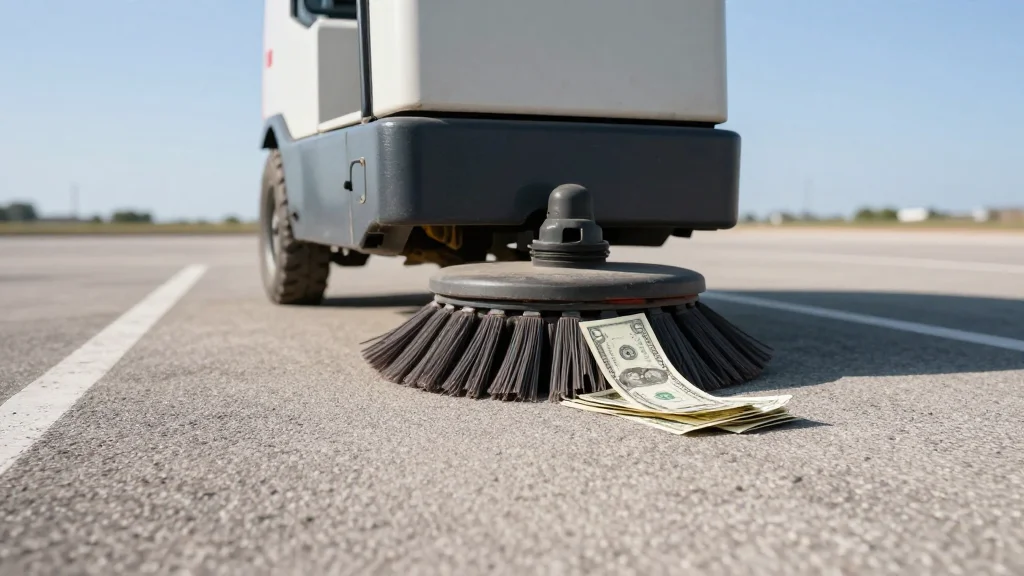
My Father and I Started a Parking Lot Clean-Up Business. It's Been 45 Years, and My Family-Run Company Is Still AI-Proof.
Why It Matters
The story shows how a simple, labor‑intensive service can generate stable cash flow and resist automation, highlighting a niche of resilience in a tech‑driven economy. It also underscores the value of family collaboration and mentorship in scaling micro‑enterprises.
Key Takeaways
- •Founded Clean Lots after father's death, now 45 years old
- •Family involvement drove scaling to $700k annual revenue
- •Parking‑lot cleaning remains AI‑proof; robots can't replace human eye
- •Mentorship program helps new entrepreneurs replicate simple service model
- •Low overhead and local relationships fuel steady cash flow
Pulse Analysis
In an era where venture capital chases high‑growth software, the parking‑lot cleaning sector offers a counter‑example of sustainable, low‑tech entrepreneurship. Winch’s Clean Lots leverages a straightforward value proposition—keeping commercial lots tidy for customers—while maintaining minimal capital outlay. The business model thrives on repeat contracts, modest equipment, and a reputation built on reliability, allowing it to generate consistent revenue without the need for large inventories or complex supply chains.
The claim of being "AI‑proof" rests on the nuanced visual inspection required to spot litter, cigarette butts, and graffiti in hard‑to‑reach spots. Current robotics excel at repetitive floor cleaning but lack the adaptive perception and decision‑making needed for irregular outdoor environments. This human advantage preserves jobs in a sector often overlooked by automation forecasts, and it provides a hedge for small operators against rapid technological displacement.
Winch’s recent shift toward mentorship amplifies the model’s impact. By codifying his "America's Simplest Business" curriculum, he enables high‑school teachers, retirees, and other side‑hustlers to launch comparable services with low entry barriers. The ripple effect could bolster local economies, increase employment in underserved communities, and diversify the small‑business landscape. As more entrepreneurs adopt this template, the industry may see modest consolidation, but the core advantage—personalized, on‑site service—will likely remain a durable competitive edge.
My father and I started a parking lot clean-up business. It's been 45 years, and my family-run company is still AI-proof.
Comments
Want to join the conversation?
Loading comments...