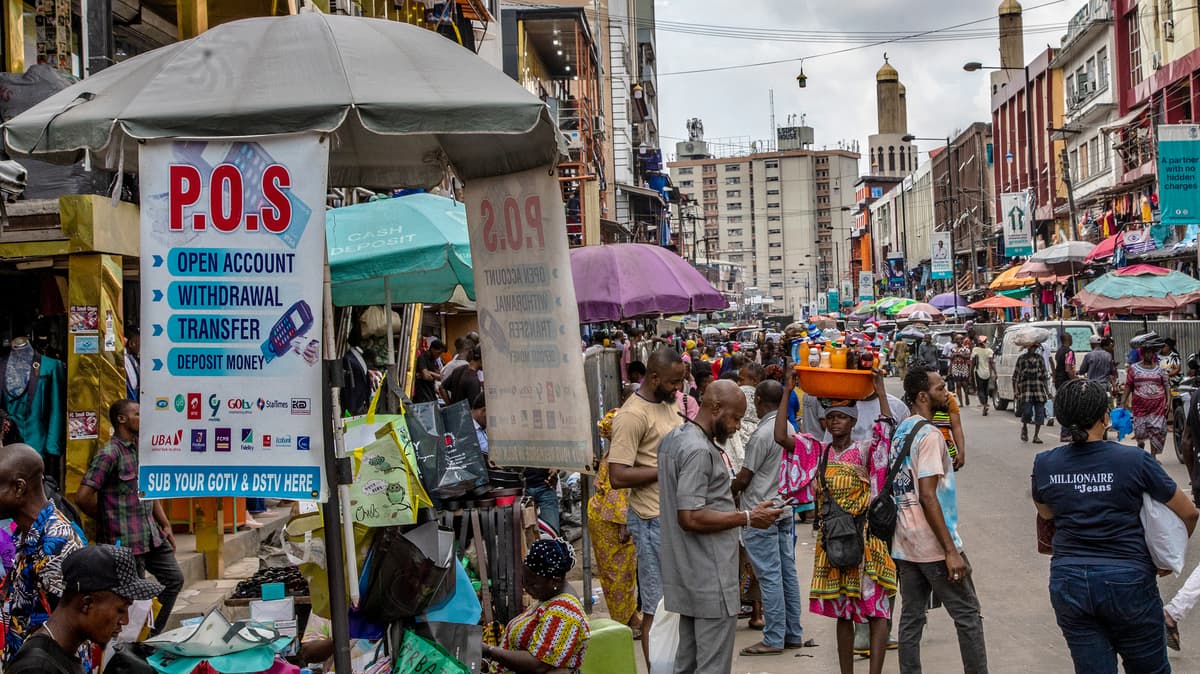
Nigerian Web3 Startups Raised $43 Million in 2025, but Growth Remains Early
Why It Matters
The influx of capital validates Nigeria’s position as Africa’s leading stablecoin market, but the concentration on early‑stage, finance‑only projects and limited growth‑stage funding could stall broader Web3 innovation and diversification.
Key Takeaways
- •$43M raised in 2025, double 2024 total.
- •89% of funds target stablecoin payments and fiat‑crypto exchanges.
- •Only one Series A deal recorded, highlighting early‑stage skew.
- •Stablecoin deposits grew >9,000% since 2018; on‑chain value $92B.
- •Regulators imposed $1.4M capital minimum for exchanges and custodians.
Pulse Analysis
The 2025 funding surge reflects a maturing Nigerian crypto ecosystem that is increasingly viewed through the lens of utility rather than speculation. While total capital doubled to $43 million, the distribution reveals a narrow focus: almost nine‑tenths of the money is funneled into stablecoin‑driven payment rails and fiat‑crypto exchange services. This concentration mirrors the broader shift in user behavior, where stablecoins are now treated as a transactional medium—evidenced by a 9,000% jump in deposits since 2018 and a 56% year‑on‑year rise in on‑chain transaction value to $92 billion. For investors, the data signals a robust demand for frictionless cross‑border payments, yet it also warns of an ecosystem that may be over‑reliant on a single use case.
Regulatory momentum adds another layer of complexity. Nigeria’s March 2025 Investment and Securities Act formally classified digital assets as securities, while the Virtual Asset Regulatory Authority’s white paper introduced a broader oversight framework. The Central Bank’s pilot AML program and the new $1.4 million capital floor for digital‑asset exchanges and custodians raise entry barriers but aim to legitimize the market. These steps provide much‑needed clarity for institutional players, yet the heightened capital requirements could deter nascent innovators, especially those outside the stablecoin niche.
Looking ahead, the sector’s growth will hinge on diversifying beyond finance‑centric models. Infrastructure‑first startups saw funding dip to $4 million, and entertainment‑related Web3 projects halved to $1 million, indicating untapped potential in gaming, creator platforms, and AI‑driven tools. If venture capital can extend beyond early‑stage grants and nurture mid‑stage scaling rounds, Nigeria could evolve from a stablecoin hub into a broader Web3 powerhouse, reinforcing its strategic importance across Africa’s digital economy.
Nigerian Web3 startups raised $43 million in 2025, but growth remains early
Comments
Want to join the conversation?
Loading comments...