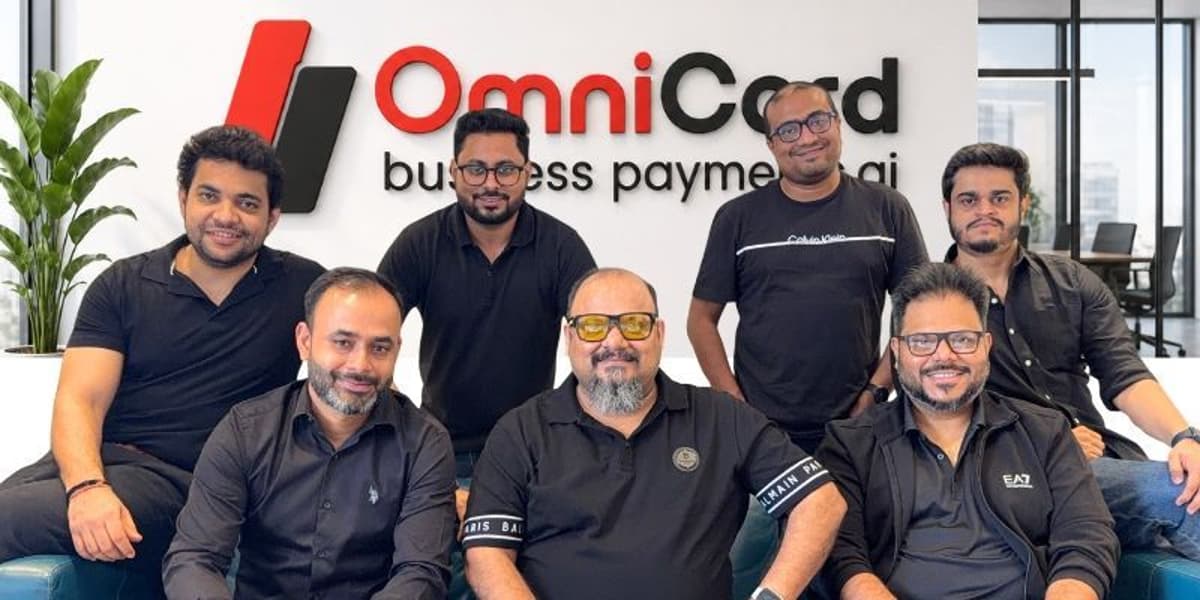
Rewiring Enterprise Spend: How OmniCard Is Building India’s Smart Financial Operating System
Why It Matters
By turning fragmented payments into a governed, data‑rich layer, OmniCard delivers efficiency, compliance and actionable insight, crucial for Indian firms as the fintech ecosystem targets up to $100 trillion of value over the next decade.
Key Takeaways
- •Unified stack merges RuPay, UPI, BBPS, and corporate cards.
- •Real‑time controls cut reconciliation time from weeks to hours.
- •Automated reimbursements reduce payout cycles to days.
- •CFO‑driven adoption fuels network effects across vendor ecosystems.
- •Platform scales instantly, onboarding whole organizations in minutes.
Pulse Analysis
India’s fintech boom has been defined by consumer‑focused payment apps that leverage the NPCI’s UPI and RuPay networks. While those solutions moved billions of rupees in seconds, they left enterprise finance processes fragmented—spreadsheets, delayed reconciliations, and weak policy enforcement. A new “middle‑layer” of platforms is emerging to bridge that gap, promising to turn raw transaction data into actionable intelligence. The World Economic Forum estimates such ecosystem‑driven models could unlock up to $100 trillion of value in the next decade, making the shift from simple payments to smart financial operating systems a strategic imperative for Indian businesses.
OmniCard answers that need by building a full‑stack fintech operating system from the ground up. It holds an RBI‑issued PPI licence, directly connects to RuPay cards, and taps UPI for instant settlements, while also integrating Bharat Bill Payment System and FASTag fleet services. The platform embeds programmable spend controls, approval workflows, and real‑time reconciliation into every transaction, turning what was once a series of isolated events into a governed data stream. Unlike western SaaS tools retrofitted for India, OmniCard’s native architecture avoids costly middleware and delivers a single source of truth for finance teams.
Early adopters across retail, logistics, healthcare and manufacturing report dramatic efficiency gains: month‑end close that once took a week now finishes in hours, and reconciliation workloads have fallen by as much as 90 percent. Automated reimbursements compress payout cycles from weeks to days, while real‑time spend visibility curbs leakage and strengthens compliance. Because the system can be provisioned in minutes and policies are baked in from day one, CFOs are championing OmniCard as a strategic asset rather than a tactical tool, driving peer‑to‑peer referrals that accelerate market penetration. As more Indian enterprises adopt a programmable spend layer, the broader fintech ecosystem will shift toward integrated, data‑rich solutions that unlock new revenue streams and operational resilience.
Rewiring Enterprise Spend: How OmniCard Is Building India’s Smart Financial Operating System
Comments
Want to join the conversation?
Loading comments...