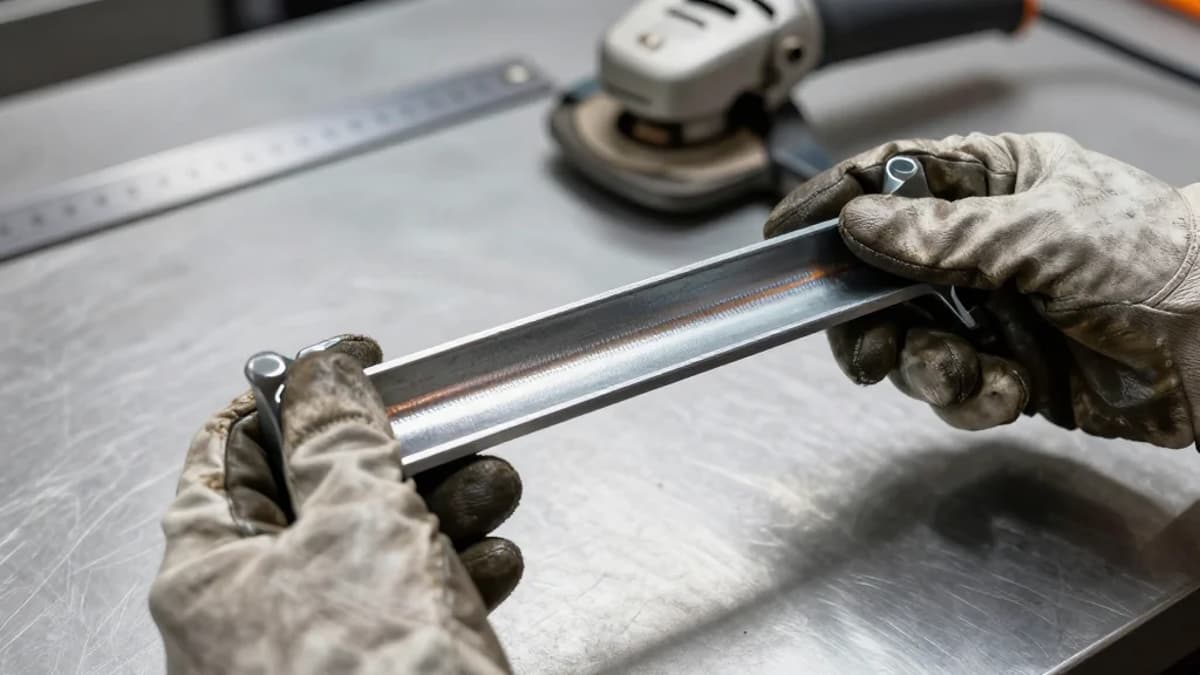
Shamli’s Iron Fabrication Works: Powering Agriculture Through Harrow Discs
Why It Matters
The initiative strengthens rural industrialization while boosting farm productivity, creating sustainable livelihoods and positioning India’s agritech sector for global integration.
Key Takeaways
- •Harrow discs produced from high‑grade steel in Shamli.
- •ODOP program provides finance, subsidies, tech upgrades.
- •Adhinath Industry employs ~35 workers, supports local supply chain.
- •Production aligns with Indian agricultural seasons, boosting farm yields.
- •Exports reach indirect markets via trade hubs.
Pulse Analysis
India’s One District One Product (ODOP) initiative aims to turn local expertise into scalable manufacturing hubs, and Shamli’s iron‑fabrication cluster exemplifies that vision. The district has been officially designated for harrow disc production, a niche yet critical component of disc harrows that prepare soil for sowing. By concentrating design, forging, and heat‑treatment capabilities in a single locale, the programme reduces logistics costs and shortens the supply chain for millions of tractors operating across northern India. This specialization lets technicians master disc geometry and heat‑treatment nuances.
The manufacturing workflow begins with high‑grade steel plates that are cut, pressed, and shaped to precise curvature before undergoing heat treatment for hardness. At Adhinath Industry, a family‑run unit founded in 2005, roughly 35 workers operate CNC presses, CNC lathes, and balancing rigs, while a broader network of transporters and raw‑material suppliers creates ancillary jobs. ODOP‑linked financing and subsidy schemes have enabled the plant to replace legacy machinery with computer‑numerical‑controlled equipment, raising output quality and consistency. The new CNC lines achieve tolerances within 0.02 mm, meeting Indian and stricter overseas standards.
Seasonal demand drives production cycles, with peaks aligning to pre‑monsoon sowing periods, ensuring a steady revenue stream for the district’s industrial base. Beyond domestic farms, the refined discs are routed through regional trade hubs such as Delhi and Mumbai, opening indirect export pathways to neighboring South Asian markets. Rising climate variability drives farmers toward conservation tillage, boosting demand for durable, precision‑engineered discs. The success of Shamli’s harrow disc cluster illustrates how targeted government programmes can catalyze rural industrialization, improve agricultural productivity, and generate sustainable livelihoods, positioning India’s agritech sector for deeper global integration.
Shamli’s Iron Fabrication Works: Powering Agriculture Through Harrow Discs


Comments
Want to join the conversation?
Loading comments...