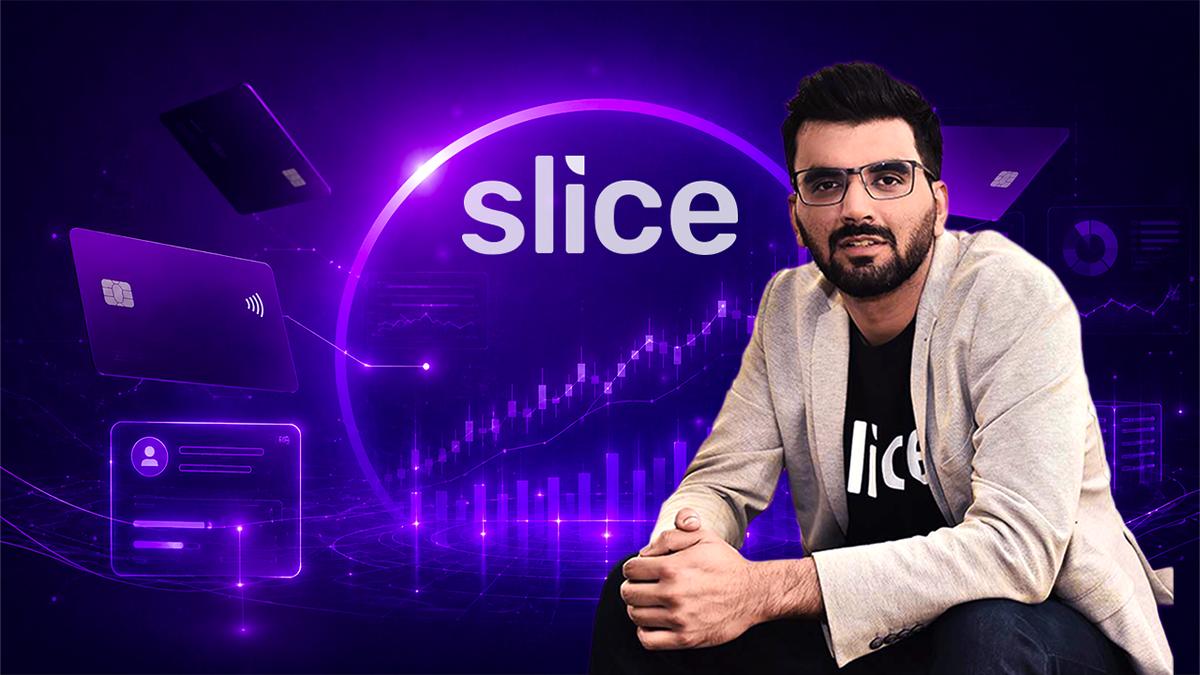
Slice Reports Profitability in First Full Year as Bank; Revenue Jumps 2.3X in FY26
Why It Matters
Slice’s turnaround proves that a fintech‑driven model can achieve profitability within a regulated banking framework, signaling heightened confidence for investors and setting a benchmark for emerging neobanks in a competitive Indian market.
Key Takeaways
- •FY26 revenue hit $169 M, up 132% YoY.
- •Net profit turned positive at $5.8 M after $26 M loss.
- •CRAR reached 19.1% and debt‑equity fell to 0.14.
- •Merged with North East Small Finance Bank, rebranded as Slice SFB.
- •CEO Rajan Bajaj approved by RBI; former SBI exec joins board.
Pulse Analysis
India’s banking landscape is rapidly evolving as digital‑first players like Slice challenge legacy institutions. By leveraging AI‑driven credit underwriting and a full‑stack product suite—savings, fixed deposits, UPI, and credit cards—Slice has accelerated customer acquisition and transaction volume. The FY26 profit milestone, underpinned by a 132% revenue surge to roughly $169 million, demonstrates that a fintech‑originated bank can scale efficiently while meeting regulatory capital standards. This performance also validates the strategic merger with North East Small Finance Bank, expanding Slice’s balance sheet and geographic footprint.
Financially, Slice’s balance sheet has markedly improved. A capital‑to‑risk‑weighted assets ratio of 19.1% far exceeds the RBI’s minimum requirement, providing a robust buffer against credit risk. The debt‑to‑equity ratio plummeted from 0.97 to 0.14, indicating a shift toward low‑cost deposits and reduced reliance on external borrowing. Such metrics enhance the bank’s appeal to institutional investors, especially after raising close to $400 million in funding. However, the competitive arena—traditional banks, other neobanks, and UPI‑centric platforms—means Slice must sustain margins through disciplined underwriting and efficient cost structures.
Looking ahead, regulatory scrutiny will intensify as Slice transitions from a fintech credit platform to a fully regulated bank. Maintaining asset quality while expanding credit exposure will be critical, particularly in a market where consumer defaults can rise quickly. The recent appointment of Rajan Bajaj as MD & CEO and former SBI executive Sreedevi Pillai to the board signals a focus on governance and risk management. If Slice can balance rapid growth with prudent risk controls, it could set a new standard for digital banking profitability in emerging markets, attracting further capital and solidifying its position as a leading AI‑native financial institution.
slice reports profitability in first full year as bank; revenue jumps 2.3X in FY26
Comments
Want to join the conversation?
Loading comments...