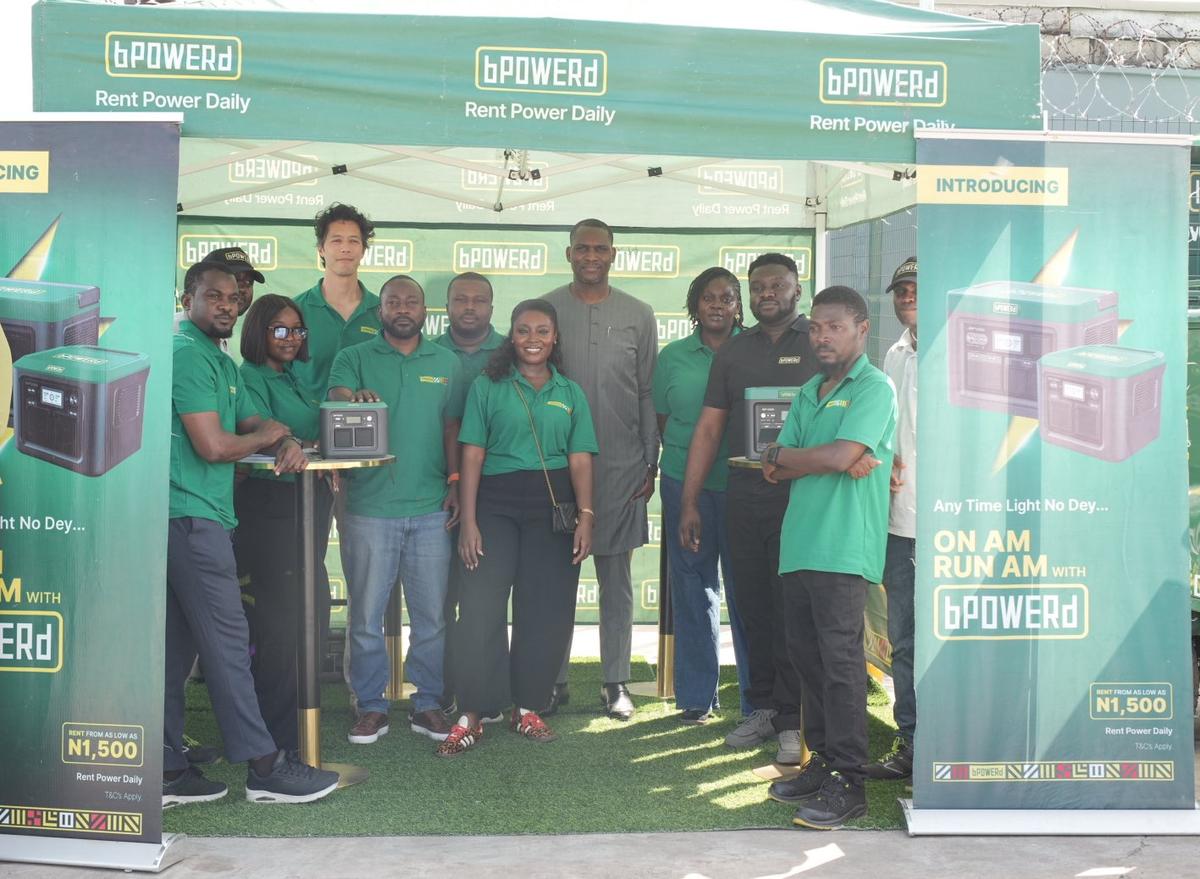
South Africa’s bPOWERd Expands Into Nigeria with Solar Battery Rental Hubs
Companies Mentioned
Why It Matters
The service offers an affordable, on‑demand power alternative that can mitigate Nigeria’s chronic electricity shortages while creating jobs in the emerging green‑tech sector. It also signals growing investor confidence in Africa’s solar market, which still represents only about 1.5% of the country’s energy mix.
Key Takeaways
- •bPOWERd launches solar battery rentals at seven Lagos Mobil stations.
- •Daily rental rates start at $1.10 for 300 Wh batteries.
- •Users pay a refundable $10.96 deposit to access batteries.
- •Service targets households and SMEs facing unreliable grid power.
- •Company recorded 125,000 rentals in its first year in South Africa.
Pulse Analysis
Nigeria’s power landscape is defined by frequent blackouts, soaring fuel‑derived electricity tariffs, and a grid that struggles to meet demand. With solar accounting for roughly 1.5% of the nation’s energy mix, policymakers and investors are hunting scalable off‑grid solutions that can bridge the supply gap without massive infrastructure spend. The bPOWERd entry arrives at a moment when consumers are increasingly willing to pay for reliability, especially in Lagos, where commercial activity hinges on uninterrupted electricity.
bPOWERd’s model blends pay‑per‑use convenience with a physical distribution network anchored at Mobil service stations. By requiring a modest refundable $10.96 deposit and offering 300‑Wh and 1,000‑Wh batteries at $1.10 and $2.19 per day respectively, the startup lowers the upfront cost barrier that typically deters solar adoption. The batteries power essential appliances—LED lighting, fans, televisions—and can be swapped or returned for recharging, creating a circular usage loop that maximizes asset utilization. This approach mirrors successful micro‑leasing schemes in other emerging markets, delivering immediate utility while building a data‑rich customer base for future upsell opportunities.
The rollout has broader implications for Africa’s renewable energy trajectory. It demonstrates that multinational partnerships—here with Mobil—can accelerate distribution, while the local hiring of sales staff and solar technicians seeds a green workforce. If the Lagos pilot scales to other megacities, it could catalyze a shift toward decentralized, affordable power, attracting further capital into the continent’s under‑penetrated solar sector. Challenges remain, including battery lifecycle management and regulatory alignment, but bPOWERd’s early traction suggests a viable path for pay‑per‑use solar services to become a mainstream complement to the national grid.
South Africa’s bPOWERd expands into Nigeria with solar battery rental hubs
Comments
Want to join the conversation?
Loading comments...