Space Weather Could Cost the Satellite Industry $40 Billion in a Single Storm. A 15-Person Startup Is Building the Forecast.
Why It Matters
Accurate, low‑latency space‑weather data can prevent costly satellite failures and enable autonomous maneuvering, directly protecting a multibillion‑dollar industry.
Key Takeaways
- •$40 billion loss from one severe geomagnetic storm
- •Mission Space targets 24 ZOHAR sensors for high‑tempo coverage
- •Space‑weather market valued at $1.4 billion, growing 10% annually
- •Rideshare launches keep sensor deployment costs under $350k per 50 kg
- •Commercial adoption depends on paying for data beyond free NOAA forecasts
Pulse Analysis
Geomagnetic storms, triggered by solar eruptions, can unleash torrents of high‑energy particles that scramble satellite electronics, increase atmospheric drag, and cause surface charging. The 2022 moderate storm that knocked 40 Starlink satellites out of orbit cost SpaceX roughly $50 million, while analysts estimate a Carrington‑class event could inflict $40 billion in damages on the satellite sector alone. As low‑Earth‑orbit constellations swell from 8,000 today to over 25,000 by 2030, operators face a tightening margin for error and a growing appetite for precise, real‑time space‑weather intelligence.
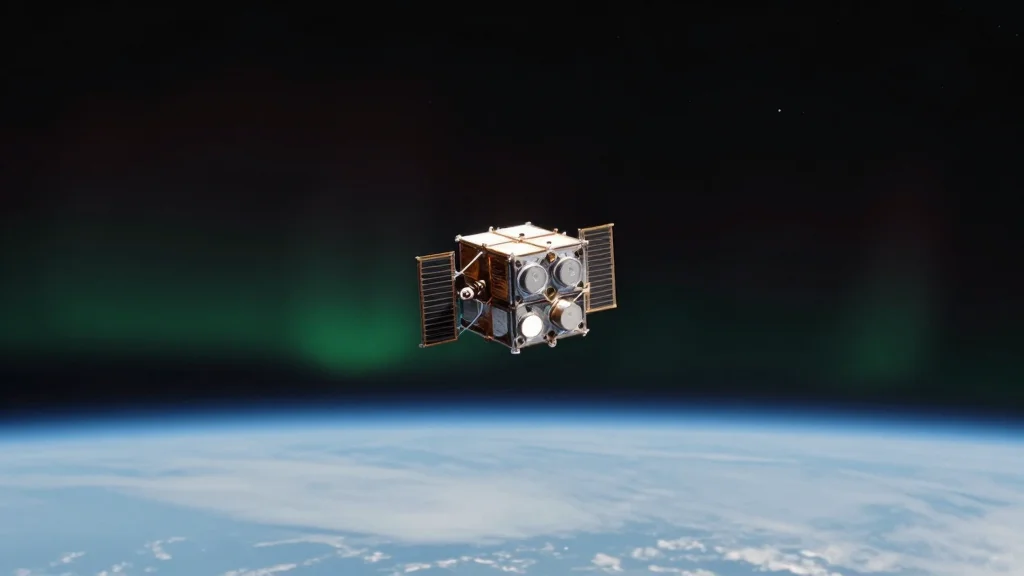
Mission Space is answering that demand with a planned 24‑node constellation of ZOHAR sensors, each sampling up to 1,000 times per second across 15 parameters using spectrometers and Cherenkov detectors. By piggybacking on rideshare missions such as HEX20’s Maya‑V1, the startup keeps launch expenses near the $350,000 price tag for a 50‑kg slot, avoiding the overhead of dedicated buses. 2 billion, underscoring a lucrative niche for high‑resolution data. Despite the clear value proposition, Mission Space must persuade satellite owners to allocate budget for premium data that rivals free forecasts from NOAA and ESA.
Early adopters stand to gain autonomous maneuvering and safe‑mode triggers that can shave millions off potential loss, but the customer base remains limited. Competition is emerging, with other startups embedding weather sensors on existing platforms, yet Mission Space’s dedicated constellation promises multi‑point, orbital‑specific coverage unavailable from government assets. If the firm can scale to its 24‑sensor target, it could redefine how the commercial space industry mitigates space‑weather risk.
Space weather could cost the satellite industry $40 billion in a single storm. A 15-person startup is building the forecast.
Comments
Want to join the conversation?
Loading comments...