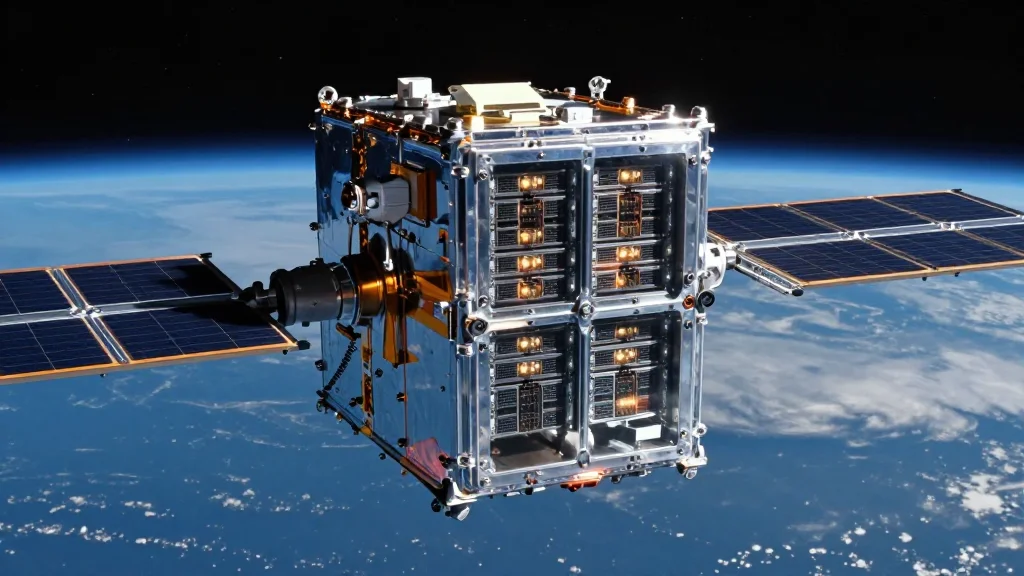
Startups Push Orbital Data Centers as Launch Costs Fall Below $2,000/Kg

Companies Mentioned

Why It Matters
Orbital data centers could reshape the entrepreneurship landscape by creating a new class of infrastructure assets that blend aerospace engineering with cloud computing. By addressing the energy and cooling constraints of terrestrial facilities, space‑based hubs promise greener operations and potentially lower total cost of ownership for AI‑intensive workloads. Moreover, the emergence of a nascent market for orbital hardware, launch services, and satellite broadband opens fresh venture‑capital opportunities, encouraging startups to innovate at the intersection of space and data. If the cost trajectory continues, early movers could secure first‑mover advantage, establishing proprietary platforms that lock in high‑value enterprise customers. This would also pressure traditional cloud providers to explore hybrid models, integrating orbital nodes into their global networks, thereby accelerating the commercialization of space‑based services.
Key Takeaways
- •Launch costs have dropped from $5,400/kg in the 1960s to $1,500/kg with SpaceX's Falcon Heavy in 2018.
- •Rocket Lab's upcoming Neutron rocket will lift 13,000 kg, enough for a modest data‑center payload.
- •Space's ambient temperature of –270 °C eliminates the need for energy‑intensive cooling systems.
- •Solar panels can provide continuous power to orbital data centers, leveraging existing satellite technology.
- •AST SpaceMobile demonstrates broadband‑speed satellite connectivity, clearing a key communications hurdle.
Pulse Analysis
The push for orbital data centers reflects a broader shift toward vertical integration of hardware, launch, and connectivity—a model reminiscent of early cloud pioneers who built their own data‑center farms. However, the space angle adds a layer of capital intensity and regulatory risk that only well‑capitalized startups can absorb. The key competitive advantage lies in the cost curve of launch services; as reusable rockets push per‑kilogram prices below $1,000, the total cost of deploying a 10‑ton data‑center could rival a mid‑size terrestrial facility, especially when factoring in energy savings from passive cooling.
From a market dynamics perspective, the entry of aerospace giants like SpaceX and Blue Origin into the data‑center conversation creates a two‑sided platform: launch providers supply the transport, while satellite operators deliver the connectivity. Startups that can bridge these sides—by designing rugged, low‑mass compute modules or by offering software that optimally distributes workloads between Earth and orbit—stand to capture a niche but high‑margin segment. The environmental narrative also cannot be ignored; investors increasingly demand ESG‑compliant infrastructure, and orbital data centers present a compelling story of reduced carbon footprints.
Looking ahead, the timeline is critical. If Rocket Lab's Neutron and SpaceX's next‑gen launch vehicles achieve their cost targets by 2027, we could see pilot deployments within five years. Early adopters will likely be AI research labs that need massive compute bursts but can tolerate higher latency. Success in these pilots would validate the business model, prompting larger scale roll‑outs and potentially a wave of venture funding focused on space‑based IT infrastructure. The sector is poised at a tipping point where engineering breakthroughs intersect with market appetite, making the next few years decisive for entrepreneurs willing to bet on the final frontier.
Startups Push Orbital Data Centers as Launch Costs Fall Below $2,000/kg
Comments
Want to join the conversation?
Loading comments...