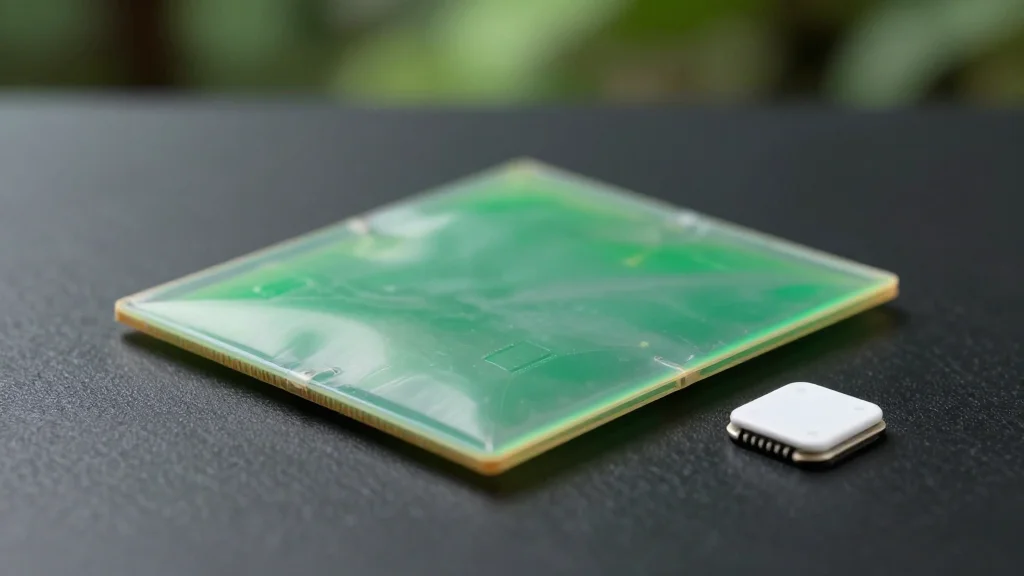
Swedish Startup Ligna Energy Rolls Out Forest‑Derived Supercapacitor for IoT

Why It Matters
The S‑Power 2S illustrates how renewable‑material chemistry can address two persistent pain points in IoT: battery waste and costly maintenance. By eliminating heavy metals and extending device life to a decade, the technology could lower the total cost of ownership for massive sensor deployments, accelerating adoption of smart‑city and industrial‑IoT projects that have been hampered by battery logistics. If the lignin‑based approach proves scalable, it may also spur a new supply chain for forest by‑products, creating revenue streams for pulp and paper mills while reducing the environmental footprint of the burgeoning IoT market. The move signals that early‑stage green entrepreneurship can deliver commercially viable alternatives to entrenched battery technologies.
Key Takeaways
- •Ligna Energy's S‑Power 2S offers 1.2 F capacitance, 2.7 V voltage and >250,000 charge cycles.
- •Device is built from lignin, a forest‑derived polymer, avoiding lithium, cobalt and nickel.
- •Targeted lifespan of eight to ten years could cut sensor maintenance costs by hundreds of dollars per unit.
- •Fast charge and ultra‑low ESR make it suitable for intermittent power bursts in IoT.
- •Pilot shipments slated for later 2026, focusing on utilities, agriculture and smart‑city applications.
Pulse Analysis
Ligna Energy’s launch arrives at a crossroads where the economics of IoT scaling intersect with mounting regulatory pressure on battery waste. Historically, the industry has relied on cheap, chemically dense lithium cells, but the environmental cost and supply‑chain volatility of cobalt and nickel have become strategic liabilities. By leveraging lignin—a readily available by‑product of the paper industry—Ligna sidesteps these constraints and creates a differentiated value proposition that resonates with sustainability‑focused enterprises.
From a competitive standpoint, the supercapacitor market has been dominated by silicon‑based electrolytes and metal‑oxide electrodes. Ligna’s polymer‑centric stack could force incumbents to reconsider material sourcing, especially as customers demand longer service intervals and greener credentials. However, the technology’s success hinges on two variables: the ability to mass‑produce lignin‑based electrodes at cost parity with traditional chemistries, and the maturation of complementary energy‑harvesting modules that can keep the supercapacitor topped up without manual intervention.
Looking ahead, the most immediate catalyst will be the outcome of Ligna’s pilot programs. If early adopters report measurable reductions in OPEX and a smooth integration path, larger OEMs may embed the S‑Power 2S into next‑generation sensor designs, effectively creating a new product class rather than a retrofit solution. In that scenario, the startup could attract follow‑on funding or strategic partnerships with firms in the paper and renewable‑energy sectors, further cementing the link between forest by‑products and the digital infrastructure of tomorrow.
Swedish Startup Ligna Energy Rolls Out Forest‑Derived Supercapacitor for IoT
Comments
Want to join the conversation?
Loading comments...