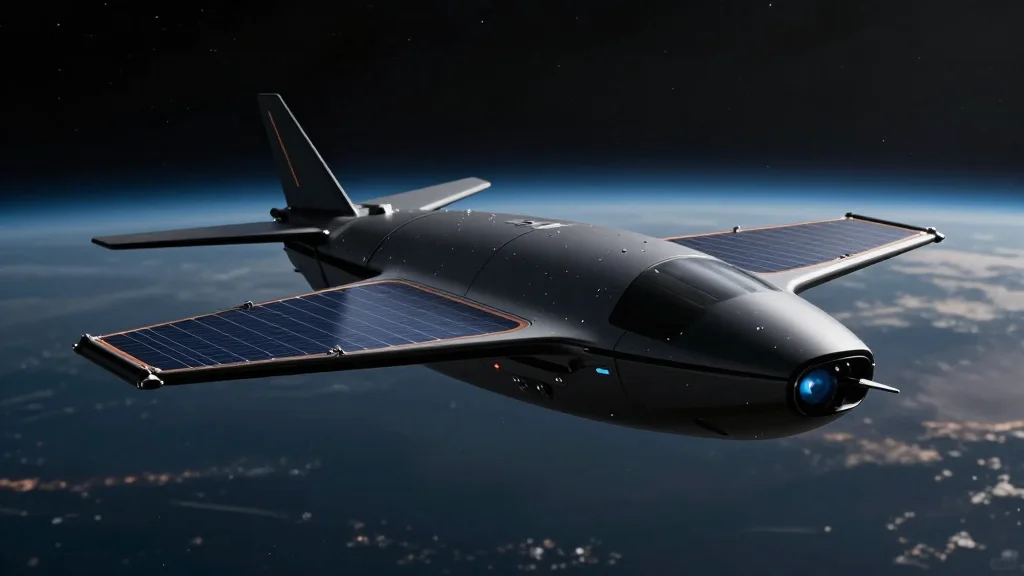
True Anomaly Raised $1 Billion to Build Weapons for a Programme the Pentagon Has Not Committed to Building
Companies Mentioned
True Anomaly
Anduril Industries
SpaceX
Eclipse
Meritech Capital
645 Ventures
General Dynamics
GD
Accel

Menlovc
Paradigm Electronics Inc.
Impulse Space
Atreides
ACME
Lockheed Martin
LMT
Stifel Bank
Raytheon
Northrop Grumman
NOC
Turion Space
G Squared
GSQD.U
VanEck
CLOI
Quindar
Space VC
Booz Allen Hamilton
BAH
Riot Ventures
Rocket Lab
RKLB
Why It Matters
The bet ties a billion‑dollar valuation to a yet‑unfunded, potentially trillion‑dollar missile‑defence system, making True Anomaly a bellwether for the commercialisation of space warfare and for future defence spending priorities.
Key Takeaways
- •True Anomaly raised $650 M Series D, total $1 B funding.
- •Selected for Golden Dome space‑based interceptor prototypes among 12 firms.
- •Programme cost estimates range $185 B to $3.6 T, affordability uncertain.
- •Company’s future hinges on Pentagon’s decision to mass‑produce interceptors.
- •Investors include high‑profile venture funds and political figure JD Vance.
Pulse Analysis
True Anomaly’s latest $650 million Series D round underscores a rapid escalation of venture capital into pure space‑defence. Backed by a roster of Silicon Valley firms and political‑linked investors, the company now commands a $2.2 billion valuation while expanding its workforce to over 500 employees by 2026. The timing aligns with the Space Force’s Golden Dome selection, a Trump‑era missile‑defence architecture that envisions a proliferated low‑Earth‑orbit interceptor constellation. By securing a share of the $3.2 billion prototype pool, True Anomaly positions itself as the primary contractor for a capability that could redefine orbital warfare.
The financial stakes are staggering. Official Pentagon estimates place Golden Dome at $185 billion, yet independent analysts project costs ranging up to $3.6 trillion depending on system scope. Such a spread raises immediate questions about affordability, especially as Space Force leadership has warned that boost‑phase interceptors will not be produced unless they are scalable and cost‑effective. True Anomaly’s business model, which lacks any commercial satellite or launch revenue, is therefore a high‑risk, high‑reward gamble: success could secure a multi‑hundred‑billion contract, while failure would leave the firm with a niche product lacking a clear market.
Beyond the immediate programme, the True Anomaly case illustrates a broader shift in defence innovation. The convergence of autonomous AI, venture funding, and geopolitical pressure—particularly from China’s objections under the Outer Space Treaty—signals an accelerating arms race in orbit. As traditional aerospace primes diversify into software‑centric solutions, pure‑play space‑defence startups like True Anomaly may become the linchpin for future U.S. military strategy, influencing both policy decisions and the allocation of billions of dollars in defence budgets.
True Anomaly raised $1 billion to build weapons for a programme the Pentagon has not committed to building
Comments
Want to join the conversation?
Loading comments...