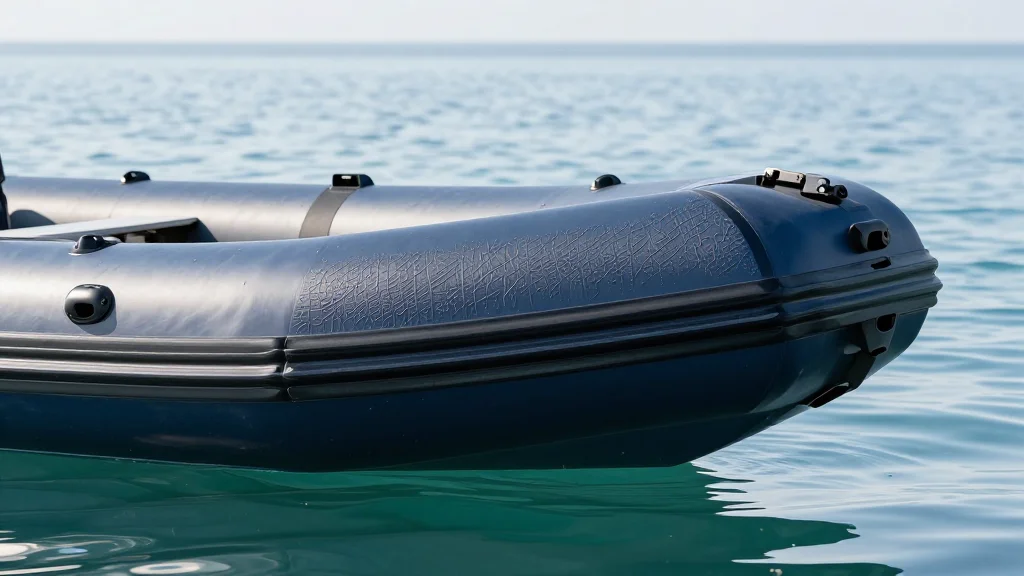
Voltage Vessels Submits 3D‑Printed, Basalt‑Reinforced RHIB for US Defense Evaluation

Why It Matters
Voltage Vessels’ approach tackles two entrenched challenges in naval manufacturing: supply‑chain fragility and environmental impact. By replacing steel and fiberglass with a recyclable, basalt‑reinforced polymer, the startup offers a lighter, corrosion‑resistant alternative that can be produced close to the point of need. If adopted, this could reduce the logistical footprint of naval forces, lower lifecycle costs, and set a new standard for sustainable shipbuilding. The broader entrepreneurship ecosystem stands to benefit from the validation of high‑tech, additive‑manufacturing processes in a traditionally conservative industry. Success would signal to investors that deep‑tech ventures can achieve defense‑grade certification, unlocking new capital streams for other startups targeting aerospace, automotive, and infrastructure sectors with similar distributed‑fabrication models.
Key Takeaways
- •Voltage Vessels entered a 6‑meter 3D‑printed RHIB into US defense evaluation programs.
- •Hull material Eclipse X9 combines recycled PETG with basalt fiber, achieving ~108 MPa tensile strength.
- •Testing shows >90 % strength retention after 24 months in saltwater and water absorption <0.4 %.
- •Company plans to scale to 15,000 metric tons of composite annually via regional Pacific hubs.
- •Distributed printing could cut vessel replacement lead times from weeks to days in contested zones.
Pulse Analysis
Voltage Vessels is at the intersection of two powerful trends: additive manufacturing and defense decentralization. Historically, naval shipbuilding has been anchored to massive, capital‑intensive shipyards that lock in long lead times and expose fleets to logistical choke points. The startup’s use of a basalt‑reinforced PETG composite not only meets the mechanical demands of high‑performance marine vessels but also introduces a recyclable loop that aligns with the Pentagon’s sustainability goals.
From a market perspective, the company’s success could catalyze a cascade of contracts across allied navies that face similar Pacific logistics challenges. Competitors in the additive‑manufacturing space—such as Relativity Space in aerospace—have demonstrated that scaling printer farms is feasible when backed by deep pockets and government contracts. Voltage Vessels will need to secure not just a single evaluation win but a series of repeat orders to justify the capital outlay for regional printer installations.
Looking ahead, the key risk lies in the rigorous validation process required for defense adoption. Even with promising lab data, real‑world operational stresses—impact resistance, fatigue under cyclic loading, and integration with mission systems—must be proven. If the startup clears these hurdles, it could usher in a new era where naval fleets are assembled on‑demand, dramatically reshaping procurement strategies and opening a lucrative niche for other deep‑tech entrepreneurs focused on distributed manufacturing.
Voltage Vessels submits 3D‑Printed, Basalt‑Reinforced RHIB for US Defense Evaluation
Comments
Want to join the conversation?
Loading comments...