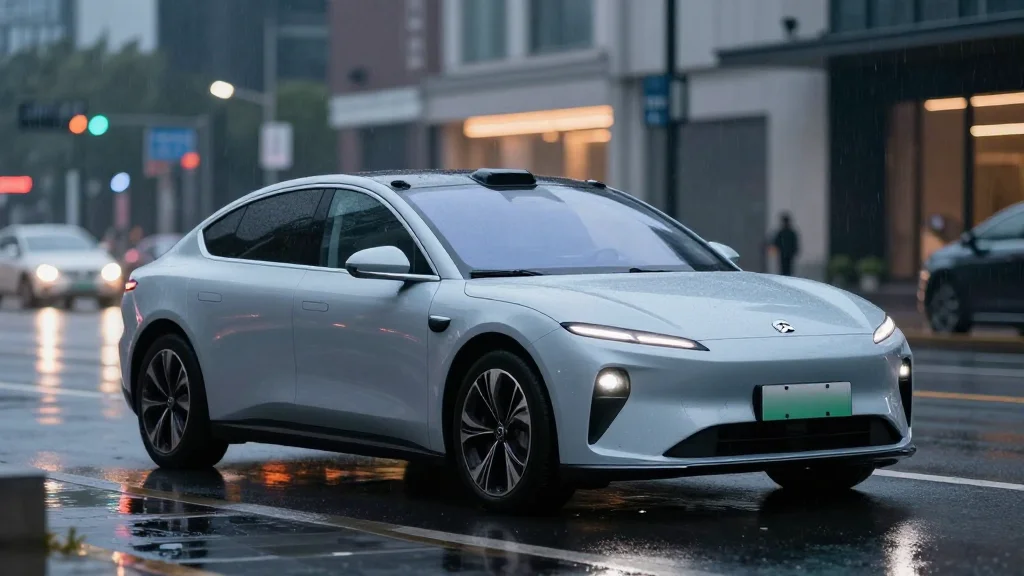
Waymo Suspends Rider Service in Six Cities After Flooded‑road Recall

Companies Mentioned
Why It Matters
Waymo’s service suspension underscores the operational challenges that autonomous‑vehicle startups face when scaling into diverse weather conditions. A recall triggered by a single flood‑related incident forced the company to halt rider service across multiple markets, highlighting how edge‑case handling can directly impact revenue and investor confidence. For entrepreneurs and investors in the robotaxi space, the episode illustrates the importance of robust sensor‑fusion algorithms and rapid software iteration to maintain service continuity. The broader implication is a potential recalibration of growth expectations across the autonomous‑mobility sector. While Waymo’s extensive data and Alphabet backing provide a cushion, smaller startups may need to adopt more conservative rollout strategies or focus on regions with predictable weather patterns. The incident also puts pressure on regulators and safety agencies to define clearer standards for autonomous operation in adverse conditions, which could shape future funding and partnership decisions.
Key Takeaways
- •Waymo paused rider service in six cities (Atlanta, Austin, Dallas, Houston, Nashville, San Antonio) after a flooded‑road incident.
- •Freeway operations were suspended nationwide to address construction‑zone performance.
- •Weekly rides fell from +14,800 in January to +2,700 by March, per The Driverless Digest.
- •Waymo plans new launches in Las Vegas, San Diego, London and will roll out Ojai and Hyundai Ioniq 5 platforms.
- •Industry observers, including Harry Campbell of The Driverless Digest, note the pause could reshape robotaxi growth timelines.
Pulse Analysis
Waymo’s recent operational setbacks reveal a classic scaling dilemma for deep‑tech startups: the tension between rapid market expansion and the need for flawless real‑world performance. Historically, autonomous‑vehicle firms have relied on controlled test environments to iron out edge cases. Waymo’s aggressive city‑by‑city rollout this year—adding six new markets—exposed the limits of its current perception stack when confronted with heavy rain and flooded roadways. The recall not only stalls revenue in the affected cities but also erodes the narrative that Waymo’s technology is ready for mass adoption.
From an investment perspective, the incident may prompt venture capitalists to demand more granular risk mitigation plans before committing to later‑stage funding rounds. Startups that can demonstrate modular sensor suites, rapid OTA update capabilities, and region‑specific weather modeling will likely attract the next wave of capital. Meanwhile, competitors such as Cruise, which has focused on limited geographic footprints, might leverage Waymo’s pause to argue for a more measured expansion strategy.
Looking ahead, Waymo’s ability to quickly deploy software patches and resume service will be a litmus test for its operational resilience. If the company can restore confidence and deliver on its upcoming launches in Las Vegas, San Diego and London, it will reaffirm its leadership and keep the robotaxi market on an upward trajectory. Conversely, prolonged disruptions could accelerate consolidation, with larger players absorbing smaller, less‑resilient startups. The episode thus serves as a bellwether for the broader autonomous‑mobility ecosystem, signaling that technical robustness will be the decisive moat in the coming years.
Waymo suspends rider service in six cities after flooded‑road recall
Comments
Want to join the conversation?
Loading comments...