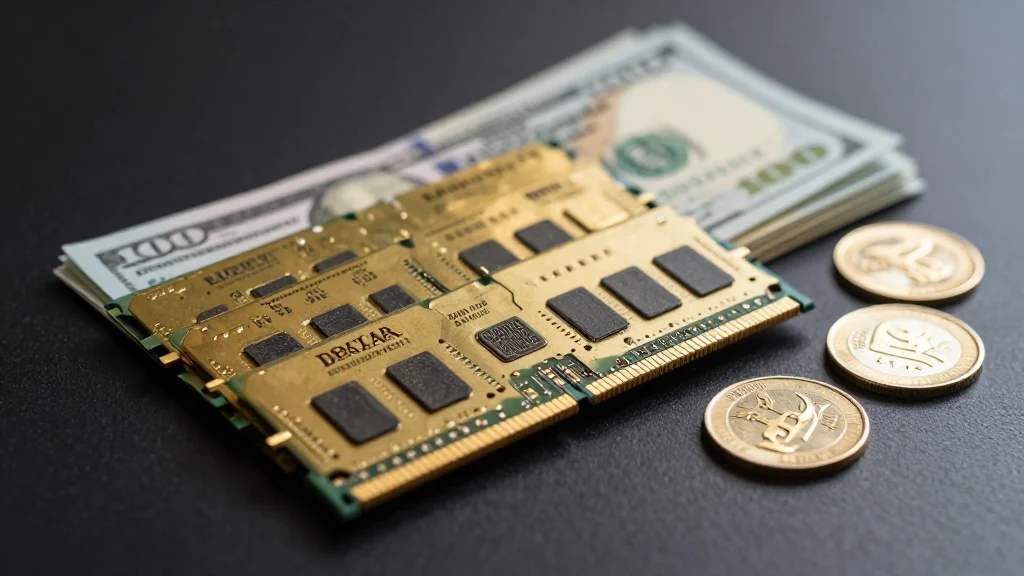
Roundhill Memory ETF Hits $1 B AUM in Just 10 Trading Days

Companies Mentioned
Why It Matters
The DRAM ETF’s meteoric rise signals that investors are willing to allocate large sums to narrowly focused thematic plays when macro trends create clear supply‑demand imbalances. By providing U.S. investors with access to non‑listed memory giants, the fund bridges a longstanding market gap, potentially reshaping how advisors construct AI‑related portfolios. Moreover, the speed of capital accumulation challenges the conventional belief that thematic ETFs require years to achieve scale, encouraging issuers to consider more aggressive launch strategies for high‑interest niches. If the memory shortage deepens, the fund could become a bellwether for AI‑related semiconductor demand, influencing pricing, corporate investment decisions, and even policy discussions around semiconductor supply chain resilience. Conversely, a rapid inflow into a concentrated basket raises questions about liquidity risk and concentration exposure, prompting regulators and industry participants to reassess risk‑management frameworks for thematic ETFs.
Key Takeaways
- •Roundhill's DRAM ETF reached $1 billion AUM in just ten trading days after its April 2 launch.
- •The fund averages $213 million in daily trading volume and over 11,000 options contracts per day.
- •More than 75 % of holdings are concentrated in Samsung Electronics, SK Hynix and Micron Technology.
- •Dave Mazza, Roundhill CEO, highlighted the fund’s role in bridging AI‑driven memory demand with U.S. investor access.
- •Analysts label the launch “beyond shocking,” noting it outpaces similar thematic funds like the Magnificent Seven.
Pulse Analysis
Roundhill’s DRAM ETF illustrates a shift in investor behavior: when a clear macro‑trend—here, AI‑driven memory scarcity—emerges, capital can coalesce around a single, highly concentrated vehicle at unprecedented speed. Historically, thematic ETFs have relied on broad diversification to attract risk‑averse capital, but DRAM’s success suggests that the market now rewards precision exposure, especially when the underlying assets are otherwise inaccessible to U.S. investors. This could spur a wave of niche ETFs targeting other supply‑constrained segments, such as rare‑earth minerals or advanced packaging technologies.
However, the fund’s concentration risk cannot be ignored. With three stocks accounting for the bulk of assets, any operational hiccup at Samsung, SK Hynix, or Micron could trigger outsized volatility. Advisors will need to incorporate stress‑testing and liquidity buffers into client portfolios, a practice more common in hedge‑fund strategies than in retail‑focused ETFs. The rapid inflow also raises the question of whether the fund’s fee structure—65 bps—remains justified if assets swell beyond the current $1 billion mark, potentially prompting a fee reassessment.
From a competitive standpoint, DRAM’s performance may pressure other issuers to accelerate their own thematic launches, perhaps by securing seed capital or leveraging partnerships with institutional investors to avoid the “dark‑horse” status that Roundhill experienced. The ETF’s trajectory will likely be a case study for the industry on how to balance speed, concentration, and regulatory oversight in a market hungry for AI‑related exposure.
Roundhill Memory ETF Hits $1 B AUM in Just 10 Trading Days
Comments
Want to join the conversation?
Loading comments...