Talk Your Book: Consternation About Concentration
Key Takeaways
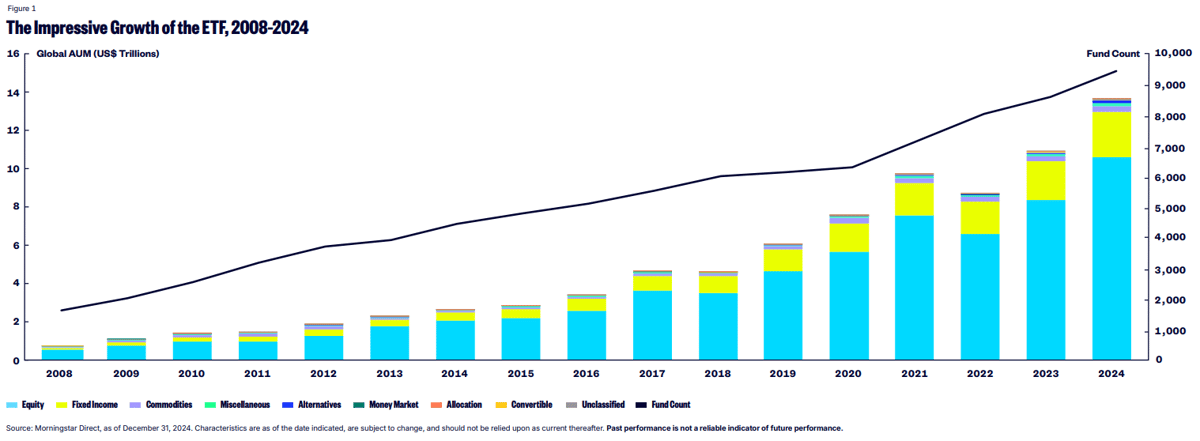
- •Global ETF AUM surged to over $12 trillion by 2024
- •Investor flow shifts from Mag‑7 to small caps and industrials
- •AI capital spending mirrors early TMT bubble dynamics
- •Earnings growth sustains market despite geopolitical and inflation risks
- •US corporate profits have doubled this century, raising sustainability questions
Pulse Analysis
The ETF industry’s meteoric rise is reshaping the investment landscape. From a modest $1 trillion in assets a decade ago to more than $12 trillion today, exchange‑traded funds have become the default vehicle for both retail and institutional investors seeking low‑cost exposure. This scale‑up is fueled by a combination of fee compression, algorithmic trading, and the proliferation of thematic products, especially in technology and ESG. As ETFs dominate portfolio construction, asset managers must adapt distribution strategies and risk‑management frameworks to accommodate the heightened liquidity and speed of market flows.
Concurrently, capital is migrating away from the traditional Mag‑7 giants toward smaller, more domestically focused sectors such as industrials and international equities. Valuation compression, tighter monetary policy, and a renewed emphasis on earnings quality are compelling investors to chase higher yields in under‑followed niches. The AI capex wave adds another layer of complexity; spending patterns echo the early 2000s TMT bubble, with firms racing to secure compute power and data pipelines. This creates a bifurcated market where AI leaders may enjoy premium valuations while laggards face steep discounting, prompting a more granular, sector‑specific allocation approach.
Underlying all these trends is the remarkable doubling of U.S. corporate profitability over the past two decades, a feat driven by productivity gains, digital transformation, and favorable tax regimes. While strong earnings have insulated markets from geopolitical shocks and persistent inflation, the sustainability of this growth is uncertain. Margin pressures, supply‑chain disruptions, and potential regulatory headwinds could temper future profit expansion. Investors therefore need to balance optimism about continued earnings resilience with a disciplined assessment of macro‑risk factors, ensuring portfolios remain agile in an environment where both asset class popularity and corporate fundamentals are in flux.
Talk Your Book: Consternation About Concentration
Comments
Want to join the conversation?