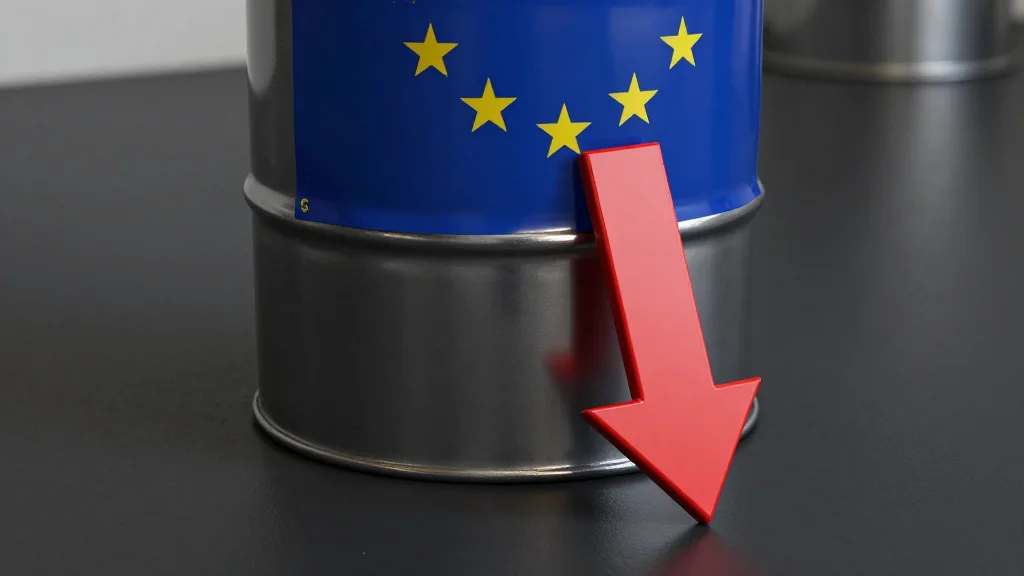
European Blue‑Chip Indexes Drop Over 1% as Oil Surges Past $100 Amid Iran Conflict

Companies Mentioned
Why It Matters
The sharp decline in Europe’s leading indexes underscores how geopolitical shocks can quickly translate into market risk‑off behavior, especially when they intersect with already elevated inflation pressures. A sustained oil price above $100 threatens to push euro‑zone inflation higher, potentially prompting the European Central Bank to consider earlier or more aggressive rate hikes, which would affect borrowing costs for households and businesses. Moreover, the market reaction highlights the interconnectedness of political events—such as Hungary’s election—and macro‑economic outcomes. A more pro‑EU Hungarian government could improve rule‑of‑law perceptions, attracting investment, but the immediate focus remains on energy price volatility and its capacity to derail the euro‑zone’s fragile recovery.
Key Takeaways
- •FTSE 100 down 0.4%, DAX off 1%, CAC 40 down nearly 0.9% as oil breaches $100 per barrel.
- •Brent crude up 7% to $102, WTI up 8% to $104 after U.S. blockade announcement.
- •Deutsche Bank Research flagged a "clear risk‑off move" and warned of stagflation risks.
- •Euro weakened to $1.1692; forint fell to 366.18 per euro amid Hungarian election news.
- •Upcoming earnings season includes major banks, ASML, and TSMC, testing resilience to higher energy costs.
Pulse Analysis
The current sell‑off is less about a fundamental reassessment of European equities and more about a classic risk‑off pivot triggered by an external shock. Historically, oil price spikes have led to short‑term equity declines, but the magnitude here is amplified by the geopolitical narrative surrounding the Strait of Hormuz. Investors are pricing in a two‑fold risk: immediate cost pressures from higher fuel prices and the longer‑term prospect of an inflation‑driven monetary tightening cycle.
For euro‑zone corporates, the key variable will be the ability to pass through higher energy costs without eroding demand. Companies with strong balance sheets and pricing power—such as premium consumer brands and high‑tech manufacturers—may weather the storm better than commodity‑linked firms. The upcoming earnings season will provide the first data points on how firms are managing input cost inflation, and any guidance cuts could deepen the market correction.
Looking forward, the ECB’s policy stance will be pivotal. If inflation readings stay above target, the central bank may accelerate rate hikes, which would further pressure equity valuations. Conversely, any diplomatic de‑escalation that eases oil prices could restore confidence and trigger a rebound. Market participants should therefore monitor both the geopolitical front in the Gulf and the ECB’s communication for clues on the trajectory of euro‑stock performance.
European Blue‑Chip Indexes Drop Over 1% as Oil Surges Past $100 Amid Iran Conflict
Comments
Want to join the conversation?
Loading comments...