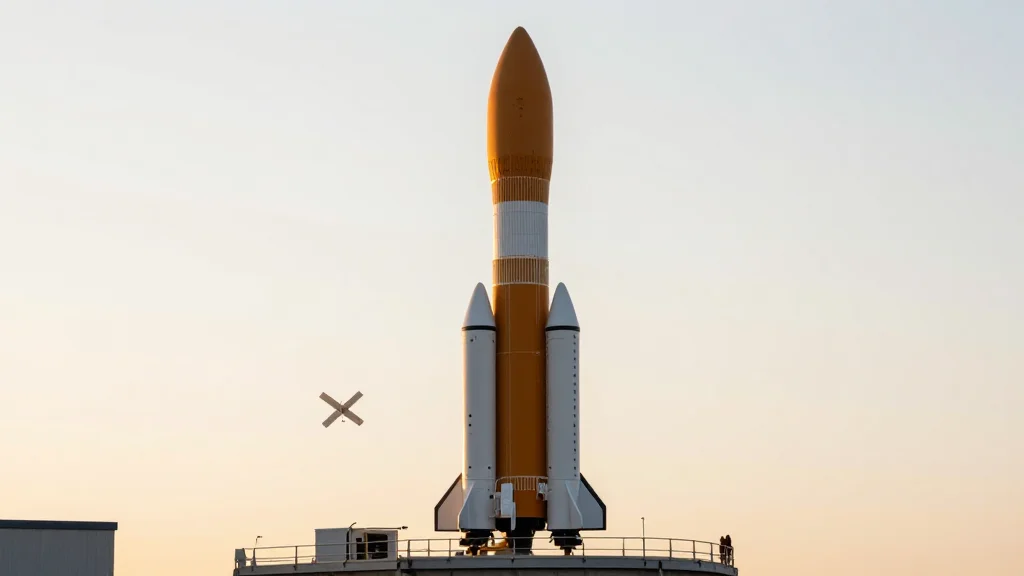
European Space Firms Post 80% Revenue Surge as Defence Funding Swells

Why It Matters
The 80% revenue surge signals a structural realignment of Europe’s space industry, moving it from a peripheral supplier to a core component of continental defence. By channeling billions of euros into indigenous capabilities, European governments are not only reducing strategic vulnerability but also creating a fertile ground for private capital, which could translate into higher valuations for listed space firms and a deeper, more diversified Euro‑stock market. For investors, the trend offers a clear narrative: growth is being driven by policy‑backed funding rather than speculative hype. This reduces downside risk and provides a clearer timeline for revenue generation, making European space equities an increasingly attractive asset class within the broader defence and technology sectors.
Key Takeaways
- •Seraphim Space Investment Trust’s top ten portfolio companies posted 80% revenue growth in the past year.
- •Growth is attributed to a surge in European defence spending, with €800 billion ($864 billion) earmarked under the Re‑arm Europe plan.
- •Mark Boggett, CEO of Seraphim, highlighted the shift away from reliance on U.S. space technology.
- •The defence‑driven boom is lifting valuations across Euro‑listed space and aerospace firms.
- •Upcoming Re‑arm Europe funding rounds in late 2026 could further accelerate the sector’s expansion.
Pulse Analysis
The European space surge is more than a short‑term earnings bump; it marks the emergence of a sovereign capability that could reshape the continent’s strategic calculus for decades. Historically, Europe has leaned heavily on U.S. satellite constellations for both civilian and military applications. The post‑Trump shock forced policymakers to confront a critical gap, prompting the Re‑arm Europe initiative that couples defence spending with industrial policy. This dual‑track approach mirrors the Cold War‑era European aerospace push that birthed Airbus, suggesting a similar trajectory for space.
From a market perspective, the infusion of €800 billion creates a predictable revenue pipeline that investors can model with greater confidence than pure‑play commercial launch startups. Companies that can secure early contracts stand to benefit from economies of scale, driving down launch costs and enabling competitive pricing against U.S. incumbents like SpaceX. Moreover, the heightened focus on secure, sovereign satellite services could spur a wave of niche IPOs, expanding the Euro‑stock universe beyond traditional aerospace names.
However, the momentum is not without risks. The reliance on government contracts means that any political shift or budgetary restraint could stall the pipeline. Additionally, the technical challenges of building a home‑grown satellite ecosystem—ranging from component supply to launch reliability—remain significant. Investors should therefore weigh the upside of policy‑backed growth against execution risk, monitoring contract award announcements and the performance of early‑stage European launch providers as leading indicators of sustained sector health.
European Space Firms Post 80% Revenue Surge as Defence Funding Swells
Comments
Want to join the conversation?
Loading comments...