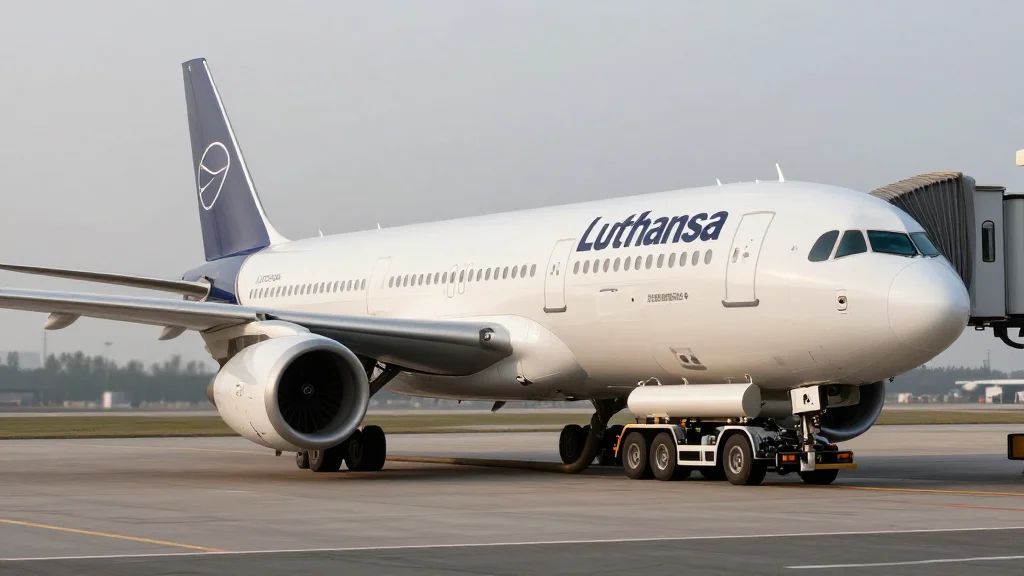
Lufthansa Cancels 20,000 Flights as Europe Faces Jet‑Fuel Shortage

Companies Mentioned
Why It Matters
The jet‑fuel shortage strikes at the core of Europe’s aviation ecosystem, a sector that underpins tourism, business travel, and ancillary services worth billions of euros annually. By forcing Lufthansa to cancel 20,000 flights, the crisis not only depresses airline stock valuations but also threatens the cash flow of airports, ground‑handling firms, and hospitality businesses that depend on steady passenger volumes. Moreover, the shortage exposes a structural vulnerability: Europe’s heavy reliance on Gulf‑origin jet fuel and the limited flexibility of its supply chain. The EU’s proposed fuel observatory could become a critical tool for mitigating future disruptions, but its effectiveness will hinge on timely data sharing and coordinated policy action. For investors, the episode underscores the need to factor fuel‑supply risk into valuation models for European carriers and related equities. Companies with diversified fuel‑sourcing strategies, stronger balance sheets, or the ability to quickly adapt to alternative fuel grades may outperform peers that are more exposed to import shocks. The situation also raises broader questions about Europe’s energy security strategy, especially as the continent seeks to decarbonize aviation while maintaining operational reliability.
Key Takeaways
- •Lufthansa will cancel 20,000 flights from May to October to conserve scarce jet fuel.
- •Europe imports roughly 500,000 barrels of jet fuel per day, with 75% previously sourced from the Gulf.
- •U.S. jet‑fuel exports to Europe doubled in April, delivering about four million barrels, but cover only half the shortfall.
- •EU ministers plan to launch a fuel observatory to track jet‑fuel stocks and flows in real time.
- •EASA issued provisional guidance allowing limited blending of Jet A and Jet A‑1 fuels under strict safety controls.
Pulse Analysis
The Lufthansa flight‑cancellation saga is a textbook case of how commodity‑supply shocks can cascade through equity markets, especially in sectors with thin margins and high fixed costs. Historically, airline earnings have been tightly correlated with fuel price volatility; this episode flips the script by turning fuel scarcity into a direct operational constraint. The immediate market reaction—sharp declines in airline stocks and widening credit spreads—reflects investors’ recalibration of risk premiums, not just for Lufthansa but for the entire European carrier cohort.
From a strategic perspective, the crisis accelerates the urgency for airlines to diversify their fuel procurement and to invest in alternative energy sources. Carriers that have already secured long‑term contracts with non‑Gulf suppliers or that are piloting sustainable aviation fuel (SAF) may find themselves at a competitive advantage when the next supply shock hits. Meanwhile, the EU’s fuel observatory could serve as a template for other critical commodities, offering a data‑driven approach to crisis management that reduces reliance on ad‑hoc political negotiations.
Looking forward, the market will likely price in a higher cost of capital for airlines that lack robust fuel‑risk hedging mechanisms. Investors should monitor the rollout of the observatory, the evolution of EASA’s fuel‑mixing guidelines, and any bilateral agreements that could open new supply corridors. In the short term, the summer travel season will test the resilience of the sector; a prolonged shortage could erode consumer confidence and accelerate a shift toward rail or short‑haul alternatives, reshaping the competitive landscape for European transport equities.
Lufthansa Cancels 20,000 Flights as Europe Faces Jet‑Fuel Shortage
Comments
Want to join the conversation?
Loading comments...